
Directional Boring Airport Aviation
Trinity Boring Solutions installs underground utilities at airports across Oklahoma. FAA coordination, airfield conduit, aviation fuel lines, fiber, and communications boring. ODOT Aeronautics approved. Call (405) 409-7423.
What Is Directional Boring for Airport and Aviation Projects?
Directional boring at airports and aviation facilities is a specialized form of horizontal directional drilling (HDD) that installs underground utilities beneath active runways, taxiways, aprons, and terminal infrastructure without disrupting flight operations or cutting through finished pavement. At airports across Oklahoma, underground utility systems carry aviation fuel, jet-A delivery lines, communications conduit, fiber optic cables for navigation aids, 400-Hz ground power, and airfield lighting circuits. Installing these systems using open-cut trenching would require runway closures, FAA coordination for flight path changes, and weeks of pavement reconstruction. Directional boring eliminates those disruptions entirely.
Trinity Boring Solutions provides directional boring services for airports, general aviation facilities, and aviation-related construction across Oklahoma. We work on commercial airports, regional airports operated by municipalities, and private airstrips where underground utility installation is required. Our crews understand the safety protocols, access restrictions, and coordination requirements that apply on and near active airfields.
FAA regulations and advisory circulars govern construction activities at certificated airports. Any work performed within the aircraft operations area (AOA) requires strict safety plans, personnel credentialing, and coordination with the airport operations center. Trinity Boring Solutions coordinates with airport operations staff and general contractors on airport projects to ensure all boring work is performed with appropriate access controls in place.
Oklahoma Department of Transportation (ODOT) oversees many airport improvement projects through its Aeronautics Division. Federal Airport Improvement Program (AIP) funds flow through ODOT Aeronautics for capital projects at public-use airports across the state. Trinity Boring Solutions has performed boring work on ODOT-coordinated airport projects and understands the documentation and inspection requirements that apply to AIP-funded work.
Major aviation facilities we serve include Oklahoma City’s Will Rogers World Airport, Tulsa International Airport, and dozens of regional airports across the state including Wiley Post Airport, Sundance Airport, and general aviation airports in communities throughout all 77 Oklahoma counties.

Aviation Utility Types We Install
Aviation Fuel Lines
Jet-A and aviation gasoline (avgas) delivery lines installed in steel casing with proper depth for airfield protection. Fuel line crossings under taxiways and aprons are designed to FAA Advisory Circular standards.
Airfield Lighting Conduit
Conduit for runway edge lights, taxiway centerline lights, approach lighting, and precision approach path indicators (PAPIs). FAA AC 150/5370-10 specifications apply to all airfield electrical installations.
Fiber Optic Communications
Fiber conduit for navigation aids, ATIS systems, ATC communications, security camera networks, and terminal data infrastructure. Fiber boring beneath taxiways avoids pavement cuts that trigger expensive FAA-compliant paving repairs.
400-Hz Ground Power
Underground 400-Hz power conduit at gate positions eliminates above-ground power carts. Boring under apron pavement installs these circuits without disrupting aircraft parking areas.
Potable Water
Water service for terminal buildings, hangars, and remote facilities. Airport water mains must be installed at adequate depth to avoid conflicts with airfield infrastructure and taxiway edge lighting systems.
Security and Communications
Conduit for access control systems, perimeter security cameras, intercom systems, and FIDS data networks. Security system conduit must often cross active airfield surfaces without pavement disruption.
How Directional Boring Works at Airports
Airport directional boring projects require more planning than standard road crossing work because of the operational sensitivity of the facility. Here is how Trinity Boring Solutions approaches an airport boring project from initial planning through completion.
- Utility Coordination and Design Review: We review project drawings, airport layout plans (ALPs), and existing utility records to identify underground conflicts. Underground strikes at airports can involve fuel lines, FAA navigational equipment cables, and airfield lighting circuits, all of which must be located before drilling begins.
- FAA and Airport Coordination: For work within the AOA, we coordinate with the airport operations manager and the project engineer to obtain access credentials, review safety plans, and understand any NOTAM requirements that may apply to construction equipment heights near active runways.
- ODOT Aeronautics Compliance: On AIP-funded projects, we submit required documentation including contractor certifications, insurance certificates, and pre-construction submittals through the general contractor to ODOT Aeronautics and FAA regional office as required.
- Private Utility Locates and SUE: In addition to standard 811 locates through OK 811, airport projects often require subsurface utility engineering (SUE) services to accurately locate airfield lighting circuits and fuel lines that are not in standard utility databases.
- Entry and Exit Pit Excavation: Entry and exit pits are excavated to planned bore depths. At airports, pit locations are selected to minimize pavement removal and avoid conflict with airfield drainage systems and FAA equipment vaults.
- Pilot Bore and Reaming: The pilot bore is drilled on a planned path beneath the taxiway, runway, or apron. A walkover locating system tracks bit position to verify depth and alignment throughout the bore. Reaming passes open the bore to product pipe diameter.
- Pipe Pullback and Pressure Testing: Product pipe or conduit is pulled through the reamed bore. Fuel lines and water mains are pressure tested after installation per project specifications. Conduit is mandrel-tested to verify open bore.
- Surface Restoration and Documentation: Pit areas are backfilled and compacted. Pavement repairs, if required at pit locations, are performed to FAA-approved specifications. As-built drawings documenting bore path and installed depth are submitted with project closeout documentation.
Why Choose Trinity Boring Solutions for Airport Projects
Airport projects demand a boring contractor with the discipline to operate under strict safety protocols, the technical capability to execute precise bores in confined entry locations, and the documentation practices that AIP-funded projects require. Trinity Boring Solutions brings all of these capabilities to airport boring work in Oklahoma.
Our equipment fleet includes multiple rigs sized for the bore lengths and soil conditions common at Oklahoma airports. Our operators are experienced with the locating technology and bore path verification required for accurate placement beneath airfield surfaces. We maintain the insurance coverage, certifications, and contractor qualifications required on public airport improvement projects.
We work closely with general contractors, aviation consultants, and airport operations staff to coordinate airport boring projects efficiently. Our understanding of FAA Advisory Circular requirements and ODOT Aeronautics process helps us navigate the documentation and coordination requirements that apply to these projects without creating delays for the broader project schedule.
For general information on boring contractor qualifications and safety standards, see the North American Society for Trenchless Technology (NASTT) and OSHA excavation and trenching standards.
Learn more about our general HDD capabilities on our directional boring Oklahoma page, our commercial boring services, and our oil and gas boring work.
Oklahoma Airport Coverage
Trinity Boring Solutions serves airports across all 77 Oklahoma counties. We have performed boring work at and near airports in Oklahoma City, Tulsa, Lawton, Enid, Ponca City, Ardmore, McAlester, Woodward, Hobart, Clinton, and many other Oklahoma communities with public-use airport facilities. With 10 or more rigs in our fleet, we can mobilize to airport projects throughout the state on competitive timelines.
Frequently Asked Questions
Does boring at airports require FAA permits?
Work within the airport operations area (AOA) requires coordination with the airport operations center and may require contractor badging. For work within the runway protection zone or near FAA navigation aids, additional FAA notification or permits may be required. We coordinate these requirements with the project engineer and airport operations on every airport project.
Can you bore under an active runway without closing it?
Yes. Directional boring installs pipe or conduit well below the runway surface, typically 5 to 10 feet or more beneath finished grade, without any surface disturbance to the runway itself. The bore entry and exit pits are located off the active runway surface. For most runway crossings, there is no requirement to close the runway during boring operations.
What depth is required for fuel lines under taxiways?
FAA Advisory Circular 150/5370-10 and the project specifications govern minimum cover requirements for fuel lines under airfield pavements. Minimum cover is typically 36 to 48 inches below finished grade for jet fuel lines under taxiways, with additional casing requirements at pavement crossings. Trinity Boring Solutions designs bore depths to meet or exceed applicable specifications.
Can you coordinate with ODOT Aeronautics on AIP-funded airport projects?
Yes. We have experience working on projects funded through the FAA Airport Improvement Program administered by ODOT Aeronautics. AIP projects require certified payroll, Buy American documentation, and other federal compliance submittals. We work with general contractors to provide required documentation for AIP-funded boring work.
Do you install fiber conduit for FAA navigation aid systems?
Yes. We install conduit for ILS localizer and glide slope systems, VOR facilities, AWOS/ASOS weather stations, and other FAA navigation aid infrastructure. Conduit routing for FAA nav-aid systems requires careful coordination with FAA Flight Standards and airport engineering to avoid interference with signal coverage.
Can you bore under airport perimeter fencing without disrupting security?
Yes. Perimeter fence crossings for utility service can be performed with entry pits on the landside and exit pits on the AOA side, or vice versa. We coordinate with airport security to ensure the fence is properly sealed and secured throughout the boring operation and that security protocols are maintained at all times.
What soil conditions are typical at Oklahoma airports?
Oklahoma airport soils vary by region. Western Oklahoma airports typically have sandy or loamy soils favorable for HDD. Central Oklahoma airports encounter red clay and sandy loam. Eastern Oklahoma airports may have rocky conditions. We select the appropriate drilling fluid and tooling for local soil conditions at each airport project.
Can you install 400-Hz ground power conduit at gate positions?
Yes. 400-Hz ground power conduit at aircraft gate positions is typically bored beneath the apron pavement from a utility duct bank at the terminal building or a remote vault. These bores are often relatively short (50 to 150 feet) but require precise depth control to maintain clearance with apron pavement section and airfield drainage systems.
Do you work with aviation fuel contractors on fuel farm installations?
Yes. We work alongside aviation fuel system contractors to install the underground fuel delivery lines that connect fuel storage tanks to hydrant pit systems or truck fill points. These installations require coordination with fuel system engineers and compliance with NFPA 407 and applicable FAA advisory circulars.
How do I get a quote for airport directional boring in Oklahoma?
Call (405) 409-7423 or submit your project information at our contact page. Provide the airport name, the utility type and size, the approximate bore length and path, and the project timeline. We will respond promptly with a free estimate.
Get a Quote for Airport Boring in Oklahoma
Serving airports across all 77 Oklahoma counties. Licensed, insured, and experienced with FAA-coordinated projects. Call Trinity Boring Solutions for a free estimate.
Trinity Boring Solutions
9102 NW Expressway, Yukon OK 73099
(405) 409-7423 | darren@trinityboringsolutions.com
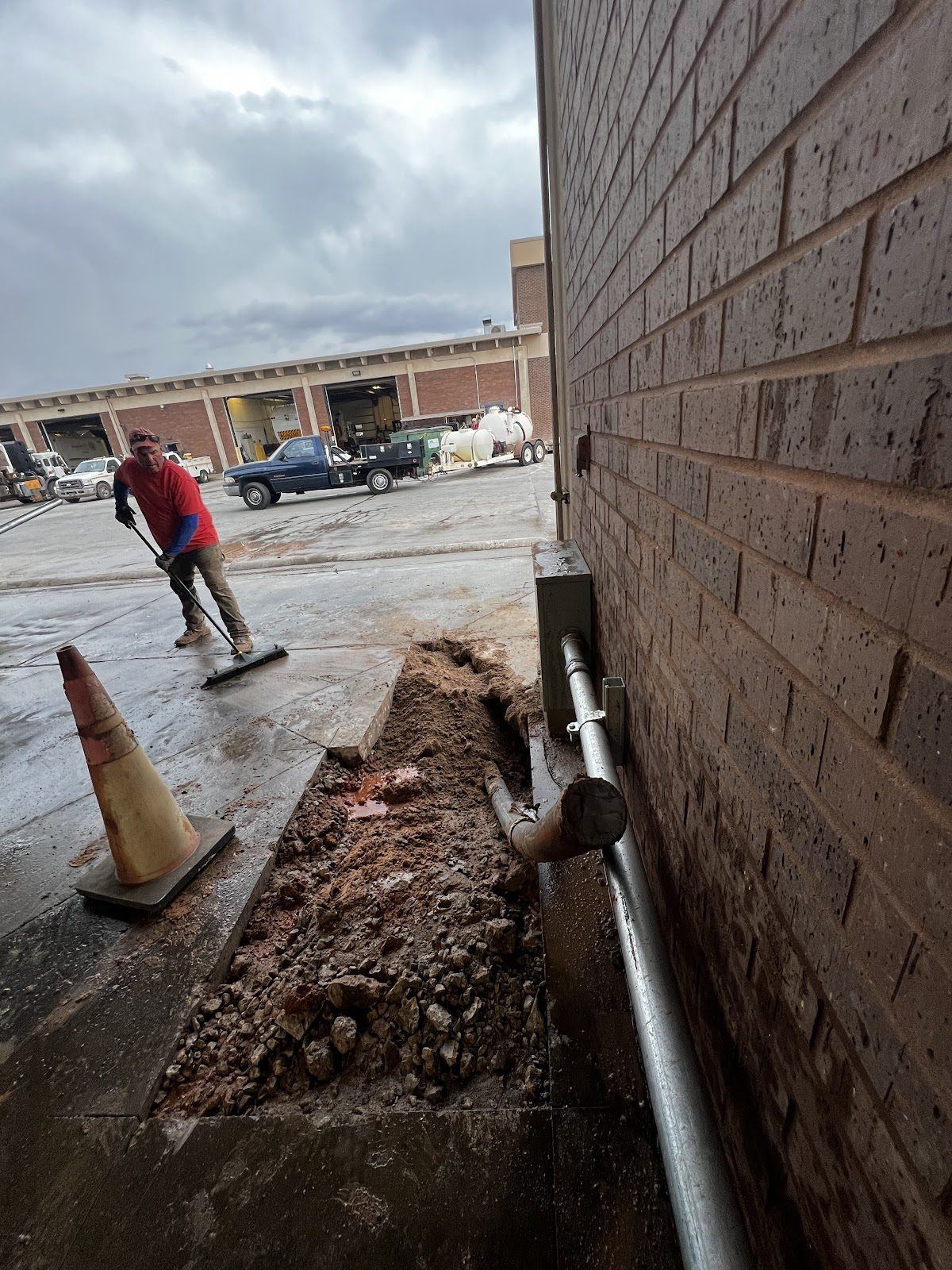
Directional Boring Airport Aviation — Project Photos



Related Boring & Utility Services
- Oil Gas Pipeline Boring Oklahoma
- Private Utility Services Oklahoma
- Railroad Crossings Oklahoma
- Railroad Utility Crossings in Oklahoma
- Rapid Utility Restoration Oklahoma
- Residential Directional Boring Oklahoma
- How Emergency Utility Repairs Are Done
- Utility Installation Methods
Where We Work in Oklahoma
New to trenchless construction? Start with our guide: What Is Horizontal Directional Drilling (HDD)?
Talk to the crew that does the work
Fastest way to a number is a phone call. Tell us where the crossing is and what is going in the ground, and you will get a straight answer on the same call. Bores from 10 feet to 5,000 feet, 3/4 inch service line through 48 inch casing, anywhere in Oklahoma and north Texas. We run 24/7 for main breaks and emergency repairs.
Answered by a person, not a call center.
Would rather not call? Send the details and we will come back with a written quote.