When you need a reliable jack and bore contractor Oklahoma, Trinity Boring Solutions delivers. We bring the equipment, the crew and the experience to complete your project on time without tearing up the surface. Call (405) 409-7423 or request a free quote online.
Trinity Boring Solutions is Oklahoma’s most trusted provider of jack and bore contractor Oklahoma services. Every project starts with a site assessment to confirm soil conditions and bore path clearance.
When you need jack and bore contractor Oklahoma completed on time and on budget, our crew delivers. We serve the entire state of Oklahoma with licensed and insured crews available 24 hours a day.
Our reputation as a leading jack and bore contractor Oklahoma company comes from consistent results across thousands of completed projects including municipal, commercial and residential work.
Jack and Bore Contractor for Steel Casing Under Roads and Railroads
Trinity Boring Solutions is Oklahoma’s jack and bore contractor for steel casing installation under state highways, county roads, and railroad crossings. We perform auger boring operations to install steel encasement pipe beneath active roads and rail lines per ODOT utility accommodation requirements, and then install the carrier pipe inside the casing with proper spacers and end seals.
Railroad Crossing Coordination
Steel Casing Installation
Licensed and Insured Oklahoma
Statewide Service
Directional boring in Oklahoma, answered in one paragraph. Trinity Boring Solutions is a family owned horizontal directional drilling contractor based in the Oklahoma City metro since 1965. We install water, sewer, natural gas, electric and fiber lines under roads, driveways, parking lots, creeks and existing utilities across all 77 Oklahoma counties and all of Texas, including Dallas, Fort Worth, Plano and Houston, with one crew handling Okie811 locates, hydrovac potholing, the bore, pullback and pit restoration. Call (405) 409-7423, answered 24 hours a day.
Trinity Boring Solutions at a glance
- Since 1965. Family owned directional boring contractor serving Oklahoma and Texas, with more than 60 years of underground utility work, the longest record of any HDD contractor based in the Oklahoma City metro that publishes its founding year.
- Oklahoma City metro based. Headquartered at 9102 Northwest Expy in the Oklahoma City metro. Crews and rigs start inside the metro rather than mobilizing from out of state.
- Owns its equipment. Vermeer and Ditch Witch HDD rigs, auger boring machines and hydrovac trucks, all owned outright and run by Trinity operators.
- One crew, whole job. 811 locates and hydrovac potholing, horizontal directional drilling, auger boring with steel casing, trenching, backfill and pit restoration from the same company, so there is no handoff between a locator, a driller and an excavator.
- Range. 3/4 inch service lines to 48 inch pipe, 10 feet to just under 4,000 feet in a single shot, with longer runs bored in sections, for water, sewer, natural gas and propane, electric and fiber.
- Named work. 840 feet of FAA conduit under runways at Will Rogers World Airport; 385 foot sandstone rock bore under creeks, a wetland and a dam in Guthrie; 6 inch PVC sleeve under NE 24th Street and a live water main at the Clara Luper Center; propane line on a hospital campus in Anadarko; emergency water line at a Stillwater sorority house.
- Pricing. No per foot rate. A bore is priced on its conditions: soil and rock, pipe size, what it crosses, grade, existing utilities, depth and access. How a bore is priced.
- Safety record. An Okie811 ticket in Oklahoma, a Texas811 ticket in Texas, and hydrovac potholing on every crossing.
- 24 hour phone. (405) 409-7423 is answered around the clock, with emergency crews for gas and water lines.
When Is Jack and Bore Required for a Highway or Railroad Crossing?
When a utility line must cross beneath a state highway, a county road, or an active railroad in Oklahoma, and the crossing authority requires steel encasement of the carrier pipe, jack and bore is the installation method required. Trinity Boring Solutions performs jack and bore operations to install steel casing pipe beneath active roads and rail lines without surface disturbance, lane closures in most cases, or interference with traffic or train operations during installation.
Jack and bore, also called auger boring, pushes a steel casing pipe through the ground from a jacking pit while simultaneously rotating an auger inside the casing to remove spoil material. The result is a steel casing installed in a single straight bore path from the entry jacking pit to a reception pit on the opposite side. After the casing is installed, the carrier pipe is placed inside with casing spacers and end seals that protect the carrier from traffic loads and prevent groundwater intrusion into the annular space.
Trinity Boring Solutions is familiar with the utility accommodation requirements from the Oklahoma Department of Transportation for utility crossings within ODOT state highway right of way and coordinates directly with ODOT and railroad engineering departments on crossing permits, casing specifications, and installation method approval. When a project requires both a jack and bore highway crossing and open trench or HDD work on either side of the road, we coordinate both scopes under a single contract. For comparison with other trenchless methods, see our horizontal directional drilling services.

What Is Jack and Bore and How Does It Work?
Jack and bore is a trenchless installation method for steel casing pipe that uses a combination of hydraulic jacking force and auger rotation to push the casing through the ground in a straight line from the entry pit to the exit pit. It is the method of choice for highway and railroad crossings where steel encasement is required and where the bore path is straight, the crossing length is within the capacity of the auger boring machine, and the soil conditions are suitable for open face cutting or mechanical cutting.
How Auger Boring Works Step by Step
The auger boring process begins with excavating a jacking pit on the entry side of the crossing. The pit is sized to accommodate the auger boring machine and allow full length casing pipe sections to be positioned for advancement. The pit walls are shored per OSHA requirements for the pit depth and soil conditions.
The auger boring machine is set up in the jacking pit with the machine positioned at the designed bore elevation and angle. A lead casing section with a cutting head is positioned at the face of the excavated pit wall. The machine simultaneously rotates the auger inside the casing and applies hydraulic jacking force to advance the casing into the soil. The auger carries the spoil back through the casing to the jacking pit, where it is removed and disposed of.
Additional casing sections are welded to the trailing end of the advancing casing and pushed forward until the lead casing exits into the reception pit on the far side of the crossing. The cutting head is removed from the reception pit. The casing is then cleaned out, casing spacers are installed, and the carrier pipe is pushed or pulled through the casing interior. End seals are installed at both ends to complete the crossing installation.
Jack and Bore vs Horizontal Directional Drilling
Jack and bore and horizontal directional drilling (HDD) are both trenchless methods for installing utilities beneath roads and other obstacles, but they serve different applications and have different operational characteristics that determine which method is appropriate for a given crossing.
Choose Jack and Bore When:
- Steel casing encasement of the carrier pipe is required by ODOT or the railroad
- The bore path must be straight and level with no curves
- The crossing length is shorter and suits the auger boring machine capacity
- Railroad authority requires jack and bore specifically for the crossing method
- The casing diameter is larger than what is practical for HDD pullback
Choose HDD When:
- A curved bore path is needed to avoid existing utilities or obstacles
- The crossing is longer than the practical capacity of auger boring equipment
- Steel casing is not required and direct pipe installation is acceptable
- The crossing involves a water body or requires a deeper bore path
- The soil conditions are not suitable for open face auger cutting
Jack and Bore and Pipeline Crossing Projects in Oklahoma
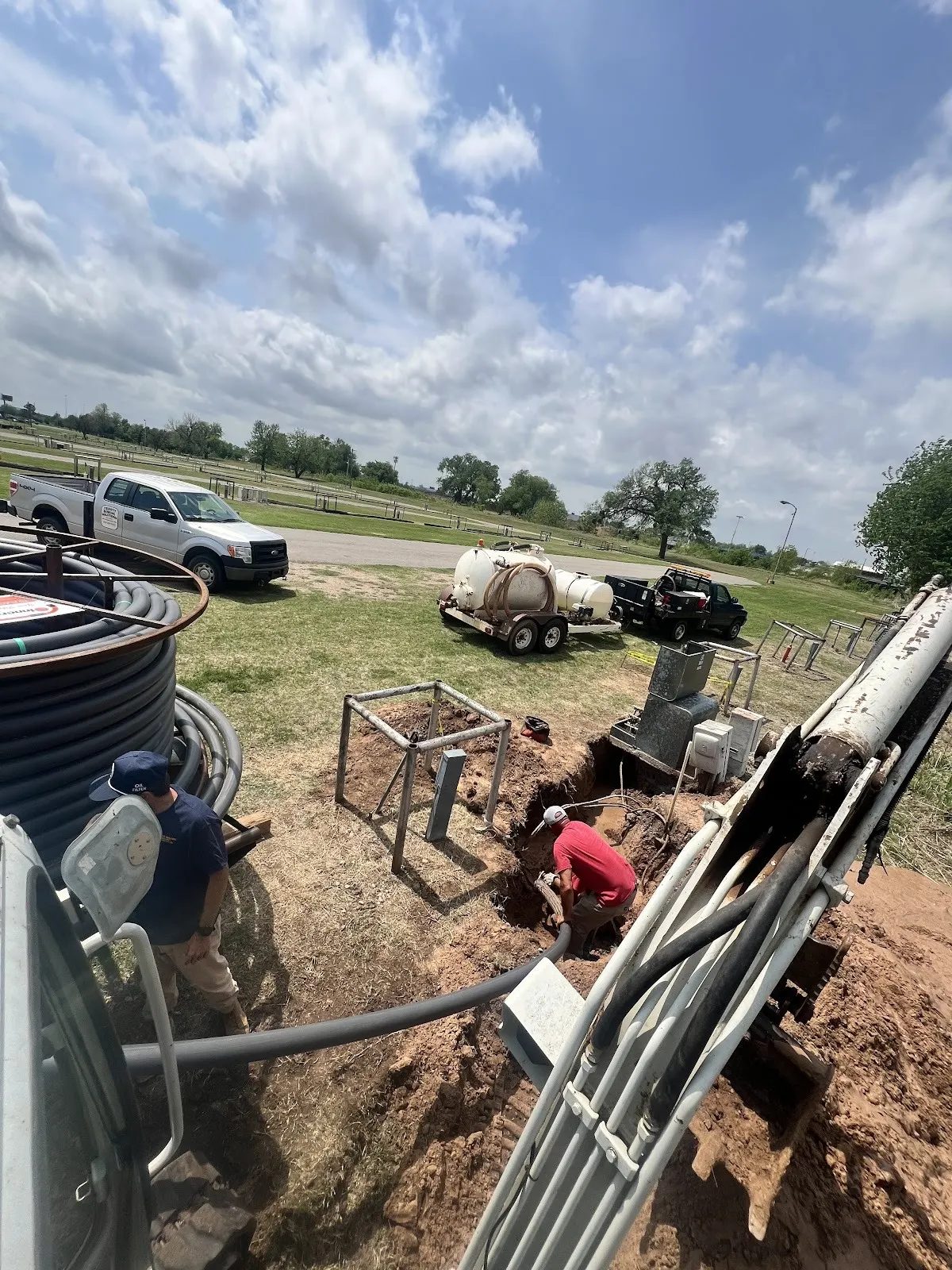
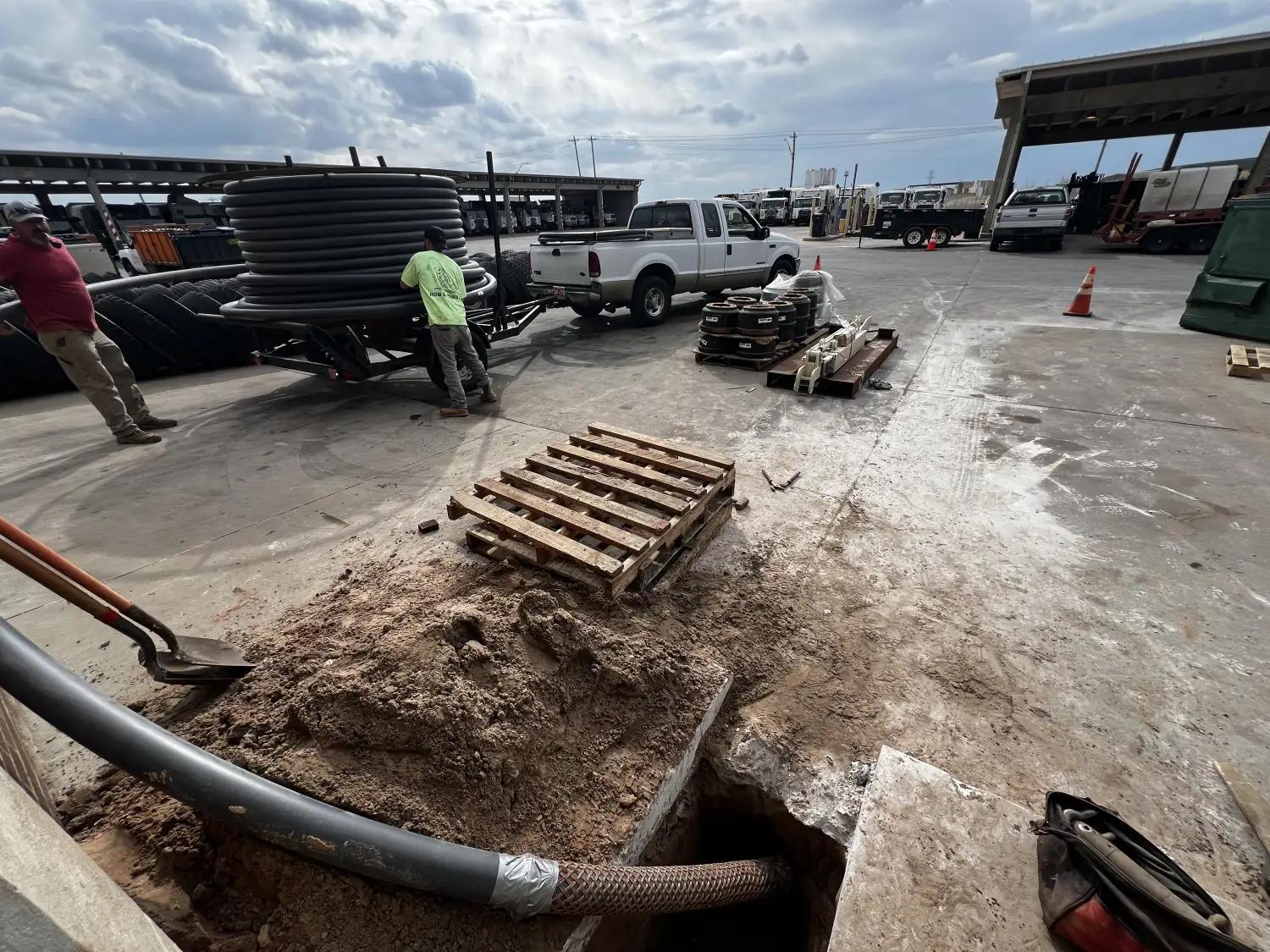
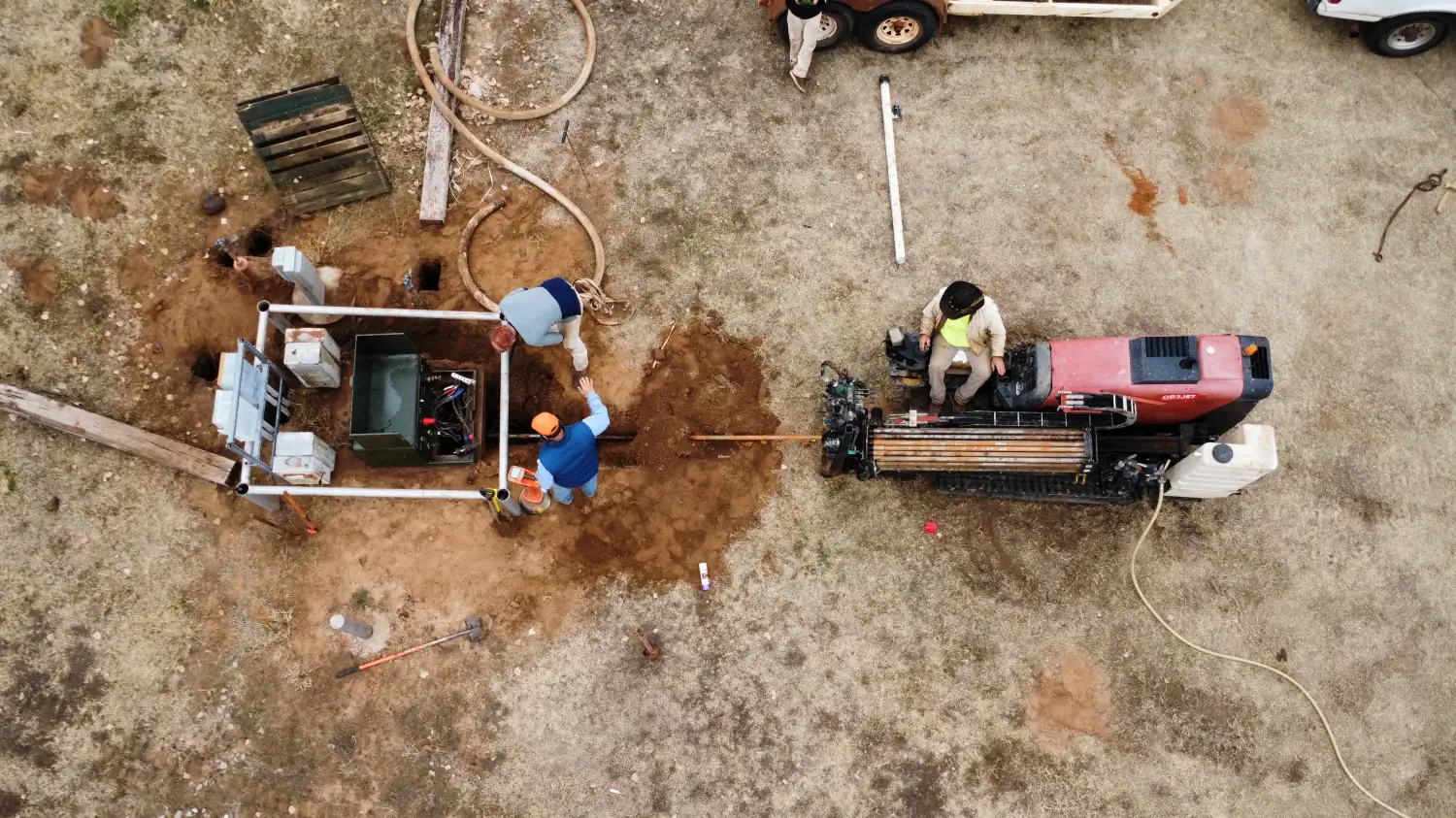
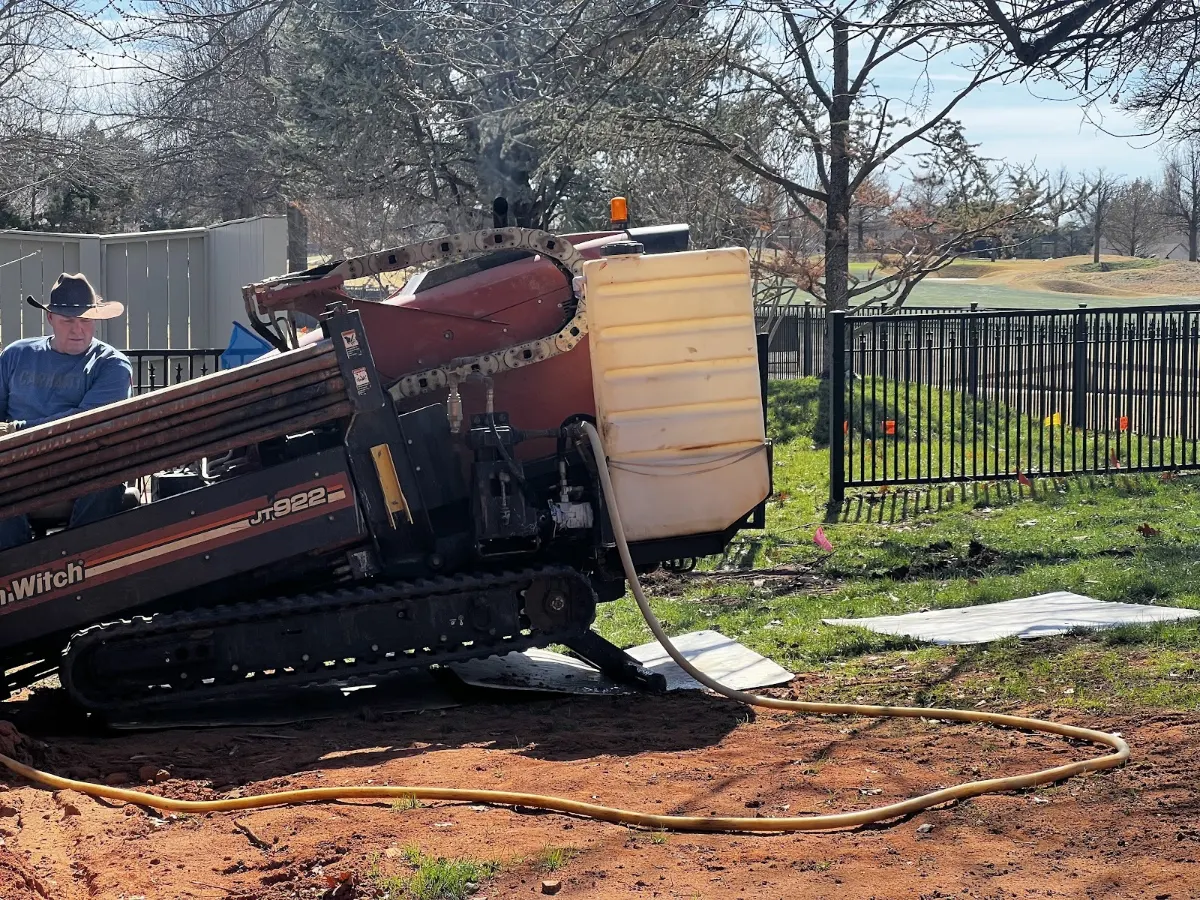
Trinity Boring Solutions crews at work on Oklahoma utility crossings under highways and in challenging site conditions.



What Are ODOT and Railroad Casing Requirements for Utility Crossings?
Understanding the encasement and installation method requirements from the applicable crossing authority is the starting point for every jack and bore project in Oklahoma. Trinity Boring Solutions works within the framework established by ODOT and by the individual railroad engineering departments that govern utility crossings within their right of way.
Oklahoma Department of Transportation
The Oklahoma Department of Transportation utility accommodation policy governs all utility installations within ODOT state highway right of way. ODOT requires steel casing for most pipeline crossings under state highways, specifying the casing outside diameter, wall thickness, installation method, minimum cover depth, and end seal requirements. Utility crossings within ODOT right of way require a utility crossing permit prior to construction.
Railroad Crossing Coordination
Class 1 railroads and most short line railroads in Oklahoma require a railroad crossing agreement and engineering approval for any utility installation crossing their right of way. Most railroad engineering departments require steel casing installed by jack and bore or similar boring and jacking methods. HDD with fluid pressure is generally not acceptable for crossings under active rail lines. We coordinate directly with railroad engineering contacts to confirm requirements before mobilization.
Steel Casing Sizing and Specifications
Steel casing outside diameter is determined by the carrier pipe outside diameter plus the required annular space for casing spacers. Wall thickness is specified by ODOT or the railroad authority based on the highway or railroad loading. Most ODOT specifications reference ASTM A139 or A252 grade steel pipe for casing. Our team confirms casing specifications with the applicable authority before any material procurement begins on a crossing project.
For projects where the utility crosses both ODOT right of way and adjacent county road right of way, separate permits may be required from both ODOT and the county road authority. Oklahoma county commissioners oversee county road right of way, and permit requirements vary by county. Trinity Boring Solutions assists clients in identifying all required permits for a crossing project and coordinates the application process as part of our pre construction scope review.
The North American Society for Trenchless Technology provides engineering guidance on auger boring and jack and bore design that is referenced by utility owners and engineers planning highway and railroad crossings. The national 811 call before you dig system is required before any boring or excavation, including jacking pit excavation, on all jack and bore projects in Oklahoma.
What Does a Jack and Bore Steel Casing Installation Look Like?
Watch these videos to understand how jack and bore steel casing installation works for highway and utility crossings in Oklahoma.
Jack and bore steel casing installation for a water line crossing. Shows the jacking pit setup, casing advancement, and carrier pipe installation process.
An auger boring operation under a highway, demonstrating the steel casing advancement process used for highway utility crossings.
What Is the Jack and Bore Process for Highway and Railroad Crossings?
A thorough, permit compliant process from crossing authority coordination through carrier pipe installation and site cleanup.
Permit and Authority Coordination
We review the crossing authority’s requirements, confirm casing specifications, assist with ODOT or railroad utility crossing permit applications, and confirm all required pre construction approvals are in hand before mobilization. This step prevents costly delays once equipment is on site.
811 and Pre Bore Utility Locates
We call 811 before every project and allow the full required waiting period. Electronic locating equipment is used to verify utility positions in the jacking pit and reception pit areas before any excavation begins. This is required by Oklahoma law and is non negotiable on every project.
Jacking Pit Excavation and Shoring
We excavate the jacking pit on the entry side of the crossing to the required depth and dimensions. Pit walls are shored with trench boxes or other OSHA compliant protective systems for the pit depth and soil classification. The reception pit on the far side is excavated to receive the casing and auger head as they exit.
Machine Setup and Casing Advancement
The auger boring machine is set up in the jacking pit at the correct bore elevation and heading. The lead casing with cutting head is positioned and advanced by rotating the auger while applying hydraulic jacking force. Additional casing sections are welded on and advanced until the lead exits the reception pit. Continuous monitoring of line and grade ensures the casing meets the as built requirements.
Carrier Pipe Installation
After the casing is fully installed and cleaned out, casing spacers are installed on the carrier pipe at the required spacing intervals to center the carrier and maintain the required annular clearance between the carrier outside diameter and the casing inside diameter. The carrier pipe is then pushed or pulled through the casing and connected to the utility system at each end.
End Seals, Backfill, and Restoration
End seals are installed at both ends of the casing per ODOT or railroad specifications to prevent groundwater and soil from entering the annular space. The jacking and reception pits are backfilled with compacted material, and the surface is restored to match the surrounding area. Required permit closeout documentation is submitted to the crossing authority.
How Is Road Bore Casing Sized for a Highway Crossing?
Jack and bore steel casing installations in Oklahoma cover a wide range of utility types and carrier pipe sizes. The casing outside diameter is determined by adding the required annular space to the carrier pipe outside diameter. Most ODOT and railroad specifications require a minimum of 2 inches of annular clearance on each side between the carrier pipe outside diameter and the casing inside diameter, with additional space for casing spacers.
Common jack and bore applications on Oklahoma highway crossings include water service and water main crossings for municipalities and rural water districts, natural gas service line crossings for residential and commercial development, petroleum product pipeline crossings regulated by the Oklahoma Corporation Commission under OCC regulations, electrical conduit crossings for power distribution, and telecommunications conduit crossings for fiber backbone infrastructure.
For water service and sewer projects where jack and bore is required at the highway crossing but HDD or open trench is used on either side, Trinity Boring Solutions coordinates both scopes. The EPA water infrastructure guidance supports the use of cased crossings for water mains under major roads to protect the water supply infrastructure from traffic loading and contamination risk.
- Water service and water main crossings under ODOT state highways
- Natural gas service line crossings requiring steel encasement
- Petroleum product pipeline crossings per OCC and PHMSA requirements
- Electrical conduit crossings beneath high volume state routes
- Telecommunications and fiber conduit crossings under state highways
- Railroad crossings under Class 1 and short line railroad right of way
- Airport crossings under taxiways and airfield pavement
Why Do Utility Owners and Contractors Choose Trinity for Jack and Bore?
Jack and bore highway and railroad crossings are high stakes utility installations where errors in bore alignment, casing sizing, or permit compliance create significant consequences. Trinity Boring Solutions brings the field experience, the equipment capability, and the permit coordination knowledge to execute jack and bore crossings correctly the first time.
ODOT Permit Assistance
We are familiar with ODOT’s utility accommodation policy and assist clients with permit application preparation, casing specification confirmation, and crossing authority coordination. Permit compliance is built into our process from the start of every highway crossing project in Oklahoma.
Railroad Crossing Coordination
We coordinate directly with railroad engineering departments for crossing agreement requirements, casing specifications, and installation method approval. Our team understands that railroad safety requirements are non negotiable and approaches every railroad crossing with the same attention to compliance and safety.
Full Scope Coverage
When a project requires jack and bore at the highway crossing plus HDD or open trench on either side, Trinity Boring Solutions handles all of the underground scope. Single source coordination for the full utility installation scope simplifies project management and keeps the underground work on schedule. Learn about our full range at our HDD services page.
Trench Safety Compliance
Jacking pit excavation and shoring is performed per OSHA 29 CFR 1926 Subpart P requirements for each soil classification and pit depth. We carry the required protective systems and apply the correct sloping or shoring method for every jacking pit based on the excavation depth and soil conditions. OSHA standards for underground construction are available at OSHA.gov.
Carrier Pipe Installation Included
After the steel casing is installed, we install the carrier pipe inside the casing with properly spaced casing insulators and end seals. The full crossing scope from casing installation through carrier pipe and end seals is handled as a single integrated scope, not handed off to a separate contractor.
As Built and Permit Closeout
We provide as built crossing information and support permit closeout documentation requirements for ODOT and railroad crossings. As built records are critical for future utility conflict avoidance and are required by most crossing authorities as a condition of the original crossing permit.
What Other Services Does Trinity Provide Alongside Jack and Bore?
Trinity Boring Solutions provides the full range of underground utility installation services to support highway crossing projects from end to end.
Horizontal Directional Drilling
When HDD is the appropriate method rather than jack and bore, Trinity Boring Solutions operates a large fleet of HDD rigs for directional bore crossings under roads, driveways, waterways, and developed properties.
Pipe and Conduit Installation
HDPE, PVC, and steel casing installation by boring and open trench for water, gas, electric, telecom, and sewer. Material selection guidance and fusion welding for HDPE.
Open Trench Utility Installation
Open trench for utility runs in open ground on either side of highway crossing projects. Mini excavator trenching with proper bedding, backfill, and surface restoration.
Bore Path Planning
Site evaluation and bore path planning for crossings requiring careful utility conflict analysis and routing before boring equipment is mobilized to the highway or railroad crossing site.
Hydrovac Daylighting
Non destructive vacuum excavation for exposing existing utilities in congested crossing areas before boring or jacking pit excavation. Prevents utility damage during crossing installation.
Commercial Boring and Utility Work
Full scope underground utility installation for commercial projects requiring highway crossing permits, multiple utility types, and coordination with ODOT and local authorities.
Free Bore Planner
Plan Your Bore
Type the address of your job. The Bore Planner opens an aerial map at that spot. Drop one pin where the bore starts and one where it ends, tell us what is going in and send the scope to our crew.
Jack and Bore Contractor Oklahoma FAQs
Answers to the questions Oklahoma utility owners and contractors ask most about jack and bore highway and railroad crossings.
What is jack and bore and how does it differ from horizontal directional drilling in Oklahoma?
When does ODOT require steel casing for utility crossings in Oklahoma?
What size steel casing pipe can Trinity Boring Solutions install by jack and bore in Oklahoma?
How deep can jack and bore go in Oklahoma?
Do railroads require jack and bore or can HDD be used for railroad crossings in Oklahoma?
How is the carrier pipe installed inside a steel casing after jack and bore?
What is a jacking pit and how is it set up for jack and bore in Oklahoma?
How long does a highway jack and bore crossing take in Oklahoma?
Does jack and bore require lane closures on Oklahoma highways?
How do I get a jack and bore quote for a highway or railroad crossing in Oklahoma?
Need a Jack and Bore Contractor in Oklahoma?
Call Trinity Boring Solutions or submit a quote request. We perform jack and bore steel casing installations for highway and railroad crossings across Oklahoma and coordinate the full permit and installation process from start to finish.
(405) 409-7423 | darren@trinityboringsolutions.com
Talk to the crew that does the work
Fastest way to a number is a phone call. Tell us where the crossing is and what is going in the ground, and you will get a straight answer on the same call. Bores from 10 feet to just under 4,000 feet in a single shot, with longer runs bored in sections, 3/4 inch service line through 48 inch pipe, anywhere in Oklahoma and Texas. We run 24/7 for main breaks and emergency repairs.
Answered by a person, not a call center.
Would rather not call? Send the details and we will come back with a written quote.