

When you need a reliable bore path planning Oklahoma, Trinity Boring Solutions delivers. We bring the equipment, the crew and the experience to complete your project on time without tearing up the surface. Call (405) 409-7423 or request a free quote online.
Trinity Boring Solutions is Oklahoma’s most trusted provider of bore path planning Oklahoma services. Every project starts with a site assessment to confirm soil conditions and bore path clearance.
When you need bore path planning Oklahoma completed on time and on budget, our crew delivers. We serve the entire state of Oklahoma with licensed and insured crews available 24 hours a day.
Our reputation as a leading bore path planning Oklahoma company comes from consistent results across thousands of completed projects including municipal, commercial and residential work.
Bore Path Planning Oklahoma
Every successful directional bore begins before the rig ever arrives on site. Trinity Boring Solutions provides thorough bore path planning and site assessment for every HDD project in Oklahoma, identifying the safest underground route, coordinating utility locates and establishing the depth profile that keeps the drill on target from start to finish.
The Most Important Step in Any Directional Bore: Bore Path Planning Oklahoma Solutions
When you need bore path planning Oklahoma completed the right way the first time, Trinity Boring Solutions is the company Oklahoma calls. Our crews are licensed, insured and available around the clock for any project size.
Most boring problems happen before the rig ever starts drilling. An incorrect entry point, an unidentified utility in the bore corridor, the wrong depth assumption for a road crossing, or a soil condition that was not evaluated before tooling was selected, all of these create problems that show up mid-bore and cost time, money and sometimes significant rework.
Trinity Boring Solutions builds a thorough bore path planning process into every project we take on, regardless of project size. A residential driveway crossing gets the same professional bore path assessment as a commercial highway crossing. This is why our bore success rate is high and why contractors across Oklahoma come back to us for their next project.
Bore path planning is not an extra service we offer. It is the standard approach behind every bore we perform, and it is one of the key reasons our bores land where they need to land, at the planned depth, with no surface damage and no utility strikes.

What a Professional Bore Path Assessment Covers
Choosing the right bore path planning Oklahoma company means choosing a crew with the right equipment, the right experience and the right commitment to finishing on schedule. That is what Trinity Boring Solutions delivers on every job.
A complete bore path planning assessment addresses every variable that affects bore success: site geometry, underground conflicts, surface obstacles, soil conditions and equipment requirements.
Site Walk and Geometry Review
We walk the planned bore path to identify surface obstacles, property boundaries, access constraints and the physical geometry of the crossing. Entry and exit point options are evaluated based on equipment access, pit placement and bore path angle.
811 Utility Locate Coordination
Utility locate requests are submitted for the project area well in advance of the bore date. All marked utilities in the bore corridor are documented and incorporated into the bore path depth profile to maintain required separations throughout the crossing.
Hydrovac Verification
When utility locate marks indicate utilities near the planned bore path or when utility density makes marks unreliable, we recommend hydrovac daylighting to physically expose and verify utility positions before boring begins.
Soil Condition Assessment
Oklahoma soil conditions vary significantly across the state and within individual project sites. We evaluate soil type at the bore entry and exit points and along the path to select the appropriate drill tooling, drilling fluid and bore speed for conditions encountered.
Bore Depth Profile Design
Required depths are established based on crossing obstacles, utility clearance requirements, local code minimums and frost depth. The depth profile defines the entry angle, path curvature and exit angle for the complete bore run from entry to exit.
Equipment and Tooling Selection
Bore length, pipe diameter, soil conditions and required pullback force determine which rig from our fleet is best matched to the project. Drill tooling is selected based on soil type and the anticipated ground conditions along the planned bore path.


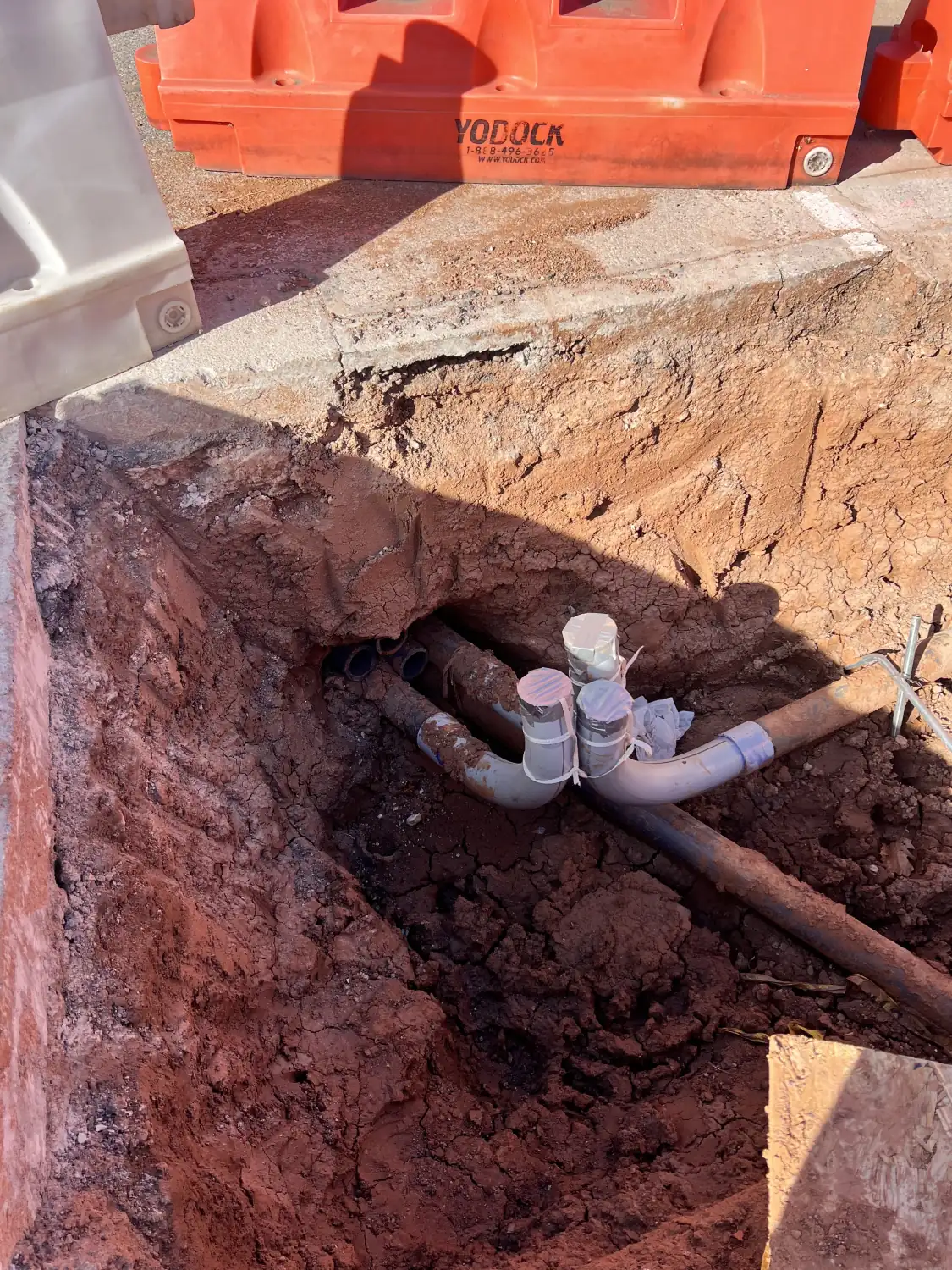

How Oklahoma Soils Affect Bore Path Planning
Choosing the right bore path planning Oklahoma company means choosing a crew with the right equipment, the right experience and the right commitment to finishing on schedule. That is what Trinity Boring Solutions delivers on every job.
Our track record as a bore path planning Oklahoma provider spans thousands of projects across Oklahoma including municipal water main replacements, commercial fiber runs and residential utility installations. We bring the same level of precision to every job regardless of size.
Oklahoma presents a wider range of underground soil conditions than most states. Understanding what is underground before boring begins is critical to selecting the right tooling and predicting bore behavior accurately.
Western Oklahoma: Sandy Loam and Red Beds
Western Oklahoma soils are typically sandy loam and red bed formations. These soils bore relatively easily but can be prone to borehole instability in dry conditions. Bentonite drilling fluid management is critical to maintaining a clean bore path in sandy western Oklahoma soils.
Central Oklahoma: Red Clay and Mixed Formations
The Oklahoma City metro and central Oklahoma region features heavy red clay soils with occasional limestone and sandstone deposits. Red clay requires specific drill tooling and drilling fluid to maintain bore path stability and prevent bit wear. Limestone formations require rock-rated tools.
Eastern Oklahoma: Rock and Hard Formation Zones
Eastern Oklahoma counties contain more significant rock and hard formation zones requiring aggressive rock-rated drill bits and higher torque equipment. Bore path planning in these areas includes rock probability assessment and tooling selection before mobilization.
Our bore path planning process accounts for the specific soil conditions at each project location rather than applying a one-size approach that ignores what the ground will actually do to the drill head.
How We Track the Bore Head Along the Planned Path
Trinity Boring Solutions has built its reputation as the go-to bore path planning Oklahoma team by delivering consistent results with zero surface damage, clean bore paths and on-time completions. Contact us today at (405) 409-7423 to get started.
A bore path plan is only as good as the tracking technology that keeps the drill following it. Our equipment uses sonde transmitters and surface locating receivers to monitor the drill head in real time throughout every bore.
Sonde Transmitter
A sonde transmitter inside the drill head broadcasts a continuous signal. Surface locating equipment picks up this signal and displays drill head depth, pitch angle and azimuth in real time for the operator to monitor and adjust throughout the bore.
Walk-Over Locating
On shallower residential and commercial bores, an operator walks above the bore path with a surface receiver, tracking the drill head position as it advances and calling corrections to the rig operator to maintain depth and direction.
Bore Log Documentation
Depth and position data at regular intervals along the bore is recorded for project documentation. This log confirms the bore followed the planned path and provides the depth record for utility records, permit completion and as-built documentation.
How Directional Drilling Navigation Works Underground
Our track record as a bore path planning Oklahoma provider spans thousands of projects across Oklahoma including municipal water main replacements, commercial fiber runs and residential utility installations. We bring the same level of precision to every job regardless of size.
For bore path planning Oklahoma across the Oklahoma City metro, Tulsa, Lawton, Norman and every surrounding community, Trinity Boring Solutions has the crew, equipment and permits to start fast and finish clean. Call (405) 409-7423 anytime.
Standards for Bore Path Planning and HDD Safety
The demand for reliable bore path planning Oklahoma continues to grow as utilities age and infrastructure expands. Trinity Boring Solutions stays ahead with a modern fleet of Vermeer and Ditch Witch HDD rigs ready for jobs from 2-inch service lines to 24-inch river crossings.
Bore path planning and HDD execution in Oklahoma follows applicable national standards and state regulations for underground utility installation and utility protection.
Directional Drilling Contractor
Full directional drilling services for residential, commercial and municipal projects throughout Oklahoma.
Hydrovac Daylighting
Physical utility verification via vacuum excavation before boring in high-density utility corridors.
Commercial Directional Drilling
Large-scale commercial and public works boring with full bore path planning and documentation.
9102 NW Expressway, Yukon, OK 73099
Phone: (405) 409-7423
Email: darren@trinityboringsolutions.com
Frequently Asked Questions: Bore Path Planning in Oklahoma
What is bore path planning for directional drilling?
Bore path planning is the pre-bore assessment process of identifying the safest and most accurate underground route for a horizontal directional drill. It includes reviewing the project site, coordinating utility locates, assessing soil conditions, determining entry and exit point locations and establishing the depth profile for the bore. Good bore path planning is what separates a successful bore from one that encounters problems mid-job.
Why is bore path planning important before starting HDD work?
Proper bore path planning prevents utility strikes, off-target exits, surface damage and bore failures. Without a defined path plan, the risk of hitting existing underground utilities, encountering unexpected soil obstructions or exiting at the wrong location increases significantly. Most boring problems originate in planning deficiencies that could have been identified and resolved before the rig arrived on site.
What does a professional bore path assessment include?
A bore path assessment includes a site walk, review of project drawings or specifications, 811 utility locate coordination, identification of surface obstacles above the bore path, soil type evaluation at the bore entry and exit areas, entry and exit point selection and a depth profile plan based on required utility clearances, frost depth requirements and the geometry of the crossing obstacle.
How do you locate existing utilities before boring in Oklahoma?
We submit 811 locate requests for every project site. Field technicians from utility companies mark existing underground utilities in the bore corridor. When utility locations are uncertain or utility density is high, we recommend and can perform hydrovac daylighting to physically expose and verify utility positions before boring begins. 811 locates alone are not always sufficient in areas where private utilities or older infrastructure may not be on record.
How do Oklahoma soil conditions affect bore path planning?
Oklahoma soils vary significantly by region, from sandy loam in western counties to heavy red clay and limestone formations in central and eastern areas. Soil type affects drill tooling selection, drilling fluid formulation, bore speed and borehole stability risk. All of these factors are evaluated during the bore path planning phase so the right equipment and materials are on site before boring begins.
Can bore path planning help prevent utility strikes?
Yes. Bore path planning is specifically designed to reduce the risk of inadvertent utility strikes. By identifying existing utilities through 811 locates and physical verification, planning a bore path that maintains required separation from those utilities, and using continuous tracking technology to monitor drill head position throughout the bore, the risk of hitting an existing utility is dramatically reduced compared to unplanned boring operations.
How far in advance should bore path planning happen?
811 utility locate requests in Oklahoma typically require a minimum of 2 to 3 business days for utility companies to mark their facilities in the field. We recommend scheduling bore path planning at least one week before the planned bore date to allow for locate completion and any follow-up actions like hydrovac daylighting near complex utility corridors. For larger commercial or municipal projects, planning should begin several weeks in advance to accommodate permit applications and engineering review.
Do you provide bore path planning for large commercial projects?
Yes. Large commercial and municipal bore projects often require detailed pre-bore planning including engineering review of bore path geometry, coordination with multiple utility owners, road authority permit applications and detailed soil or geotechnical information. We support all phases of the bore path planning process for complex commercial and public works projects in Oklahoma.
What tracking technology do you use to follow the planned bore path?
We use sonde transmitters embedded in the drill head combined with surface locating equipment to track drill head position, depth and orientation in real time throughout the bore. The surface locating system displays depth and pitch information that the rig operator uses to steer the drill head along the planned path. A walk-over tracker following the drill head above ground provides additional position verification for shallower residential and commercial bores.
What happens if the bore path needs to change after the project starts?
If site conditions, utility conflicts or soil conditions require an adjustment to the planned bore path during the project, we assess the alternatives and communicate with your project team before making any changes. Path changes affect entry and exit locations, pipe lengths and utility clearances and must be agreed upon before proceeding. We do not deviate from the planned path without coordination with the contractor, engineer or property owner as appropriate.
Related Boring & Utility Services
- Boring Under Driveway Oklahoma
- Commercial Directional Boring Oklahoma
- Commercial Drilling Oklahoma
- Damage Prevention Safety Oklahoma
- Directional Boring Airport Aviation
- Directional Boring Commercial
- Directional Boring Data Centers
- Directional Boring Fire Line Installation
Where We Work in Oklahoma
New to trenchless construction? Start with our guide: What Is Horizontal Directional Drilling (HDD)?
Talk to the crew that does the work
Fastest way to a number is a phone call. Tell us where the crossing is and what is going in the ground, and you will get a straight answer on the same call. Bores from 10 feet to 5,000 feet, 3/4 inch service line through 48 inch casing, anywhere in Oklahoma and north Texas. We run 24/7 for main breaks and emergency repairs.
Answered by a person, not a call center.
Would rather not call? Send the details and we will come back with a written quote.