
El Paso Texas Directional Boring: A Caliche Cap, Bolson Sand and the Pavement Cut Permit
Quick Answer: Trinity Boring Solutions takes directional boring and horizontal directional drilling (HDD) jobs in El Paso, Texas and across El Paso County. Two things set El Paso apart. The first is the ground: a layer of hard white caliche sits 2 to 4 feet under most of the desert floor, with loose sand and gravel below it and solid rock only at the mountains. The second is the paperwork: the city counts boring as a pavement cut, so a bore needs a Pavement Cut Permit even when no pavement is touched. We work in Oklahoma and Texas with our own Vermeer and Ditch Witch rigs, sent out from Yukon, Oklahoma.
El Paso, Texas bores at a glance
- City and county: El Paso, Texas, the seat of El Paso County. Population 683,012 in the 2025 Census estimate.
- Ground: caliche 2 to 4 feet down and usually 2 to 4 feet thick, over sand, gravel, silt and clay
- Rock: solid rock is limited to the Franklin and Hueco mountains and the hills around them
- City permit: a Pavement Cut Permit, which covers excavating, boring, coring and drilling in the right of way
- On the application: the Texas811 ticket number. No number, no permit.
- Permit life: up to 30 calendar days, with one 30 day extension
- Inspections: scheduled 24 hours before any work
- Fiber bores: paint marks and depths on the ground while the bore is in progress
- State roads: TxDOT El Paso District, covering six far West Texas counties
- Phone answered 24 hours a day: (405) 409-7423
What is under El Paso?
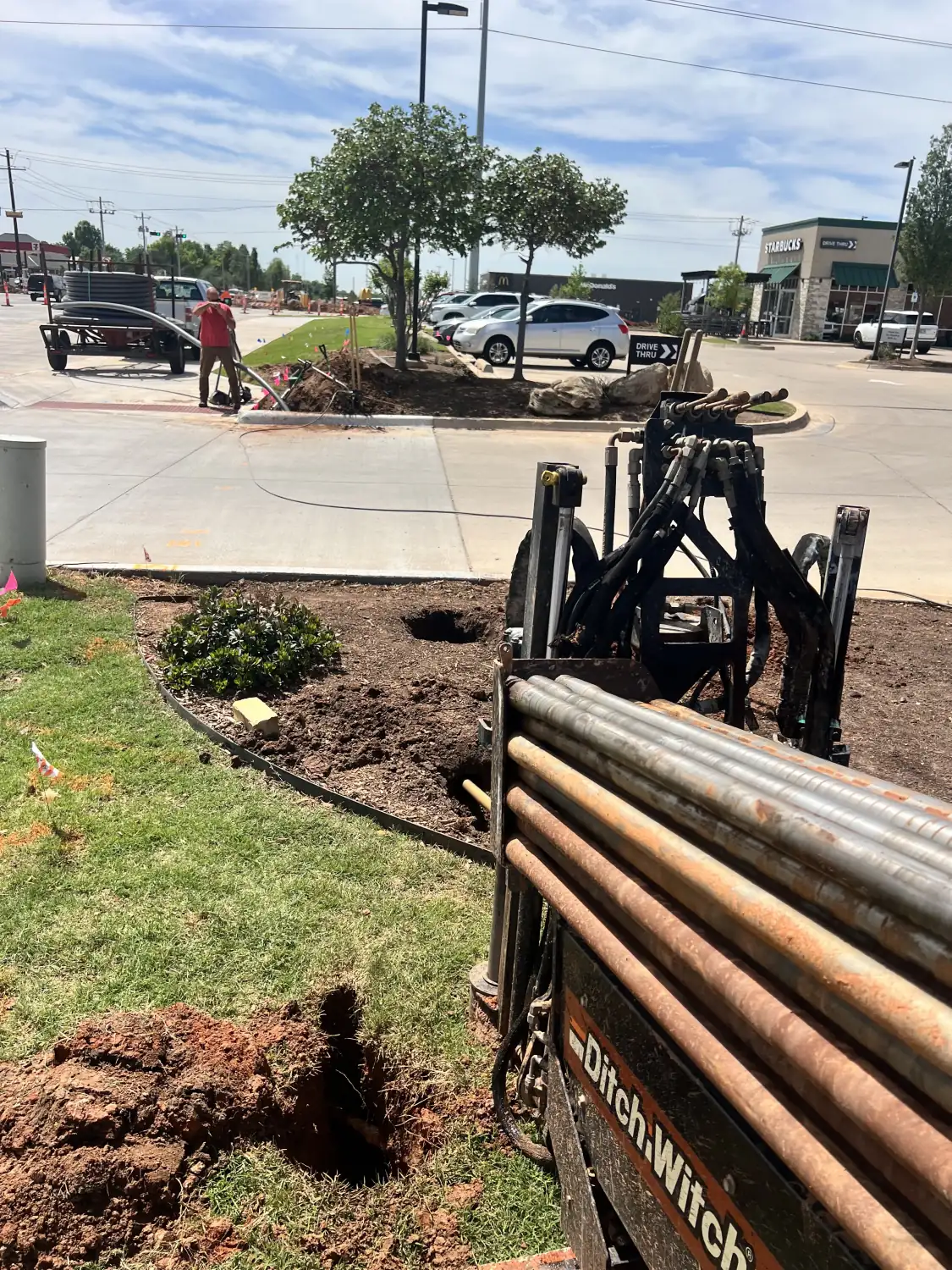
Under most of El Paso is basin fill of sand, gravel, silt and clay, with a hard layer of caliche 2 to 4 feet below the surface. El Paso sits between two desert basins, the Hueco Bolson east of the Franklin Mountains and the Mesilla Bolson west of them. The Texas Water Development Board describes the fill in those basins as silt, sand, gravel and clay, as much as 9,000 feet thick in the Hueco Bolson (Texas Water Development Board). No bore gets anywhere near the bottom of that. What matters is the top ten feet.
The top ten feet is where the caliche is. The U.S. Geological Survey found that caliche lies nearly everywhere beneath the surface of the Hueco Bolson, as a nearly continuous layer of hard white calcium carbonate. It is generally 2 to 4 feet below the surface and generally 2 to 4 feet thick, and in places as much as 8 feet thick (U.S. Geological Survey Water Supply Paper 1426).
Put those numbers next to a utility bore. A line that runs 4 to 6 feet deep is being drilled in the caliche or just under it. The pits have to be dug through it either way.
How does the ground change across the city?
El Paso has three kinds of ground, and which one you get depends on how close the job is to the mountains or the river.
| Where | What the surveys found | How we plan the bore |
|---|---|---|
| The mesa and the open desert floor, east and northeast | Caliche near the surface. Where it is missing, sand or clay covers the surface. Below it, layers of sand, gravel and clay that do not run far in any direction. | An excavator opens the pits through the cap. Below it the sand is loose, so the drilling fluid is mixed heavier to hold the hole open. |
| The slopes at the foot of the Franklin Mountains | The thickest and coarsest sand and gravel in the basin. Poorly sorted gravel washed off the mountains, some of it cemented by caliche. | The hardest boring in town outside of solid rock. Cobbles push a drill head off line, so the pilot hole is steered slowly and checked often. |
| The Rio Grande valley, the Upper and Lower Valley | River deposits: channel sand with beds of silt and clay, laid over the older basin fill. | Softer and faster. Sand and clay take turns, so the fluid mix is watched as the returns change. |
Solid rock is the exception here, not the rule. The old geologic folio for the El Paso district says outcrops of consolidated rock are confined to the Franklin and Hueco mountains and the outlying hills, and that gravel cemented by caliche is easy to see on the outwash slopes just north of the city (U.S. Geological Survey Folio 166). The river and fan deposits are described in a later survey report (U.S. Geological Survey report 02 4108).
Why does a bore need a Pavement Cut Permit in El Paso?
A bore needs a Pavement Cut Permit in El Paso because the city counts boring as a pavement cut. The Streets and Maintenance Department says a pavement cut involves any excavating, boring, coring or drilling in city right of way areas (El Paso Streets and Maintenance). A bore that never breaks the asphalt is still a pavement cut on paper.
The steps, in the order they have to happen:
- Call in the locate first. City code says the permit application has to carry the one call verification number, and an application without it is denied (El Paso City Code 13.08.030).
- File the application with a traffic control plan, proof of insurance and a permit bond. A Traffic Control Permit goes with it.
- Get the license if a utility is involved. The city asks for a Special Privilege License when a telecommunication or utility company is part of the job.
- Book the inspection. Inspections are scheduled 24 hours before any work, and the city takes those requests from 6:00 in the morning to 2:45 in the afternoon, Monday to Friday.
- Finish inside the window. A permit runs no more than 30 calendar days in a row. One 30 day extension is allowed, and it has to be asked for before the first 30 days run out.
Step one has a catch. Texas law does not let a locate request go in more than 14 days before the digging starts (Texas Utilities Code, Chapter 251). The ticket, the application and the start date have to be lined up close together, or the ticket goes stale while the permit is in review. We file the Texas811 ticket for the bore and pass the number to whoever is applying for the permit.
Franchised utilities need the same permit as everyone else, and the permit official can ask for the crossing to be moved if traffic calls for it. El Paso also runs on Mountain Time, an hour behind our office, which matters when an inspection has to be called in by 2:45.
Permits are not part of a Trinity quote. The owner, the utility or the prime contractor holds the permit, and we build the bore to it.
What does El Paso ask for on a fiber bore?
On a fiber bore El Paso asks for the path and the depth of the bore to be marked on the ground while the drill is turning. The part of the city code that covers telecommunications providers in the right of way says all directional boring shall have the locator place bore marks and depths while the bore is in progress, with a paint dot at each stem and a depth at least every other stem (El Paso City Code 15.08.130). A stem is one drill rod. An inspector can walk the line and read where the bore is and how deep.
The same section limits directional boring to Monday through Friday, 7:00 in the morning to 6:00 in the evening, unless the city approves other hours in advance. It also has the provider verify where the existing lines are, side to side and top to bottom, by potholing or hand digging before any excavation or boring.
Where in El Paso do we bore?
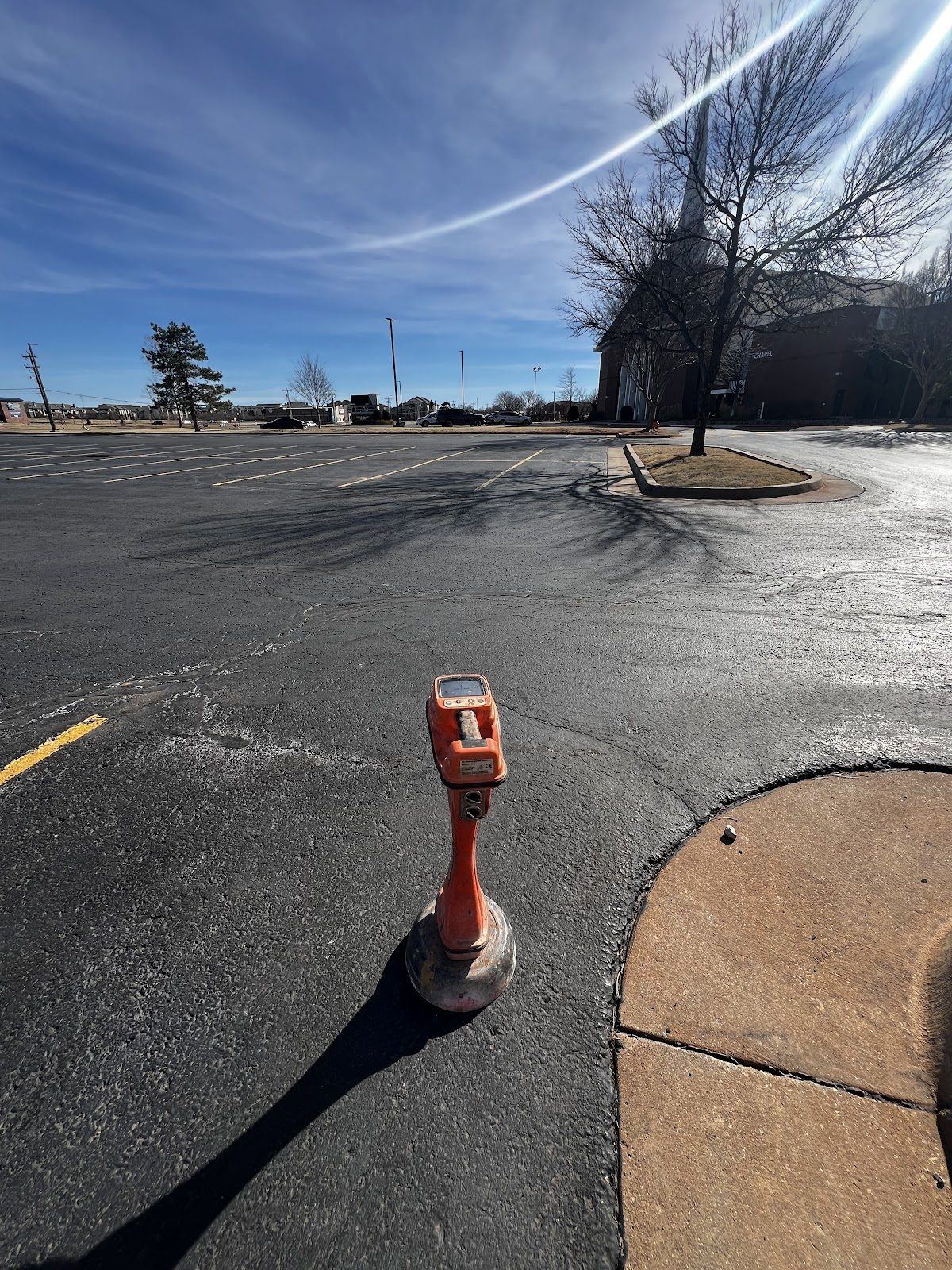
In El Paso we take bores on the Westside and in the Upper Valley, Downtown and Central, in the Northeast, on the Eastside and Far East, and in the Mission Valley. Outside the city limits we take calls from Socorro, Horizon City, San Elizario, Canutillo, Anthony and Vinton.
Underground boring in El Paso covers water and sewer lines, gas lines, power conduit and fiber conduit, drilled under streets, driveways, parking lots, canals and arroyos so the surface stays where it is.
The rest of the county is on our El Paso County page. Sunland Park and Santa Teresa are across the state line. New Mexico has its own one call law and its own highway rules.
What about county roads outside the city?
On county roads outside the city, El Paso County has pipeline crossings jacked and bored with steel casing and does not allow open cuts in the pavement. Those are written county requirements, and they point the same direction as the city rules. Bore pits are not to stay open longer than 14 days, and they are kept at least 10 feet from the edge of the pavement unless the county approves something closer (El Paso County pipeline permit requirements).
Whose lines are in the way?
The lines in the way of an El Paso bore belong to El Paso Water, to El Paso Electric and to the gas, phone and fiber companies marked through Texas811.
- Water and sewer: El Paso Water, the city utility governed by the Public Service Board (El Paso Water). Its rules list boring fees for a new water service that has to cross a dedicated right of way, so a bored service is an ordinary thing here (El Paso Water rules and regulations).
- Electricity: El Paso Electric, which serves the city along with parts of West Texas and southern New Mexico (El Paso Electric).
- Gas, phone and fiber: marked through the same Texas811 ticket.
Operators have 48 hours to mark after the request, not counting weekends and legal holidays. Then we open each crossing with our hydrovac and look at the line before the drill goes past it. Paint shows where a line runs. It does not show how deep the line is, and depth is what a bore has to miss.
What does TxDOT want under Interstate 10, Loop 375 and US 54?
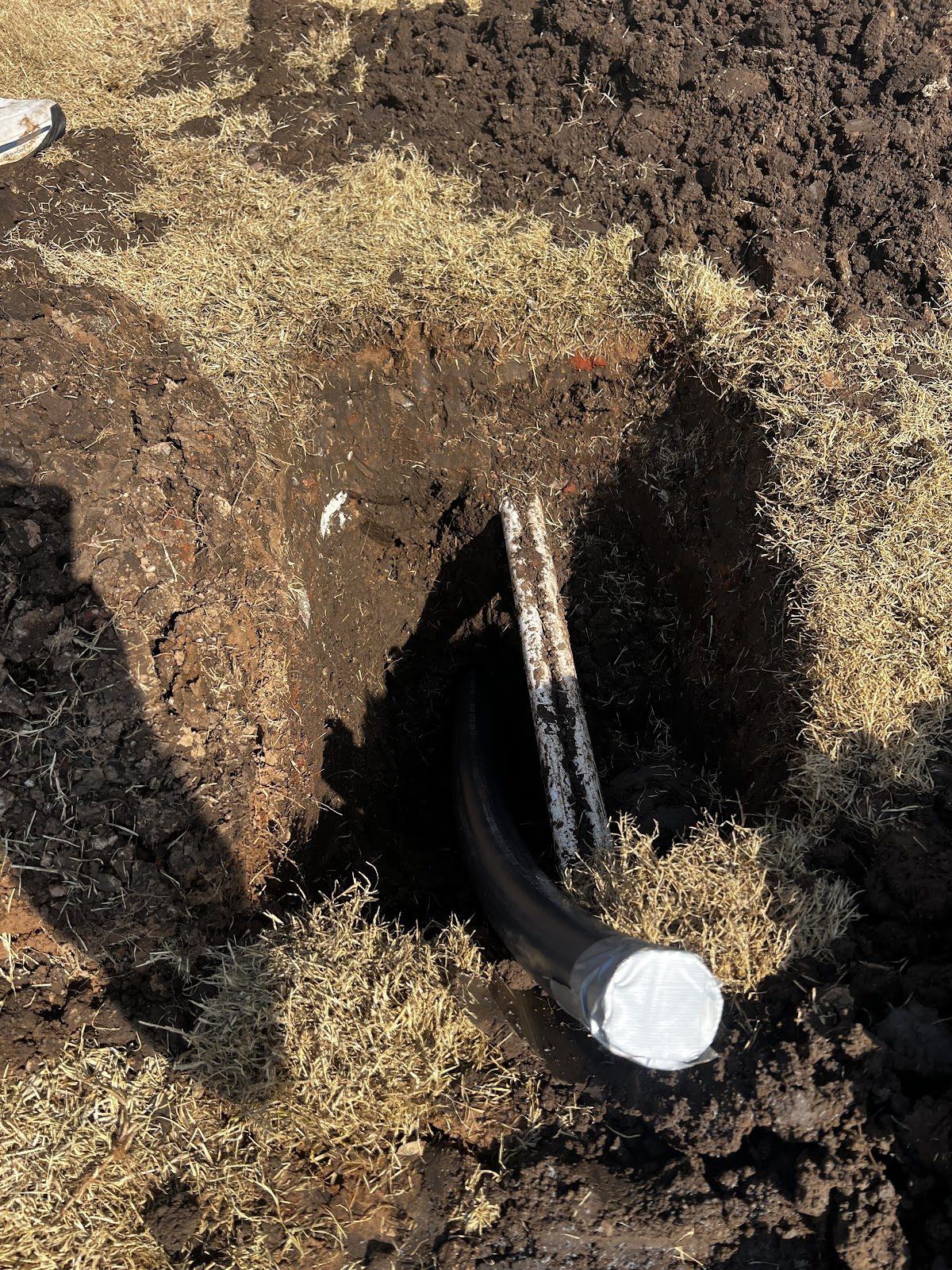
Under Interstate 10, Loop 375 and US 54 in El Paso, TxDOT wants the line bored or tunneled and a state utility permit in hand. The Texas rule for utilities on highway right of way says a line placed under an existing highway is installed by boring or tunneling, and it sets out how the crossing is encased (43 Texas Administrative Code 21.40). On a curbed section the bore runs under the travel lanes and the parking lanes and comes up past the back of the curb and the sidewalk.
El Paso County is one of six counties in the TxDOT El Paso District. The others are Brewster, Culberson, Hudspeth, Jeff Davis and Presidio (TxDOT districts). The utility permit is applied for online in the state system (TxDOT utility installation permits). That permit is separate from the city Pavement Cut Permit, and a job that touches both kinds of road needs both.
How is an El Paso bore priced?
An El Paso bore is priced from its footage and conduit size, then from what the site holds and how far the crew travels. Our yard in Yukon, Oklahoma is about 565 miles from El Paso in a straight line. That is a long move for a rig, a vacuum truck and a crew, so an El Paso job can carry a mobilization fee, and it makes sense to put several bores in one trip when you can.
The bore itself starts from a general range based on the footage and the conduit size. From there the number moves with the site: how thick the caliche is and what is under it, whether the path runs into mountain gravel, how many utilities it crosses, whether concrete has to be cut out, whether an arroyo or a canal is in the way, whether pits need an excavator and sand backfill, and whether the work is routine, high profile or an emergency. When we have looked at all of that you get one price for the whole job.
That price takes in the hydrovac work on the utilities we cross. It leaves out permits. Concrete we cut out is hauled off, and replacing it is not ours.
El Paso boring questions, answered
Does Trinity Boring Solutions do directional boring in El Paso, TX?
Yes. Trinity takes directional boring and horizontal directional drilling (HDD) jobs in El Paso and El Paso County. Trinity works in Oklahoma and Texas with its own rigs, and crews travel from the yard in Yukon, Oklahoma.
Do you need a permit to bore under a street in El Paso?
Yes. The city defines a pavement cut as any excavating, boring, coring or drilling in city right of way, so a bore needs a Pavement Cut Permit and a Traffic Control Permit from the Streets and Maintenance Department.
How long is an El Paso Pavement Cut Permit good for?
An El Paso Pavement Cut Permit is good for no more than 30 consecutive calendar days. One 30 day extension is allowed if it is applied for before the permit expires.
Why does the Texas811 ticket come before the El Paso permit application?
City code requires the one call verification number on the application and denies applications without it. Texas law does not allow a locate request more than 14 days before excavation, so the ticket and the application are timed together. Trinity files the Texas811 ticket for its bores and gives the number to the permit applicant.
How deep is the caliche in El Paso?
The U.S. Geological Survey describes a nearly continuous layer of hard white caliche under the Hueco Bolson, generally 2 to 4 feet below the surface and generally 2 to 4 feet thick, reaching 8 feet in places.
Is there rock under El Paso?
Solid rock is confined to the Franklin and Hueco mountains and the hills around them. Most of the city is on basin fill of sand, gravel, silt and clay. Near the mountains the gravel is coarse and some of it is cemented by caliche.
What does El Paso require on a directional bore for fiber?
City code for telecommunications providers says the locator places bore marks and depths while the bore is in progress, with a paint dot at each stem and a depth at least every other stem. Boring is limited to Monday through Friday, 7:00 a.m. to 6:00 p.m., unless approved in advance.
What does directional boring cost in El Paso?
There is a general range that comes from footage and conduit size. Caliche, gravel, utility crossings, concrete, pit work and urgency move a job within it, and the distance can add a mobilization fee. Trinity quotes one price for the whole job and leaves permits out.
Where the El Paso facts on this page come from
- City of El Paso: Streets and Maintenance Department, pavement cut program
- El Paso City Code 13.08.030: permit application and requirements
- El Paso City Code 15.08.130: right of way used by certificated telecommunications providers
- El Paso County: pipeline permit requirements
- U.S. Geological Survey Water Supply Paper 1426: geology of the Hueco Bolson
- U.S. Geological Survey Geologic Folio 166: El Paso district
- U.S. Geological Survey Water Resources Investigations Report 02 4108
- Texas Water Development Board: Hueco and Mesilla Bolsons Aquifer
- El Paso Water: about the utility
- El Paso Water: rules and regulations
- El Paso Electric: service area
- Texas Utilities Code, Chapter 251: underground facility damage prevention
- 43 Texas Administrative Code 21.40: underground utilities on state highways
- Texas Department of Transportation: districts and their counties
- Texas Department of Transportation: utility installation permits
- U.S. Census Bureau QuickFacts: El Paso
About the author
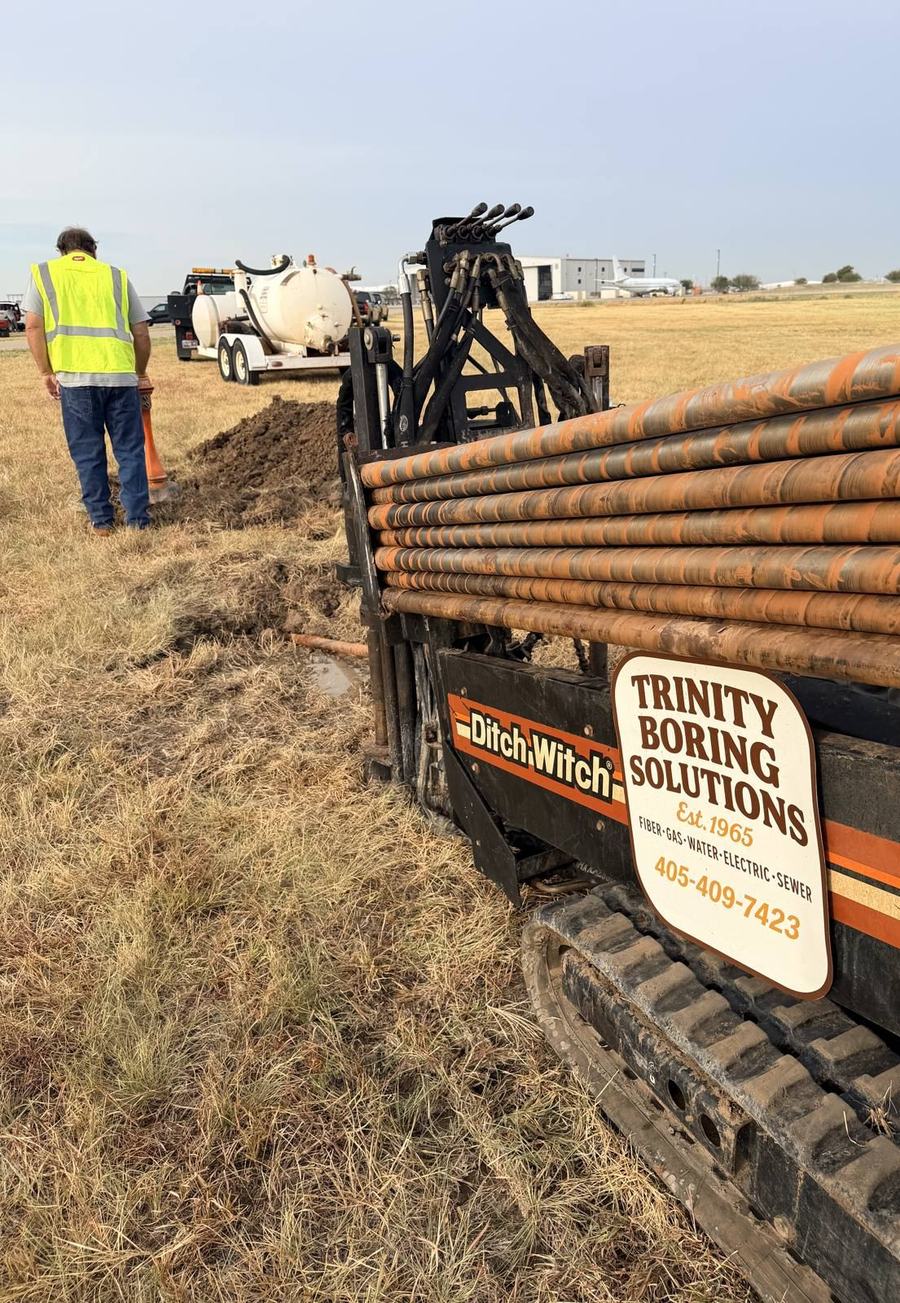
Darren Rice owns Trinity Boring Solutions in Yukon, Oklahoma and serves as its president. Dean Rice founded the family business in 1965, and Darren added directional boring in 1982. His bores have run through sandstone, red clay and river sand across Oklahoma and Texas. He put this page together from the El Paso city code and the geological surveys linked above. Call him at (405) 409-7423.
Get a Quote for a Bore in El Paso
Send the address, what is going in, the conduit size and the footage. If you have more than one crossing, send them together.
Trinity Boring Solutions
9102 NW Expressway, Yukon, OK 73099
(405) 409-7423 | darren@trinityboringsolutions.com
Free Bore Planner
Plan Your Bore in El Paso, Texas
Type the address of your job in El Paso. The Bore Planner opens an aerial map at that spot. Drop one pin where the bore starts and one where it ends, tell us what is going in and send the scope to our crew.
Talk to the crew that does the work
Fastest way to a number is a phone call. Tell us where the crossing is and what is going in the ground, and you will get a straight answer on the same call. Bores from 10 feet to 5,000 feet, 3/4 inch service line through 48 inch casing, anywhere in Oklahoma and Texas. We run 24/7 for main breaks and emergency repairs.
Answered by a person, not a call center.
Would rather not call? Send the details and we will come back with a written quote.
County and State Pages for El Paso
Same county: Socorro · Horizon City · San Elizario · Fort Bliss · Fabens · Homestead Meadows South · Canutillo · Homestead Meadows North · Anthony · Sparks · Westway · Agua Dulce. All counties: Texas county list. All seven states: directional boring service area.