
Plano Texas Directional Boring: Offsets From City Mains, Black Clay and Austin Chalk
Quick Answer: Trinity Boring Solutions takes directional boring and horizontal directional drilling (HDD) jobs in Plano, Texas and across Collin County. Plano is a city where the question is not whether to bore but how close the bore can get. A bore running alongside a water or sewer main stays 9 feet away from a main 12 inches or larger and 5 feet away from one 8 inches or smaller, and every bore keeps 24 inches of vertical separation from city pipes and pavement. The ground is black clay that cracks open in dry weather, with Austin Chalk underneath. We work across Oklahoma and Texas with Vermeer and Ditch Witch rigs we own. Plano is covered from our main yard in Yukon, Oklahoma and from a satellite yard just south in Dallas, run by a partner drilling contractor Trinity has personally vetted.
Plano, Texas bores at a glance
- City and county: Plano, Texas, in Collin County with a small part in Denton County. Population 293,028 in the 2025 Census estimate.
- Running beside a city main: 9 feet off mains 12 inches or larger, 5 feet off mains 8 inches or smaller
- Vertical separation: at least 24 inches from city infrastructure, pavement included
- Crossing a main 12 inches or larger: a profile drawing goes in with the permit
- Pavement: no open trench or pothole for three years after a street is built or resurfaced
- Permit: issued in the name of the agency that will own the line
- Ground: Houston Black clay over weathered and then hard Austin Chalk
- Roads: the city, TxDOT and the North Texas Tollway Authority each permit their own
- Texas811: we file the ticket with at least 48 hours of notice, not counting weekends and legal holidays
- Phone answered 24 hours a day: (405) 409-7423
How close can a bore run to a city main in Plano?
A bore running alongside a Plano water or sewer main has to stay 9 feet from a main 12 inches or larger and 5 feet from a main 8 inches or smaller. Plano publishes guidelines for franchise right of way permits, and they are written around keeping new lines off the city water and sewer system (City of Plano franchise right of way permit guidelines).
| Where the bore is | What Plano requires |
|---|---|
| Running lengthwise beside a water or sewer main 12 inches or larger | No directional bore within 9 feet of the main |
| Running lengthwise beside a main 8 inches or smaller | No directional bore within 5 feet of the main |
| Crossing a water or sewer line 12 inches or larger | A profile drawing of the crossing with the application |
| Passing over or under any city infrastructure, pavement included | At least 24 inches of vertical separation |
| On the drawings | The bore diameter and the start and end points of each bore, on 11 by 17 sheets |
The 9 foot rule decides more routes than anything else on that list. A parkway strip with a 12 inch water main in it may not have 9 clear feet on either side, and then the line has to move to the other side of the street. We look for the mains before we sketch a path, not after. The city gives out its record drawings on request, and the depth on those drawings is what the profile is built from.
The 24 inches from pavement is easy to overlook. It puts the top of the bore at least 2 feet under the pavement, whatever depth the utility itself asks for.
Whose name goes on a Plano permit?
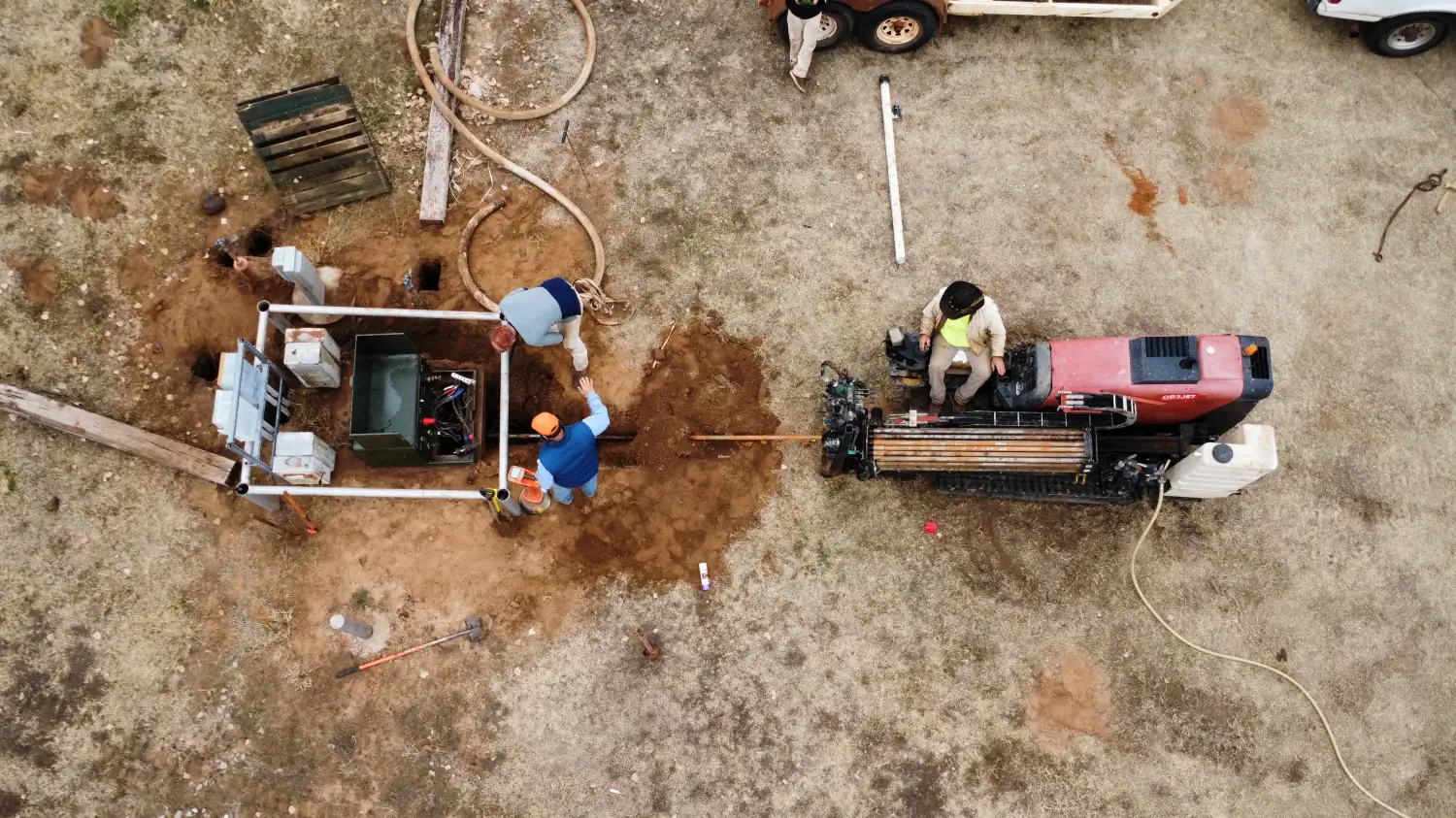
A Plano permit is issued in the name of the agency that will own the line, not the contractor who drills it. A contractor can sign the application only with written authorization from that agency. So before we drill for a fiber company or a gas utility in Plano, the permit is theirs and a letter from them covers the contractor.
The city code backs this up. No one cuts pavement or excavates in the right of way without a permit from the engineering department, apart from an emergency, and a copy of the approved permit is kept at the work site (Plano Code of Ordinances, Chapter 19; Plano engineering permits). An excavation deeper than 5 feet needs excavation safety plans.
Permits are outside our price. The agency or its prime contractor carries them, and we supply the bore details the drawings need.
What is the three year pavement rule?
For three years after a street is built or resurfaced, Plano does not allow open trench excavation or potholing in that pavement. The code lists the conditions for an exception, and one of them is that boring or jacking without disturbing the pavement is not practical. In other words the city expects a bore first and wants to hear why not.
The word potholing in that rule matters to a driller. On a street inside its three years, the lines cannot be exposed through the pavement. They get exposed behind the curb, in the parkway, and the bore is planned from what is found there.
Who permits which road in Plano?
Three different owners permit the roads in Plano: the city, the state and the North Texas Tollway Authority. The big roads here are not all the state’s. US 75 runs down the east side of the city and the Dallas North Tollway down the west. The President George Bush Turnpike crosses the south end and the Sam Rayburn Tollway the north end (Wikipedia: Plano, Texas).
| Road | Who authorizes a utility crossing |
|---|---|
| City streets | City of Plano engineering department |
| US 75 and Preston Road, which is State Highway 289 | TxDOT Dallas District |
| Dallas North Tollway and President George Bush Turnpike | North Texas Tollway Authority, in writing |
| Sam Rayburn Tollway, which is State Highway 121 | The tollway authority for the toll lanes. TxDOT handles utility permits within the frontage roads. |
The tollway authority policy is short on this point: any occupancy of toll road right of way by a public or private utility has to be authorized by the authority, and no construction starts until that approval is in writing (North Texas Tollway Authority utility policy). The split on State Highway 121 comes from the project agreement between the authority and the state (SH 121 Project Agreement).
On the state roads the Texas rule applies. A utility under an existing highway is bored or tunneled, and the rule spells out the casing for the crossing (43 Texas Administrative Code 21.40). Collin and Denton counties are both in the TxDOT Dallas District, along with Dallas, Ellis, Kaufman, Navarro and Rockwall (TxDOT districts), and the application goes through the state online permit system (TxDOT utility installation permits).
What ground will a bore hit in Plano?
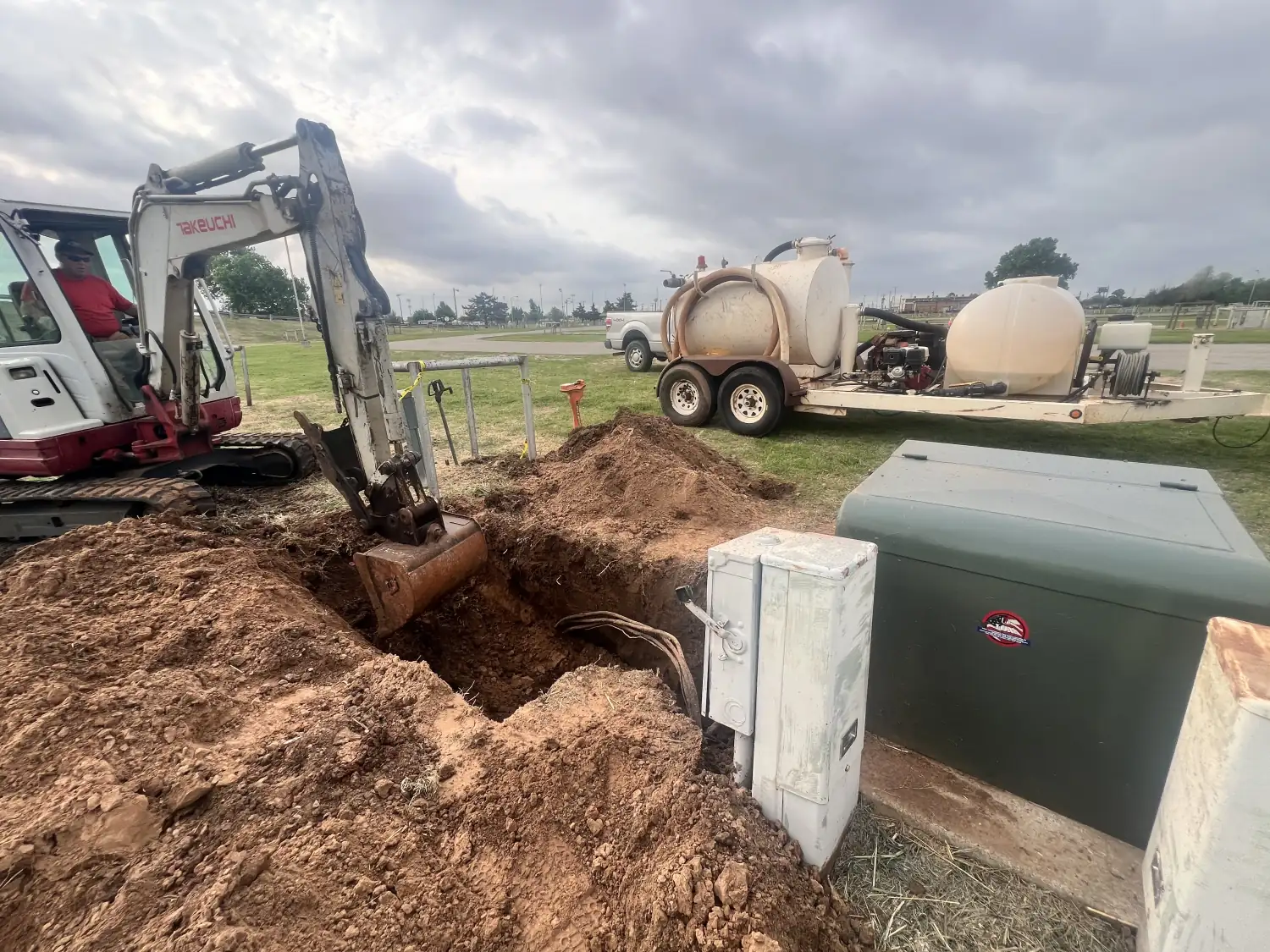
Plano ground is black clay on top with Austin Chalk below it. Collin County lies almost entirely in the Blackland Prairie, and the Handbook of Texas describes its central and western parts as deep clayey soils over marl and chalk (Handbook of Texas: Collin County).
The clay has a name, Houston Black. The USDA describes it as very deep and very slowly permeable, formed from Cretaceous mudstone, with a high shrink and swell potential. When it dries it cracks. The cracks are half an inch to 4 inches wide, run a foot or more deep, and stay open 90 to 150 days in most years (USDA Houston Black soil series).
Under the clay is the Austin Chalk, a body of chalk and marl about 600 feet thick that the U.S. Geological Survey maps in Collin County (U.S. Geological Survey: Austin Chalk). How far down it starts is the question on every Plano bore. One set of test borings gives a real answer. When Preston Road was widened through Plano, the borings for TxDOT logged this (TxDOT geotechnical report, Preston Road):
- Fill of clay and sandy clay with gravel, asphalt and limestone pieces, down to between 2.5 and 9.5 feet
- Native clay below the fill, down to 7 to 10 feet
- Tan weathered limestone, moderately hard, down to 12 to 15 feet
- Gray unweathered limestone, hard, from there down
That is one site, and the depths move from block to block. It still shows the pattern. A street crossing at 4 to 6 feet is usually a clay bore. A bore pushed deeper to get 24 inches under a large main or under a creek can reach the weathered chalk, and that changes the tooling and the time. The tollway authority found the same pairing at the turnpike and Plano Parkway: Austin Chalk bedrock with Houston Black soil on it (North Texas Tollway Authority impacts assessment).
Two habits come from this ground. In dry months a cracked clay can let drilling fluid find its way toward the surface, so the returns are watched and the pressure kept down under pavement. And fill is not clay. Old road fill with asphalt and rock in it steers differently from native soil, and those Preston Road borings found fill as deep as 9.5 feet.
Where in Plano do we bore?
We take bores in every part of Plano: East Plano and the downtown blocks along US 75, central Plano, West Plano and the Legacy business district out by the Dallas North Tollway, and the east side toward Rowlett Creek. Around the city we take calls from Allen, Frisco, McKinney, Richardson, Murphy and Carrollton.
Plano builders and utilities hire a directional boring company like ours for water lines, sewer force mains, gas lines, electric conduit and fiber conduit. The line goes under a street, a driveway, a parking lot or a creek, and the surface above it is left alone.
Plano is about 17 miles north of downtown Dallas. Our pages for Frisco, McKinney and Dallas cover the cities around it, and the Collin County page covers the county.
How are the lines found before a Plano bore?
Before a Plano bore the lines are marked through Texas811 and then exposed with our hydrovac, and the ticket is ours to file. The law gives a window: the request is made at least 48 hours ahead of the excavation and not more than 14 days ahead, and weekends and legal holidays are not counted in the 48 hours (Texas Utilities Code, Chapter 251). The utility owners then have 48 hours to mark.
Marks are a start. Plano’s offsets are measured in feet and inches from real pipe, so each line the bore crosses is opened with our hydrovac and measured. That daylighting is included in what we quote.
How does Trinity work out a price in Plano?
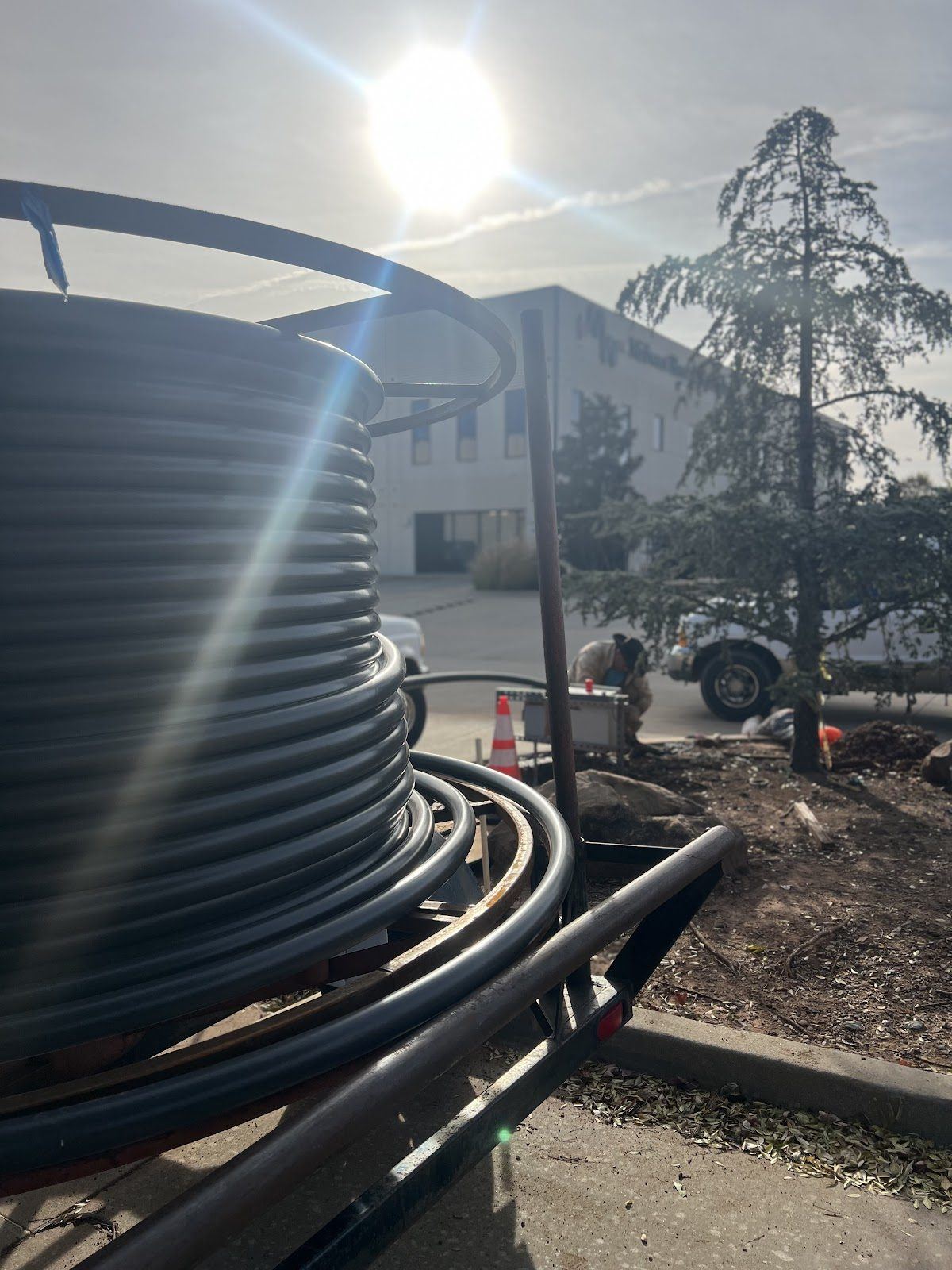
We work out a Plano price from two numbers first, the footage and the conduit size. Those give a general range. Then we go through the job the way we would walk it:
- What is the soil, and does the depth put any of the bore in chalk?
- How many utilities does it cross, and how many city mains does it have to stay off?
- Is there concrete to cut out for a pit?
- Is there a creek or a drainage channel to go under?
- Do the pits need an excavator and sand backfill?
- Is it routine work, a high profile site such as a corporate campus or a tollway frontage, or an emergency?
The answers turn the range into one price for the whole job. A site well outside the city, with nothing near it, can add a mobilization fee. Exposing the crossed utilities is in the price. Permits are not. Where we cut out concrete we remove it, and putting it back is not part of our work.
Plano boring questions, answered
Does Trinity Boring Solutions do directional boring in Plano, TX?
Yes. Trinity takes directional boring and horizontal directional drilling (HDD) jobs in Plano and across Collin County. Trinity works in Oklahoma and Texas. Rigs and crews are based in Yukon, Oklahoma, with a satellite yard in Dallas that is run by a partner drilling contractor Trinity has personally vetted.
How far does a directional bore have to stay from a water or sewer main in Plano?
A bore running lengthwise may not be within 9 feet of a water or sewer main 12 inches or larger, or within 5 feet of a main 8 inches or smaller. Every bore keeps at least 24 inches of vertical separation from city infrastructure.
Does Plano require a profile drawing for a bore?
Yes, Plano requires a profile drawing where a bore crosses a water or sewer line 12 inches or larger. The drawings also show the bore diameter and the start and end points of each bore.
Who applies for a right of way permit in Plano?
The permit is issued in the name of the agency that will own the facilities. A contractor needs written authorization from that agency to sign the application.
Can a new street be cut or potholed in Plano?
A new street in Plano cannot be trenched or potholed for three years after construction or resurfacing, unless the conditions in the city code are met. One of those conditions is that boring or jacking without disturbing the pavement is not practical.
Who permits a utility crossing of the Dallas North Tollway or the George Bush Turnpike?
The North Texas Tollway Authority permits a utility crossing of the Dallas North Tollway or the President George Bush Turnpike. Its policy says any utility occupancy of toll road right of way must be authorized by the authority in writing. On State Highway 121, TxDOT handles utility permits within the frontage roads.
How deep is the chalk under Plano?
The depth to the chalk under Plano varies from place to place. Test borings for the Preston Road widening found fill and clay down to 7 to 10 feet, weathered limestone to 12 to 15 feet and hard gray limestone of the Austin Chalk below that.
What does directional boring cost in Plano?
Footage and conduit size set a general range. Clay or chalk, the utilities and city mains in the way, concrete, creek crossings, pit work and the kind of job decide the number. Trinity gives one price for the whole job, without permits.
Where the Plano facts on this page come from
- City of Plano: franchise right of way permit guidelines
- Plano Code of Ordinances, Chapter 19: streets and sidewalks
- City of Plano: engineering permit requirements
- North Texas Tollway Authority: utility policy for toll road right of way
- North Texas Tollway Authority and TxDOT: SH 121 Project Agreement
- North Texas Tollway Authority: impacts assessment, President George Bush Turnpike at Plano Parkway
- TxDOT Dallas District: geotechnical report for the Preston Road (SH 289) expansion
- USDA Natural Resources Conservation Service: Houston Black soil series
- U.S. Geological Survey: Austin Chalk
- Texas State Historical Association, Handbook of Texas: Collin County
- Texas Utilities Code, Chapter 251: underground facility damage prevention
- 43 Texas Administrative Code 21.40: underground utilities on state highways
- Texas Department of Transportation: districts and their counties
- Texas Department of Transportation: utility installation permits
- U.S. Census Bureau QuickFacts: Plano
- Wikipedia: Plano, Texas
About the author
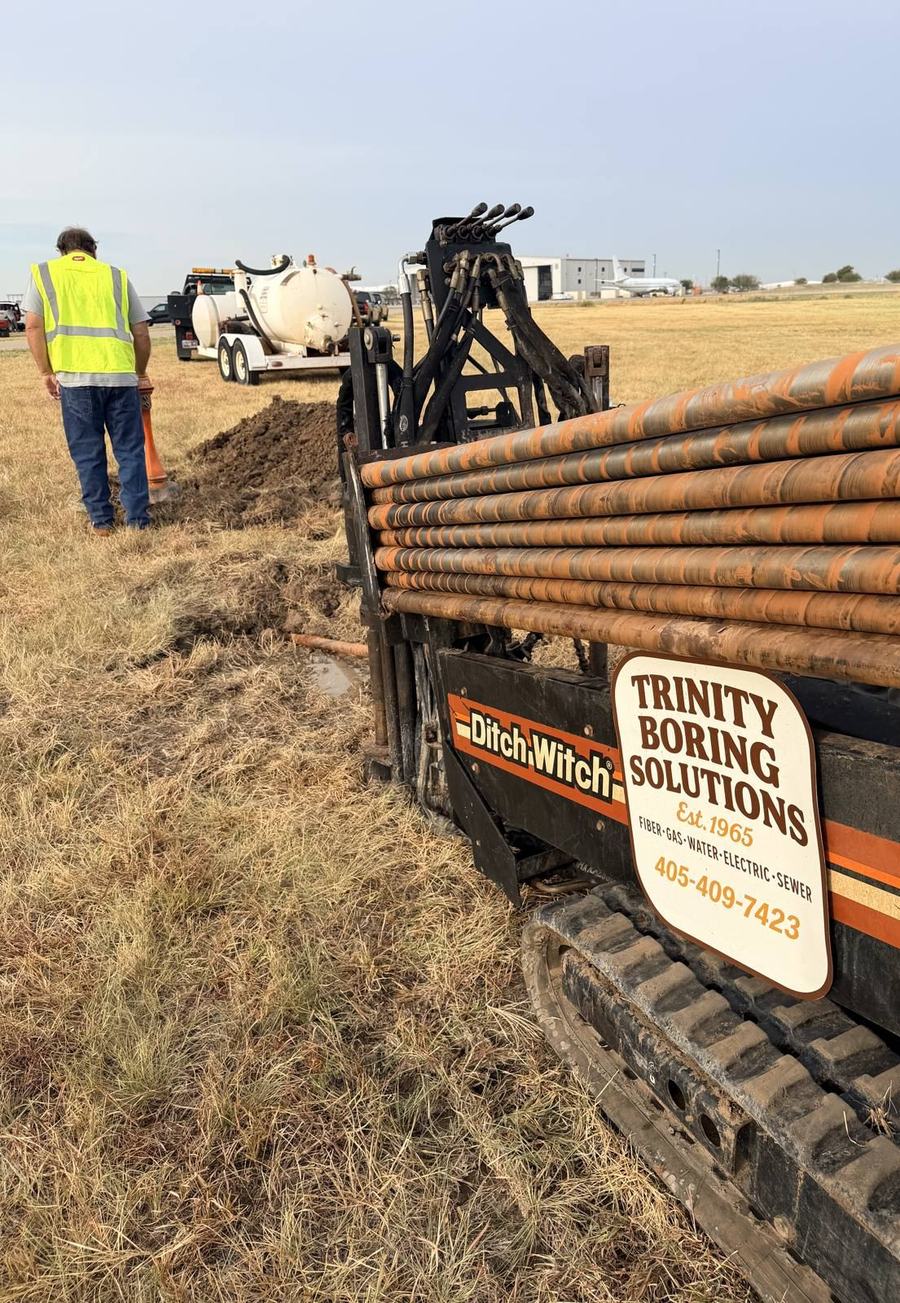
Darren Rice runs Trinity Boring Solutions as its owner and president. The company is a family business in Yukon, Oklahoma, founded by Dean Rice in 1965, and Darren has led its directional boring work since 1982, in clay, sand and sandstone across Oklahoma and Texas. The Plano rules and soil facts here are taken from the city, state and federal documents linked above. He can be reached at (405) 409-7423.
Get a Quote for a Bore in Plano
Send the address, what is going in, the conduit size and the footage, and any city mains you know are in the parkway.
Trinity Boring Solutions
9102 NW Expressway, Yukon, OK 73099
(405) 409-7423 | darren@trinityboringsolutions.com
Free Bore Planner
Plan Your Bore in Plano, Texas
Type the address of your job in Plano. The Bore Planner opens an aerial map at that spot. Drop one pin where the bore starts and one where it ends, tell us what is going in and send the scope to our crew.
Talk to the crew that does the work
Fastest way to a number is a phone call. Tell us where the crossing is and what is going in the ground, and you will get a straight answer on the same call. Bores from 10 feet to 5,000 feet, 3/4 inch service line through 48 inch casing, anywhere in Oklahoma and Texas. We run 24/7 for main breaks and emergency repairs.
Answered by a person, not a call center.
Would rather not call? Send the details and we will come back with a written quote.
County and State Pages for Plano
Same county: Allen · Wylie · Celina · Richardson · Princeton · Prosper · Anna · Melissa · Murphy · Sachse · Fairview · Lucas. All counties: Texas county list. All seven states: directional boring service area.