
Field Notes · FAA / Aviation
Case Study: 840 Feet of FAA Conduit Bored Under Runways at Will Rogers World Airport
By Trinity Boring Solutions · Yukon, Oklahoma · 5.0★ from 49 reviews
There is no version of an airport project where you get to cut the runway. Federally funded pavement does not get trenched, navigational aid circuits do not get guessed at, and an active airfield does not shut down because a contractor needs to get a conduit from one side to the other. That is exactly the situation Trinity Boring Solutions was brought in to solve at Will Rogers World Airport in Oklahoma City.
The job: approximately 840 feet of 2 inch conduit installed by horizontal directional drilling beneath an active taxi runway and two airport service roads, performed under an FAA Nav Aids 17L/35R revocable permit covering the RGR ALS, RGR GS and RGR LOC navigational aid sites. Zero pavement cuts, zero runway closures, zero interruption to airfield operations.
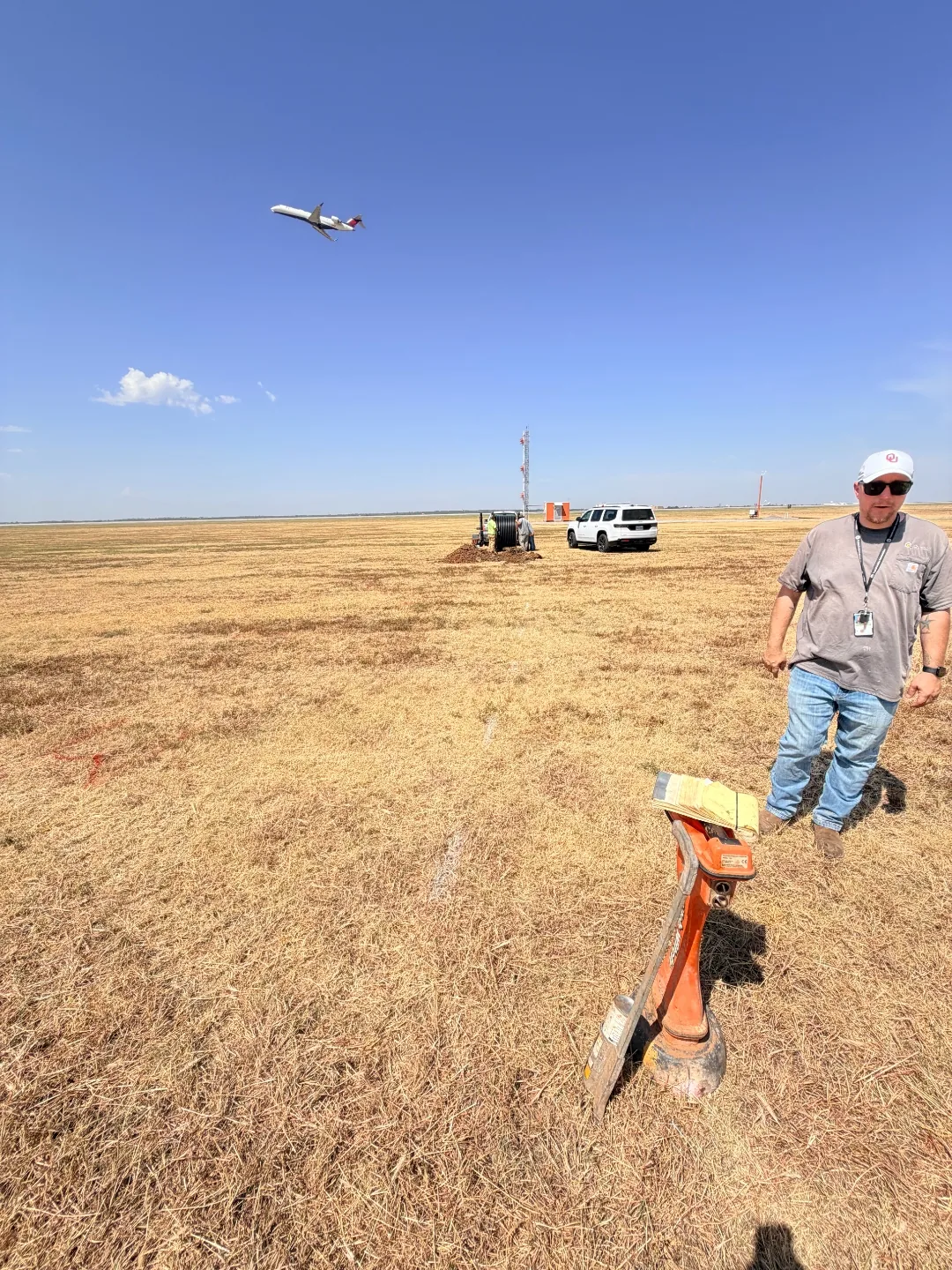
The Challenge: A Federal Airfield Does Not Stop for Utility Work
The conduit run had to reach navigational aid equipment on the far side of an active taxi runway and two airport service roads. Open cutting was never on the table. Cutting airfield pavement means closing the surface, damaging a federally funded asset, and building a permanent seam into a runway environment where surface integrity is a safety item. On top of that, the corridor was full of live airfield circuits, duct banks and lighting cans that could not be nicked.
The paperwork was its own project. Before a drill head ever turned, Trinity Boring Solutions had to produce an Oklahoma Certificate of Good Standing, airport grade certificates of insurance naming the correct holders, a signed and notarized co permittee page, and approved access for every crew member on the airfield. This is the part of federal and government directional boring that quietly eliminates most utility contractors before the bid is even scored.
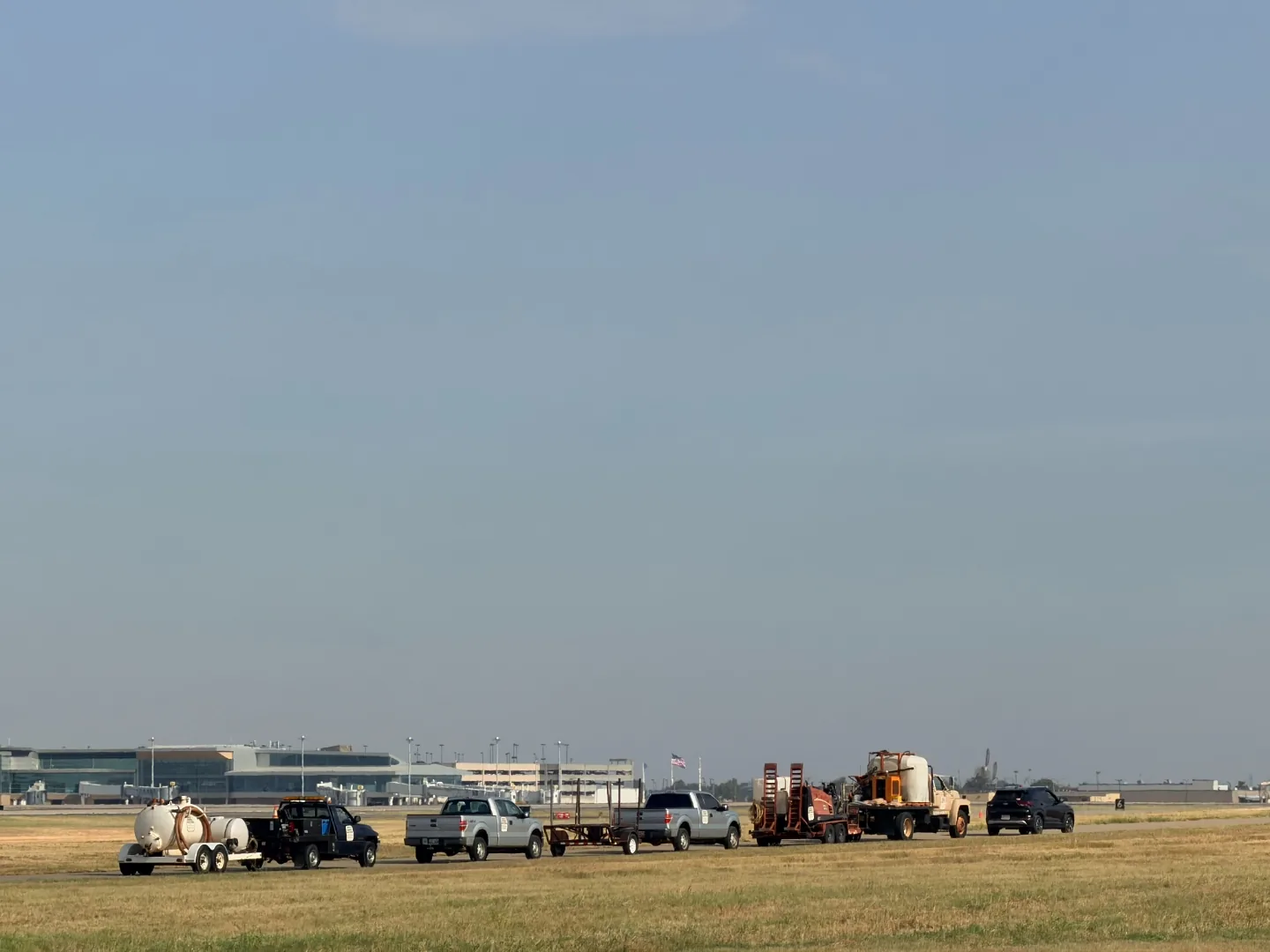
The Approach: Locate Everything, Then Drill Under It
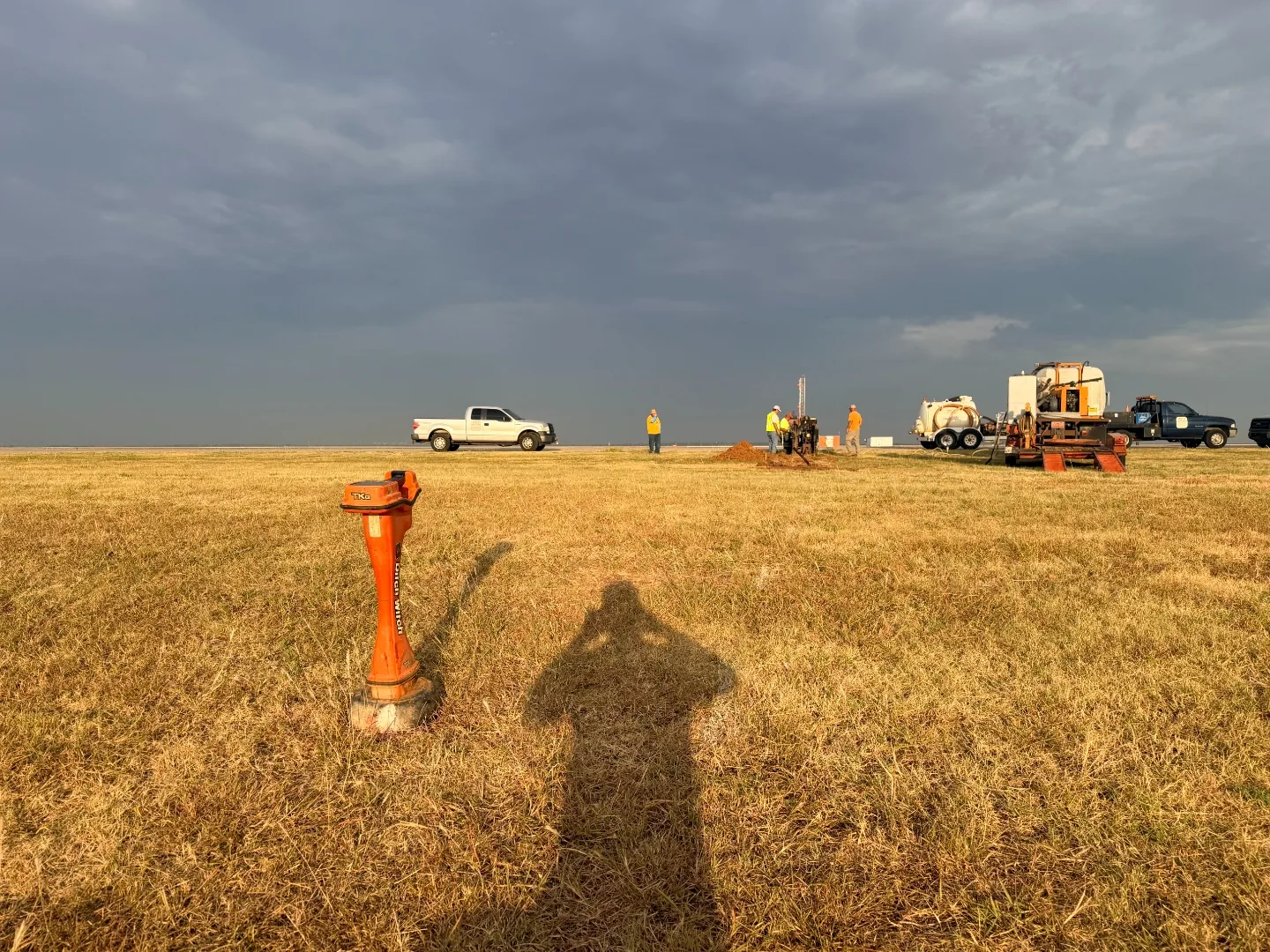
Every existing line in the bore corridor was positively located and physically exposed before drilling. Hydrovac daylighting let the crew see the actual depth and alignment of live airfield circuits instead of trusting a paint mark on the grass. On an airfield, a strike is not an inconvenience, it is an outage on equipment pilots depend on.
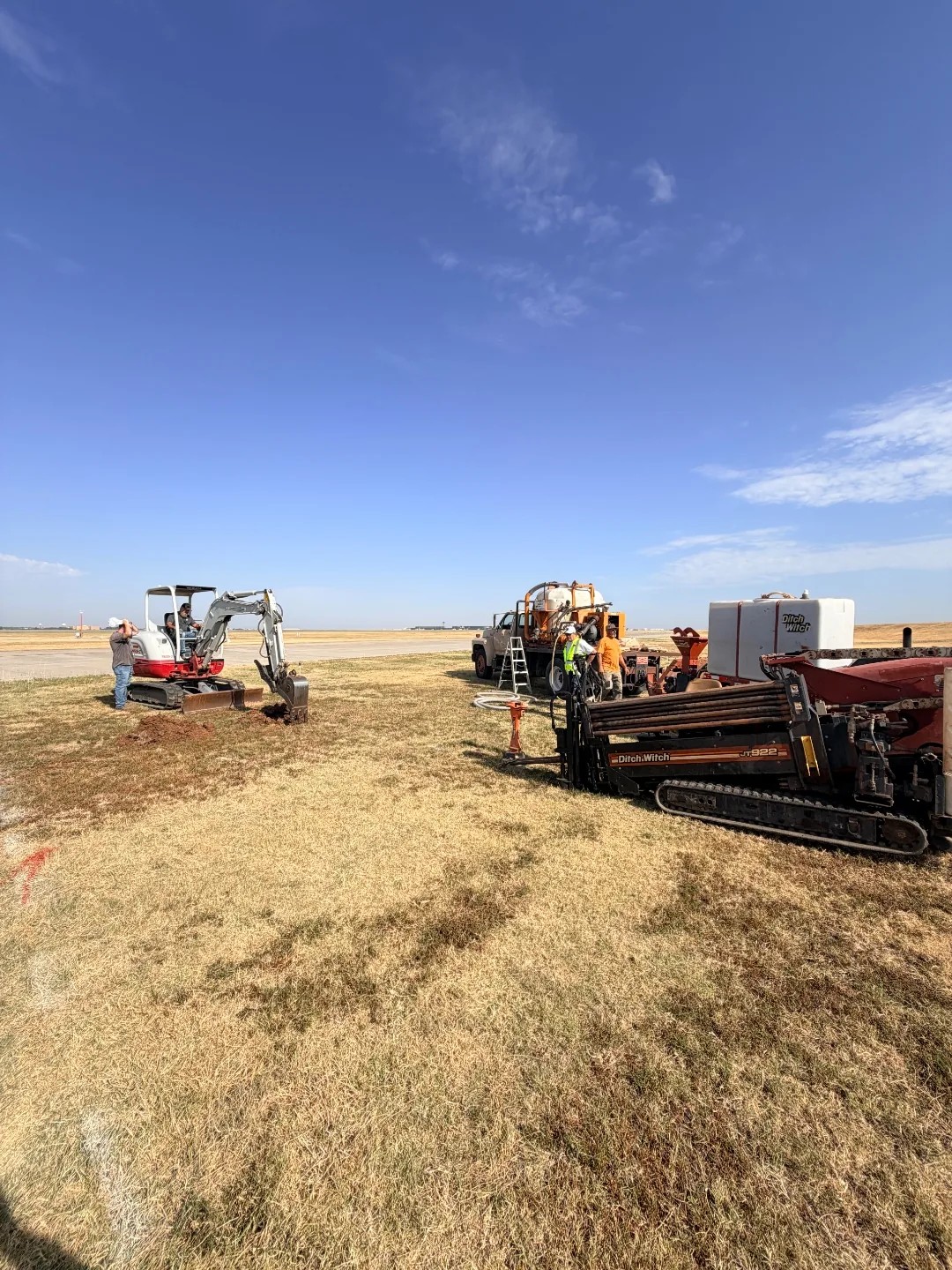
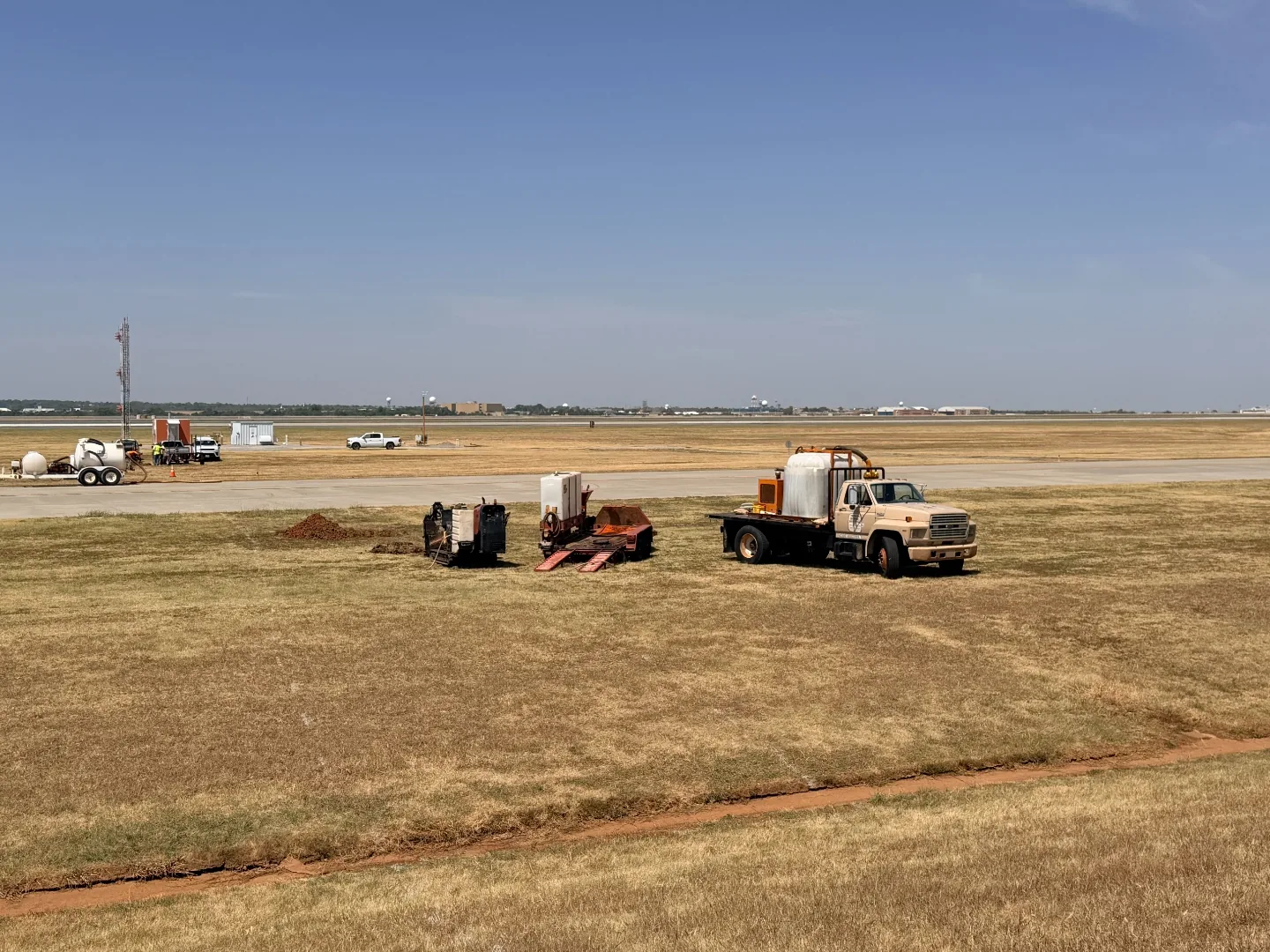
From there the work was three directional bores totaling roughly 840 feet of 2 inch conduit. Entry and exit pits were set well clear of the active pavement, the pilot bore was tracked rod by rod to hold depth and alignment under the taxi runway, the hole was reamed to size, and the conduit was pulled back in a single controlled pass. Spoils were contained, the turf was restored, and the airfield went back to normal. The same discipline applies to every high impact utility crossing we take on.
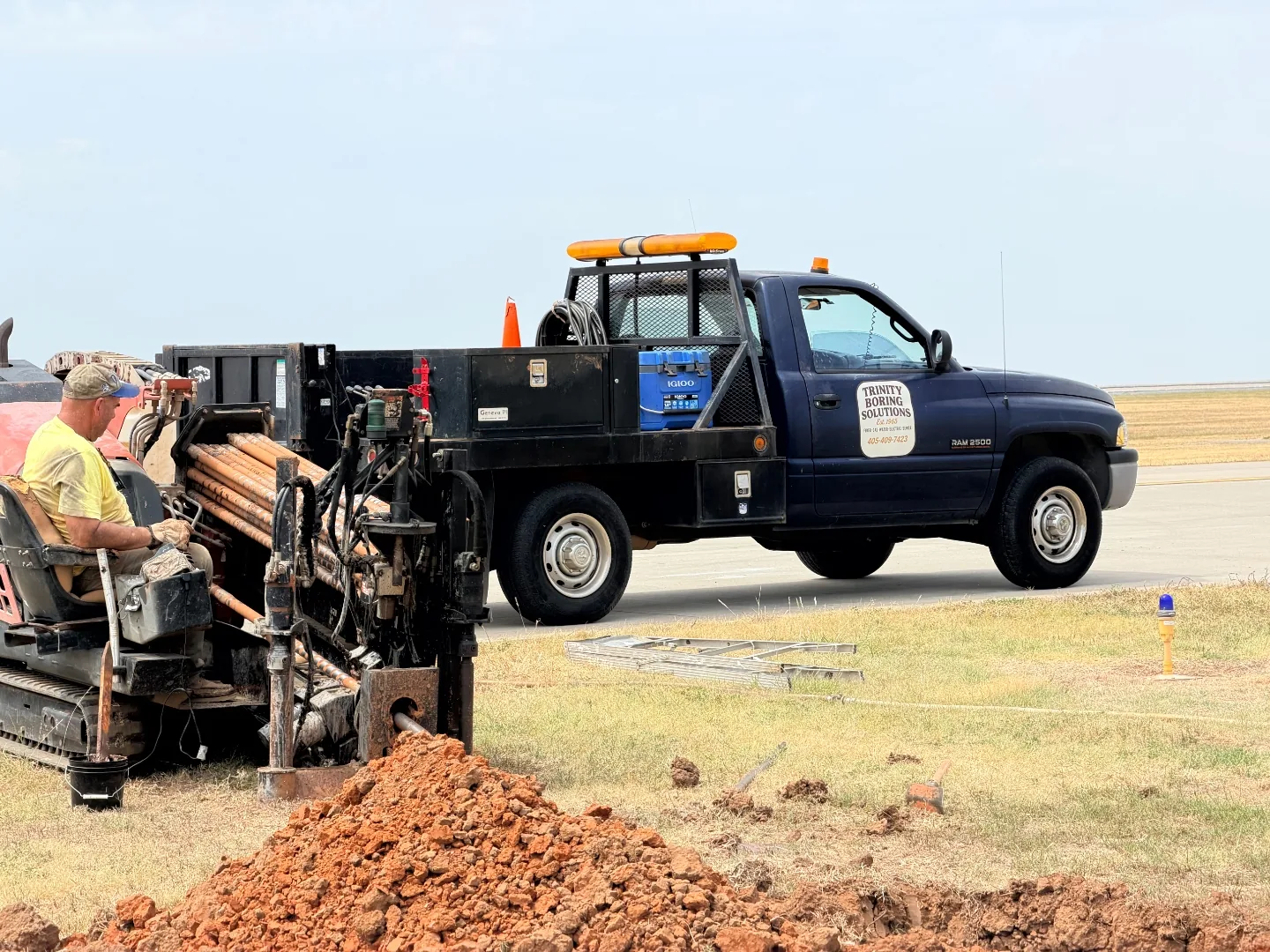
The Result: Conduit In, Pavement Untouched, Airport Never Closed
All three bores were completed inside the approved work window. The conduit reached the navigational aid sites, the runway and taxiway surfaces were never cut, no flight operation was interrupted, and the permit closed out clean with the FAA, the prime contractor and the Oklahoma City Department of Airports. The project was invoiced and paid in full, and it now stands as documented aviation past performance for Trinity Boring Solutions.
That record is why agencies and prime contractors keep calling. Airports, DOT and turnpike agencies, municipalities, electric cooperatives, fiber carriers and federal contractors need a directional drilling contractor who can carry the permit, carry the insurance, protect what is already in the ground, and finish inside a window that cannot move. Whether it is a runway, a state highway, a railroad crossing, or a municipal utility corridor, the standard is the same.
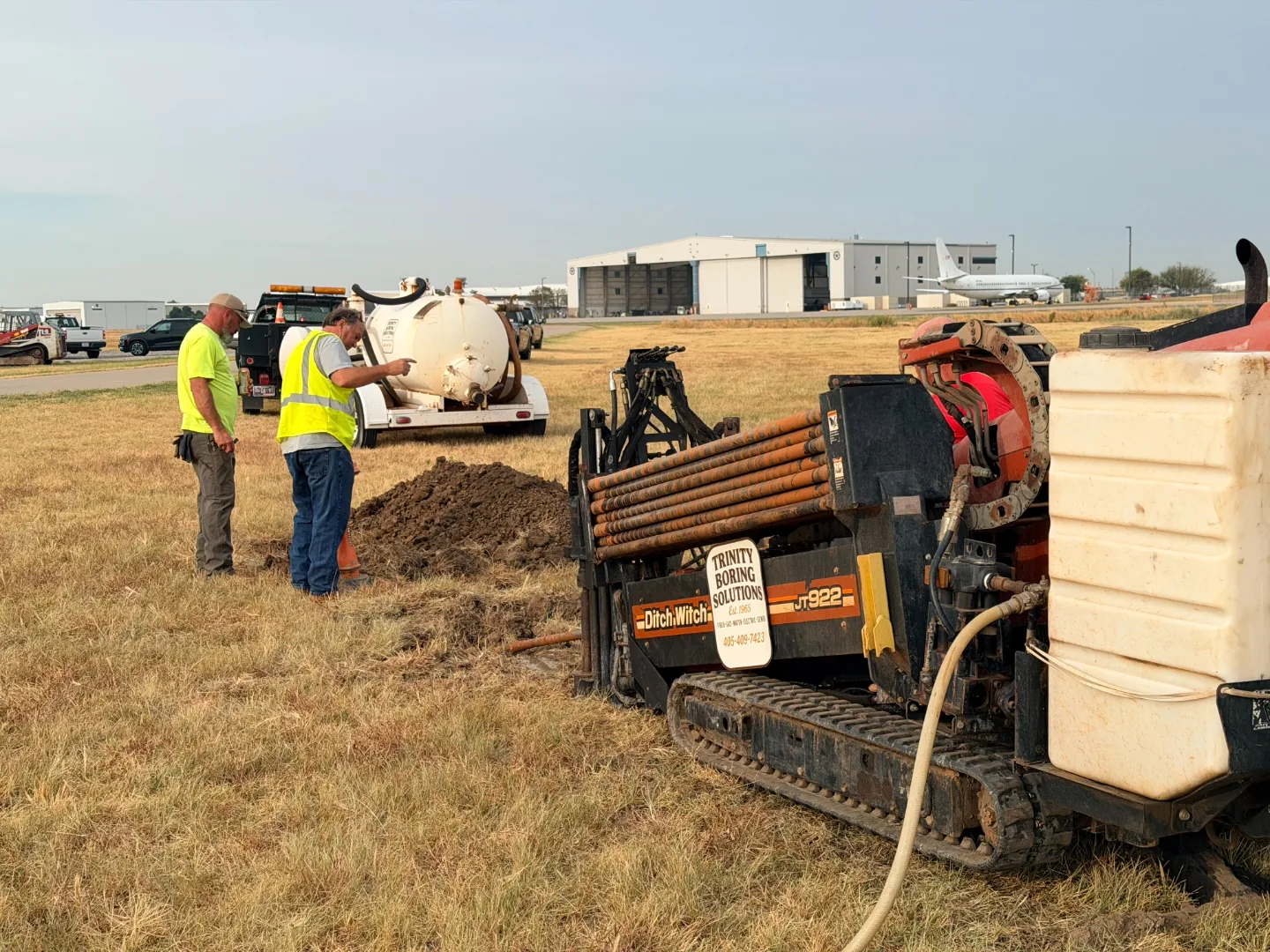
What Airport and Federal Work Actually Requires
- A revocable permit issued by the airport authority, with FAA coordination on navigational aids
- Co permittee approval for every contractor working inside the airfield boundary
- Corporate good standing and certificates of insurance naming the correct holders
- Badged or escorted access and radio coordination inside movement areas
- Positive utility location and daylighting of every existing circuit in the corridor
- Bore path planning that holds depth and alignment under pavement with no tolerance for drift
- Documented close out that satisfies the agency, not just the general contractor
Trinity Boring Solutions handles all of it in house, from the permit package to the pullback. See our full airport and aviation directional boring capabilities, or browse the project gallery.
Frequently Asked Questions
What agencies and contractors ask before an airport bore.
How do you install conduit under an airport runway without closing the airport?
Horizontal directional drilling installs the conduit underneath the pavement from entry and exit pits located off the active surface. The drill head is steered along a planned bore path below the runway or taxiway, the hole is reamed to size, and the conduit is pulled back through. Nothing is cut, nothing is trenched, and the airfield stays open. That is how we installed roughly 840 feet of 2 inch conduit under an active taxi runway and two service roads at Will Rogers World Airport.
Who is allowed to bore at an airport?
Only a contractor named on the permit. At Will Rogers World Airport, Trinity Boring Solutions executed as an approved co permittee with the Oklahoma City Department of Airports under an FAA Nav Aids 17L/35R revocable permit covering the RGR ALS, RGR GS and RGR LOC navigational aid sites. That required corporate good standing documents, airport grade certificates of insurance, badged and escorted access, and an approved work window before any equipment moved onto the airfield.
What permits are required to bore at an airport?
Airport boring typically requires a revocable permit issued by the airport authority, FAA coordination when navigational aids or runway safety areas are involved, co permittee approval for each contractor performing the work, certificates of insurance naming the airport and the prime contractor, and a notarized permittee signature page. Utility locating and daylighting records are usually required before drilling begins.
Can you bore under a highway, railroad or river the same way?
Yes. The same trenchless method used for this airport crossing applies to state highway and interstate crossings, railroad crossings, levee and river crossings, and any other high impact crossing where open cutting is not permitted. We perform these crossings for DOT agencies, municipalities, utilities and federal contractors.
Does Trinity Boring Solutions work on federal and government projects?
Yes. We are licensed, insured and bondable for federal, state and municipal work, including FAA airport projects, military installations, departments of transportation, turnpike authorities, municipal utilities and public school districts. This Will Rogers World Airport project is documented past performance for aviation and federal contracting.
Have a crossing that cannot fail?
Runways, highways, railroads, rivers and municipal corridors. Trinity Boring Solutions is open 24 hours for directional boring across Oklahoma and available nationwide for federal and agency work. 9102 NW Expressway, Yukon, OK 73099.
Will Rogers World Airport FAA Conduit Bore — Field Photos
More Boring & Utility Resources
- Airport & Aviation Directional Boring
- Federal & Government Directional Boring
- Municipal Boring Contractor
- Military Base Utility Contractor
- Road & Highway Utility Work
- Railroad Boring Contractor
- Utility Crossings in Oklahoma
- Hydrovac Daylighting & Potholing
- Electrical Conduit Installation
- Directional Boring in Oklahoma City
- Project Gallery
- Directional Boring FAQ
Talk to the crew that does the work
Fastest way to a number is a phone call. Tell us where the crossing is and what is going in the ground, and you will get a straight answer on the same call. Bores from 10 feet to 5,000 feet, 3/4 inch service line through 48 inch casing, anywhere in Oklahoma and north Texas. We run 24/7 for main breaks and emergency repairs.
Answered by a person, not a call center.
Would rather not call? Send the details and we will come back with a written quote.