Field Notes · Rock Boring · Logan County
Case Study: 385 Foot Sandstone Rock Bore Under Creeks, Wetland and a Dam in Guthrie, OK
By Darren Rice, Owner of Trinity Boring Solutions · Yukon, Oklahoma · Licensed, Insured and Bondable
Some crossings cannot be trenched. Trinity Boring Solutions was called in to run a 385 foot sandstone rock bore at the Cimarron site in Guthrie, Oklahoma, north of Highway 33 near Highway 74 in Logan County. The bore path ran under two small creeks, wetland and a dam, and the finished hole carries 4 inch HDPE conduit for a high priority electric line. It was a high profile job on a regulated site, and it met every requirement.
The job: a 385 foot horizontal directional bore through hard sandstone, drilled with rock tooling on a Vermeer D24x40 S3 Navigator, under two small creeks, wetland and a dam where trenching was not an option. The hole was pre reamed, then 4 inch HDPE conduit was pulled back for a high priority electric line. No trench through the creeks, the wetland or the dam.
The Challenge: Hard Sandstone Under Two Creeks, Wetland and a Dam
The Cimarron site is the former Kerr McGee nuclear fuel plant on the south bank of the Cimarron River, about half a mile north of the Highway 33 and Highway 74 intersection. It is in the final phase of its cleanup, the Cimarron Groundwater Remediation Project, overseen by the Oklahoma Department of Environmental Quality and the U.S. Nuclear Regulatory Commission. Work on a site like this has to meet every requirement, and this electric line was a high priority.
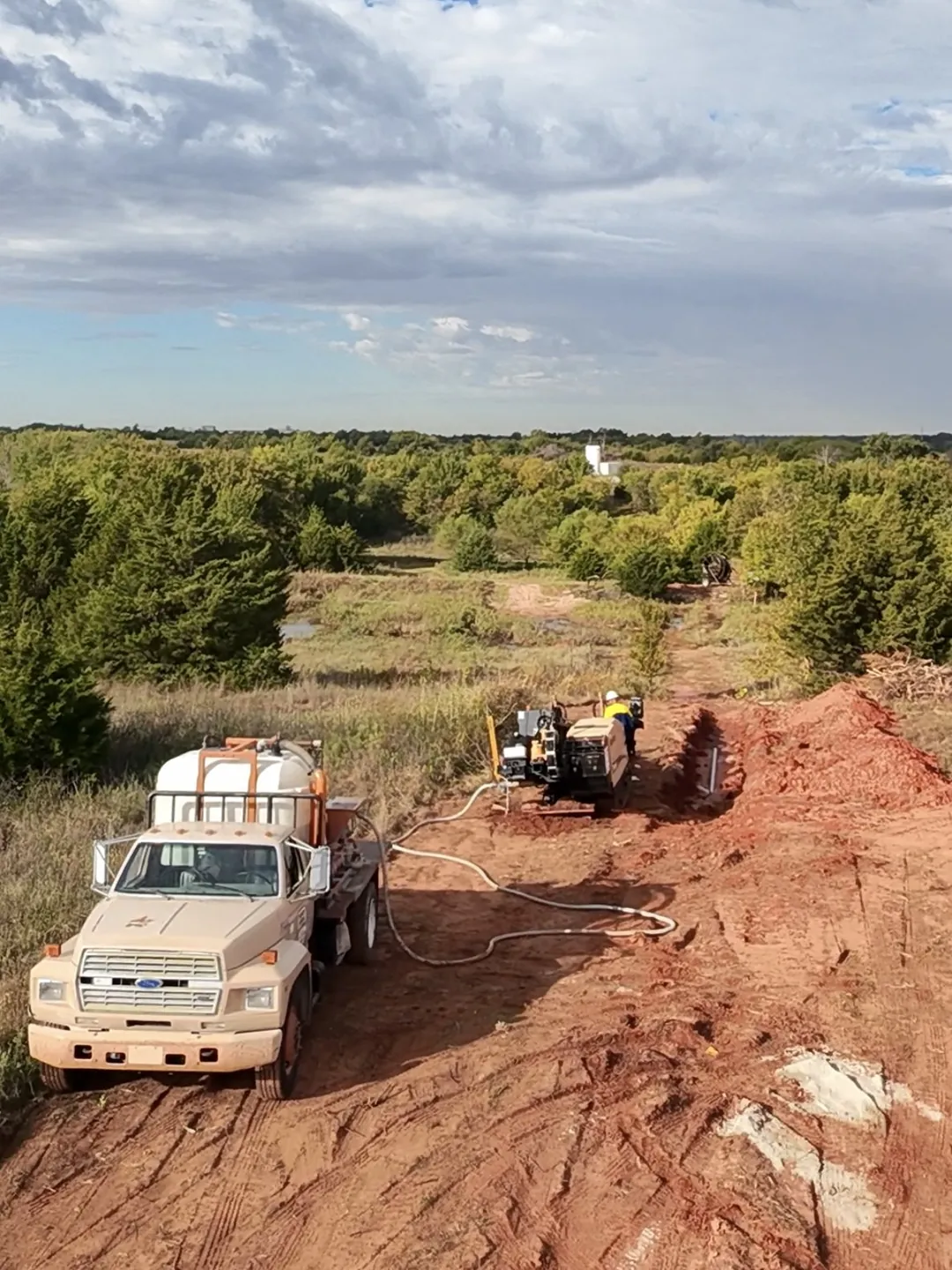
The route was the hard part. Between the entry and the exit were two small creeks, a stretch of wetland and a dam. Trenching was not available there, and cutting a trench through the creeks and the wetland would have disrupted the water flow. The line had to go under all of it. The ground in this part of Guthrie is hard sandstone, so the bore required rock tooling from the start. That is the kind of creek and river crossing where directional boring is the only practical answer.
The Approach: Rock Tooling, Tracking and a Pre Ream
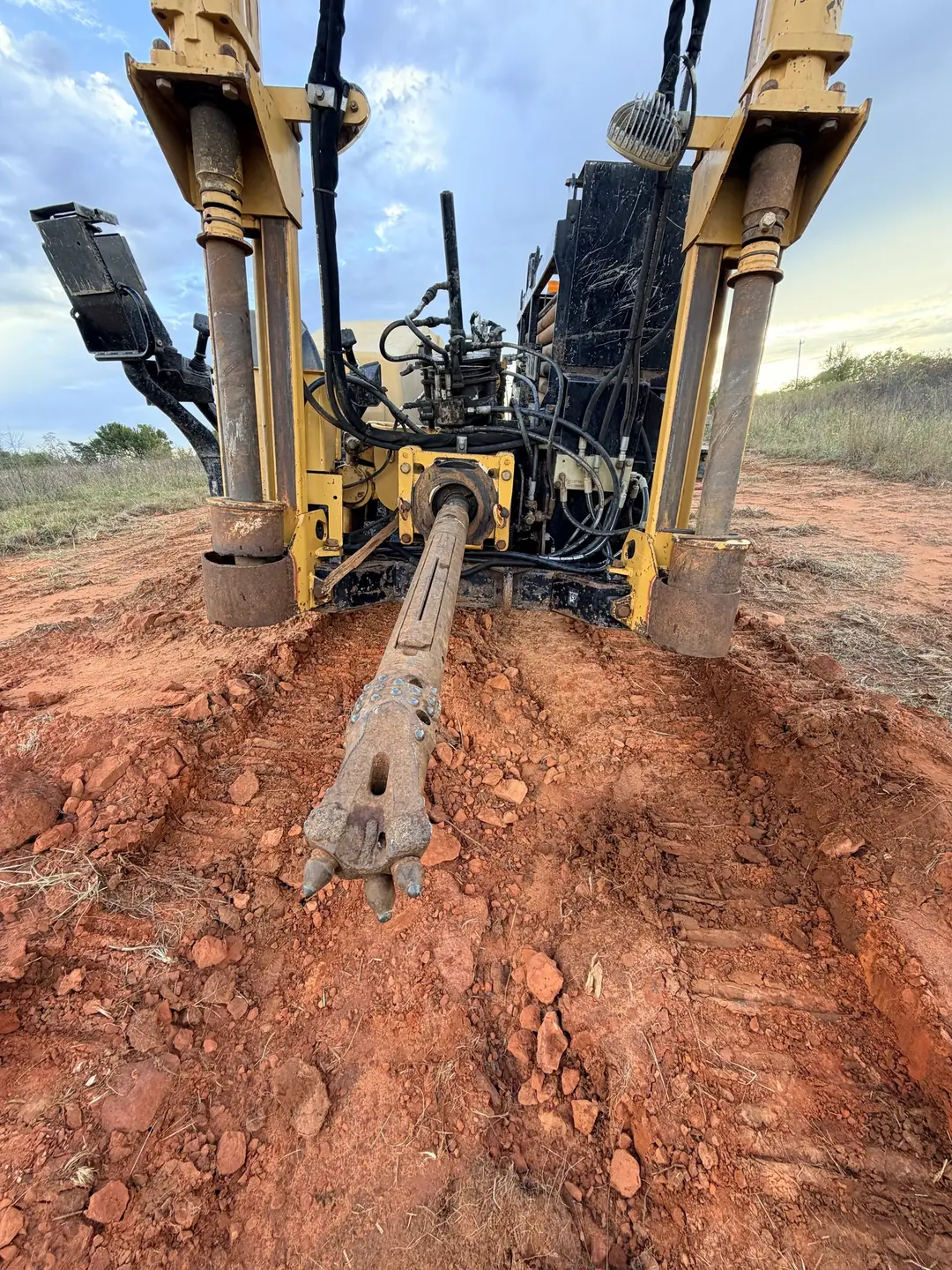
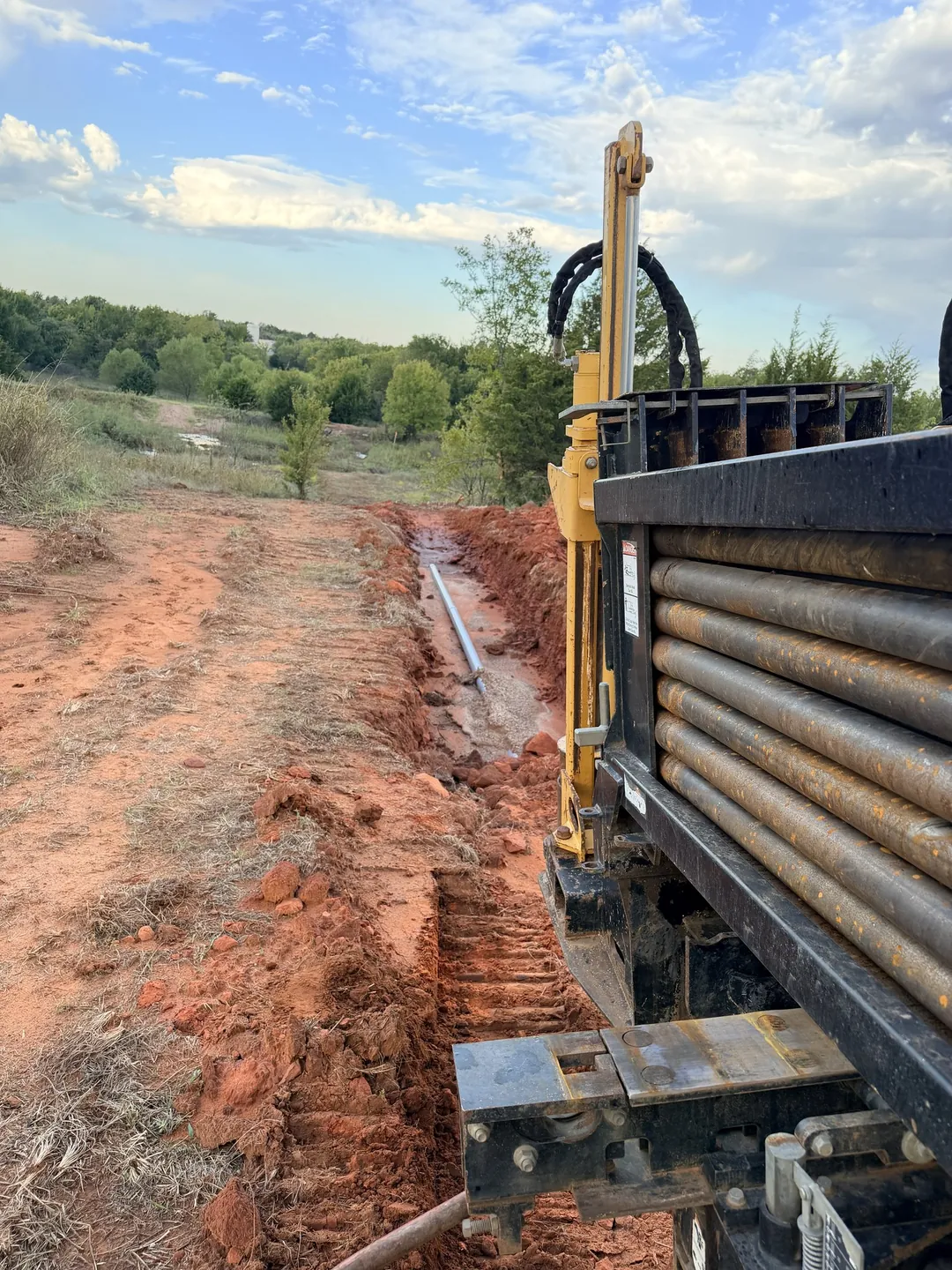
We set up our Vermeer D24x40 S3 Navigator on the high ground at the entry, with a water truck alongside to supply water for the drilling fluid. Vermeer rates the D24x40 S3 for 28,000 pounds of thrust and pullback and 4,200 ft lb of spindle torque, and it runs 10 foot Firestick drill rod. With rock tooling on the front of the drill string, the rig drilled through the sandstone. Our page on directional boring in rocky and hard soil explains how we match tooling to the ground.
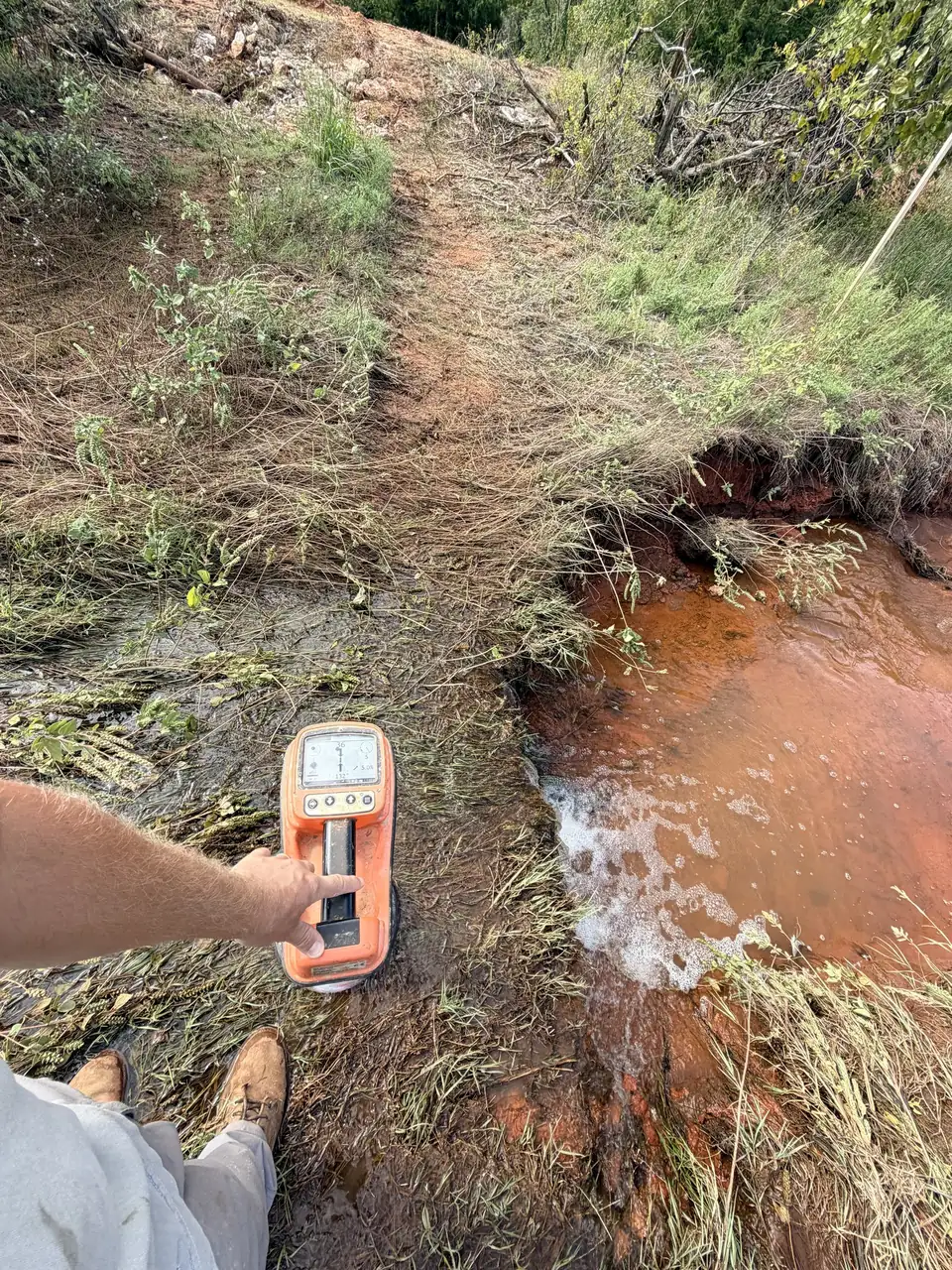
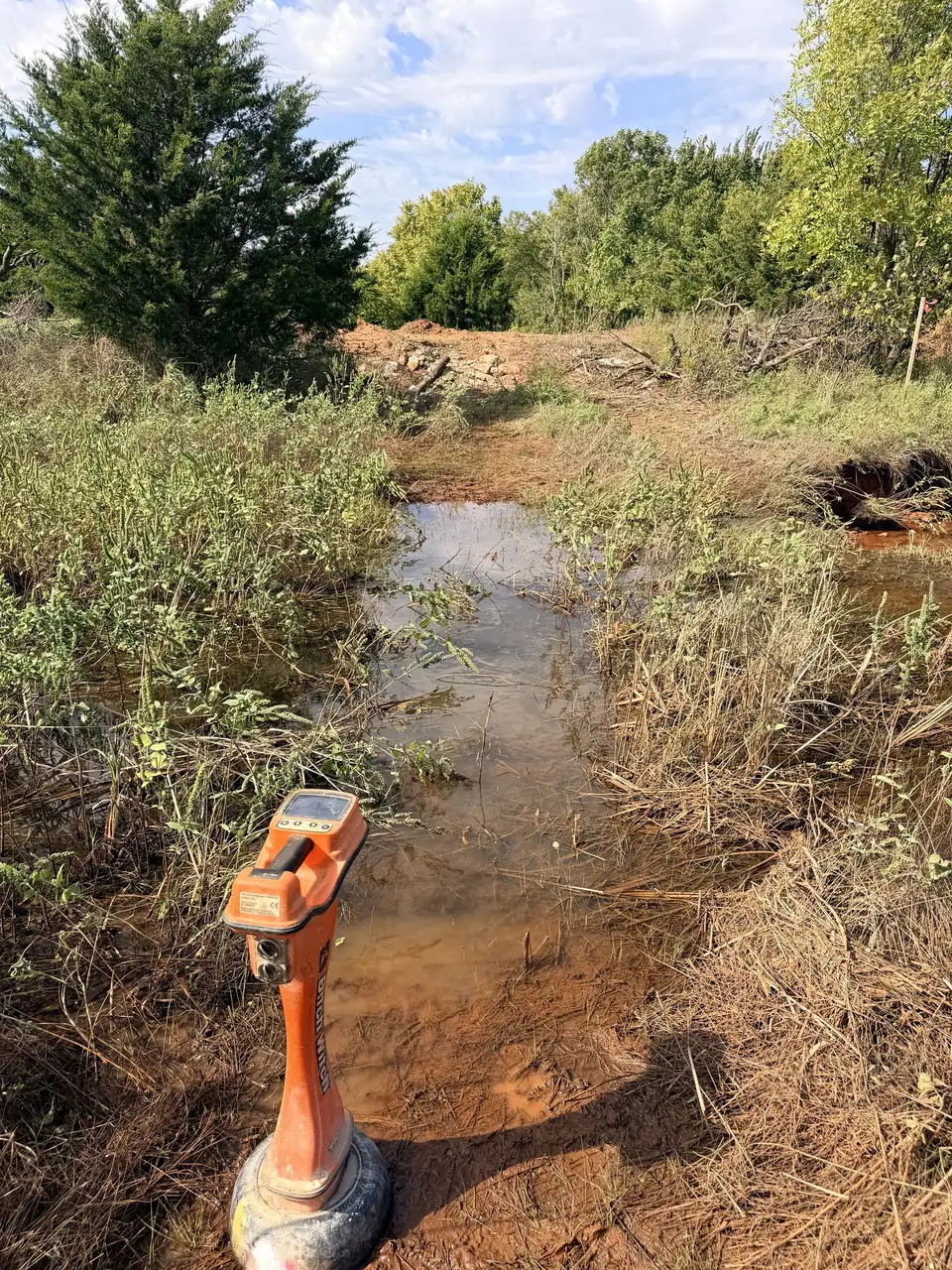
A walkover locator tracked the drill head the whole way, under both creeks, the wetland and the dam, so the bore stayed on its path. The drilling fluid carried the cuttings back to the entry and helped hold the hole open in the rock.
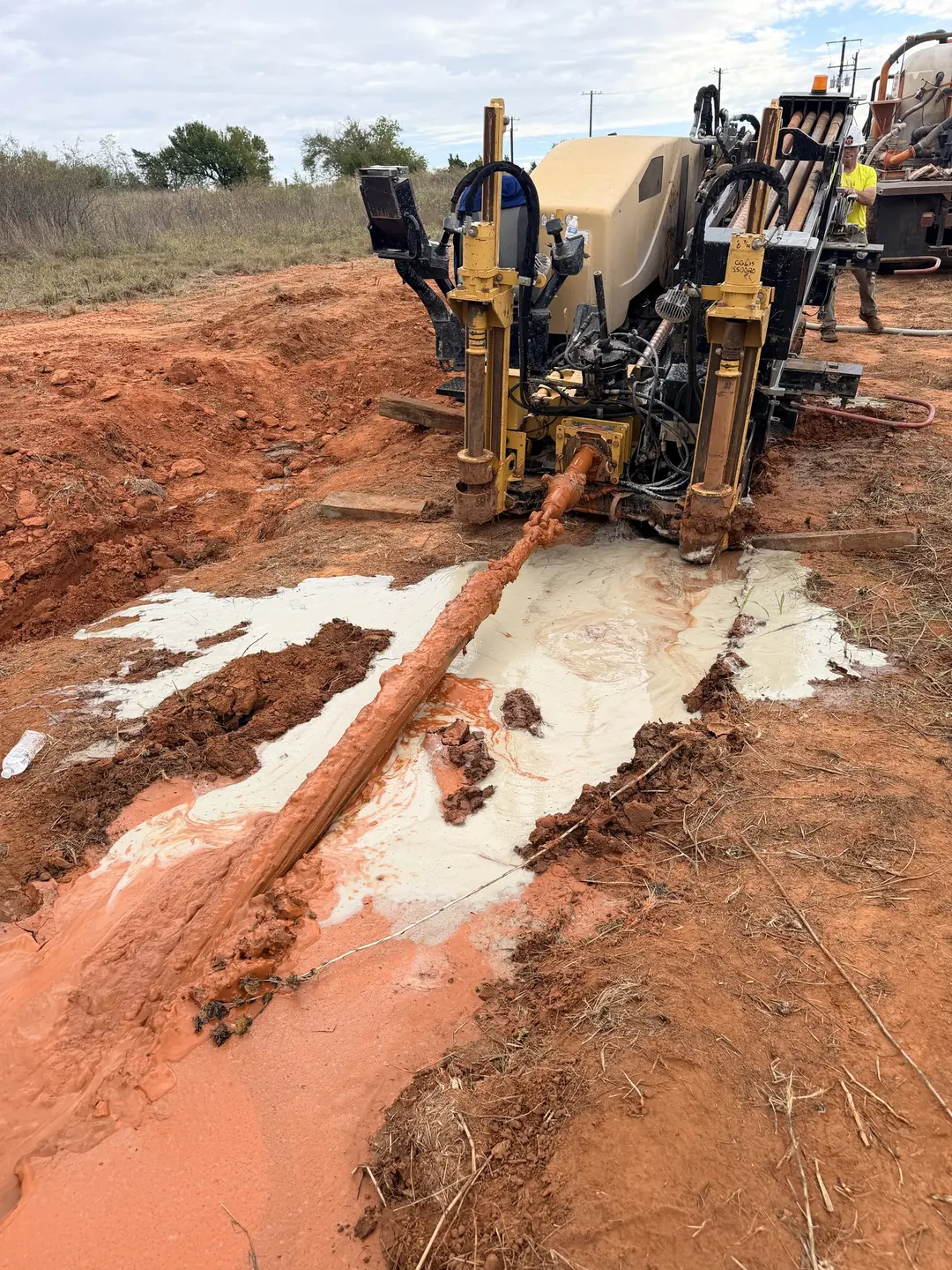
When the drill head came up on the other side, our crew pre reamed the hole and made sure it was perfect before pullback. A pre ream opens the pilot hole to a larger size before the pipe goes in, so the pullback runs through a clean, open hole instead of dragging through raw rock.
The Result: 4 Inch HDPE Conduit In for a High Priority Electric Line
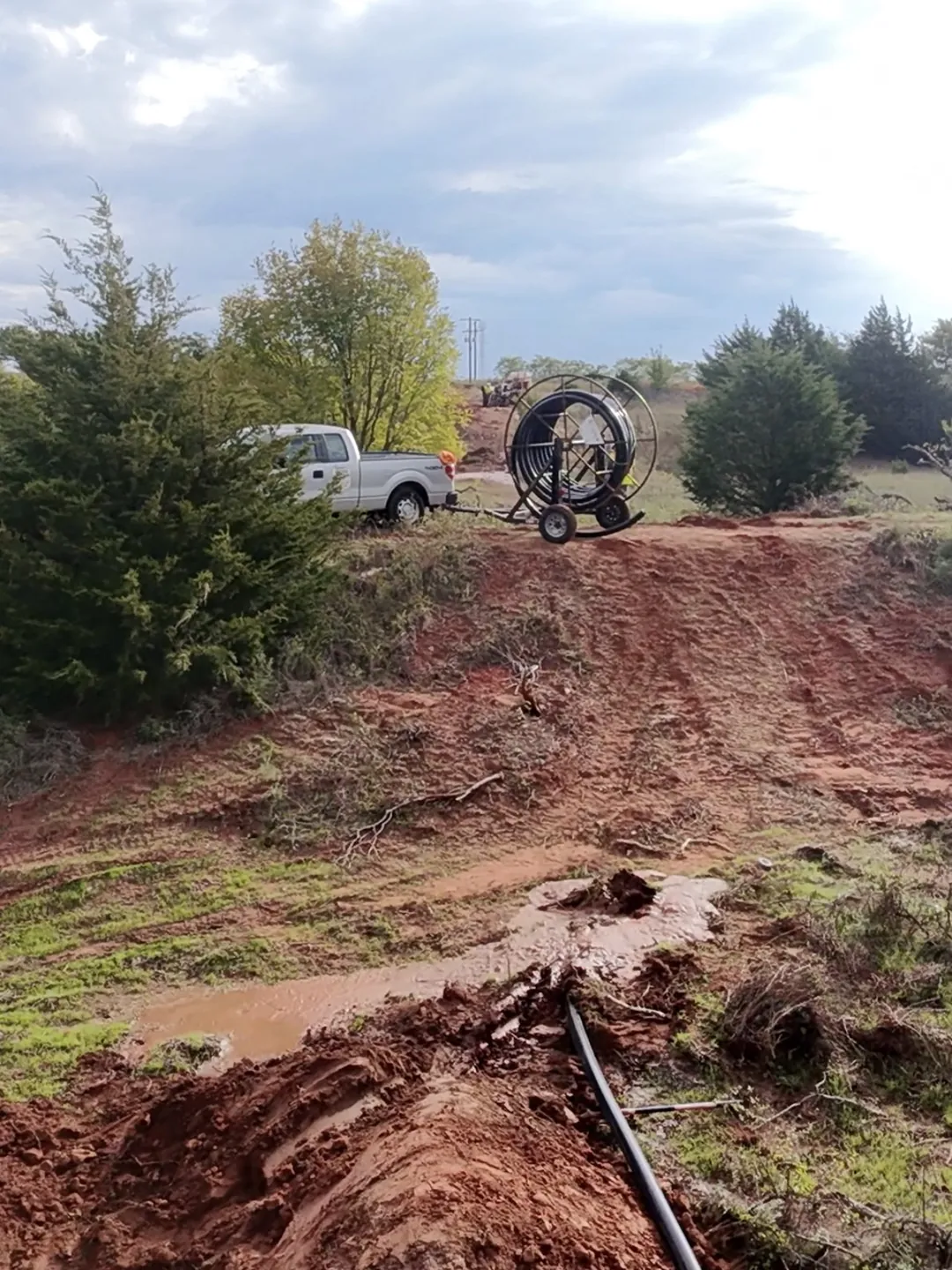
With the hole open, we pulled back the 4 inch HDPE conduit from the reel on the exit side. The full 385 foot shot went in through the sandstone, under both creeks, the wetland and the dam, with no trench through any of them. The conduit is in the ground for a high priority electric line, and the job met every requirement. See how we handle electrical conduit installation across Oklahoma.
What Rock and Creek Crossings Actually Require
- A rig with the thrust, pullback and torque for rock. The D24x40 S3 is rated for 28,000 pounds of thrust and pullback.
- Rock tooling on the front of the drill string. Hard sandstone takes rock tooling, not standard soil tooling.
- Tracking under the water. A walkover locator follows the drill head under creeks and wetland so the bore stays on its path.
- A pre ream before pullback. Opening the hole first protects the pipe on a pull through rock.
- Pipe built for the pull. HDPE comes on a reel in long continuous lengths and bends to follow the bore path.
- Entry and exit outside the water. The rig and the reel sit on solid ground, so the creeks, the wetland and the dam are left alone.
- A trained crew. Our crew on this site was OSHA 10 trained.
Trinity Boring Solutions handles rock and water crossings in Guthrie, Crescent, Cashion, Coyle and across Logan County and Oklahoma. See directional boring in Guthrie, directional boring in Logan County, the environmental benefits of trenchless drilling, or browse the project gallery.
Frequently Asked Questions
What people ask before a rock bore or a creek crossing.
Can you directional bore through rock?
Yes. With the right rig and rock tooling, directional boring goes through rock instead of around it. Near Guthrie, Oklahoma, Trinity Boring Solutions drilled 385 feet through hard sandstone with rock tooling on a Vermeer D24x40 S3 Navigator, then pre reamed the hole and pulled back 4 inch HDPE conduit.
How does horizontal directional drilling work in rock?
The rig drills a pilot hole with rock tooling on the front of the drill string while a walkover locator tracks the drill head. Drilling fluid cools the tooling, carries the cuttings out and helps hold the hole open. Once the pilot hole reaches the exit, the hole is reamed to size and the pipe is pulled back through it.
Can you bore under a creek, wetland or dam without trenching?
Yes. Directional drilling installs the line underneath from entry and exit points outside the water. On this Guthrie job, one 385 foot bore went under two small creeks, wetland and a dam with no trench through any of them, so the water flow was not disrupted.
What is the purpose of reaming in directional drilling?
Reaming enlarges the pilot hole so the pipe fits and pulls back cleanly. A pre ream opens the hole before pullback, which matters in rock. On this job the hole was pre reamed before the 4 inch HDPE conduit went in.
How far can you directional bore?
It depends on the rig, the ground, the pipe and the crossing. This sandstone bore near Guthrie was 385 feet in one shot. Our guide to directional boring distance covers the details.
Why use HDPE conduit for electrical lines?
HDPE comes on reels in long continuous lengths, bends to follow a bore path and stands up to pullback, which makes it a common choice for underground electric conduit installed by directional boring. This job used 4 inch HDPE for a high priority electric line.
What is the environmental impact of directional drilling compared to trenching?
Directional drilling disturbs the ground at the entry and exit, so the creeks, wetland and dams between them stay in place. Trenching cuts through everything on the route. On this job a trench would have disrupted the water flow, so the line was bored under the creeks, the wetland and the dam instead.
What are the specs of the Vermeer D24x40 S3 Navigator?
Vermeer rates the D24x40 S3 Navigator for 28,000 pounds of thrust and pullback and 4,200 ft lb of spindle torque, and it runs 10 foot Firestick drill rod. Trinity Boring Solutions ran this 385 foot sandstone bore near Guthrie with it.
Do you work on regulated and environmental cleanup sites?
Yes. This bore was at the Cimarron site near Guthrie, the former Kerr McGee nuclear fuel plant, now in the Cimarron Groundwater Remediation Project overseen by the Oklahoma Department of Environmental Quality and the U.S. Nuclear Regulatory Commission. Our crew on this site was OSHA 10 trained.
Who does directional boring in Guthrie and Logan County, Oklahoma?
Trinity Boring Solutions, based at 9102 NW Expressway in Yukon, does directional boring, rock boring, creek crossings and conduit installation in Guthrie, Crescent, Cashion, Coyle, Cedar Valley and across Logan County and Oklahoma. Call (405) 409-7423.
Have a crossing you cannot trench?
Rock, creeks, wetland, dams, highways and rivers. Trinity Boring Solutions bores across Guthrie, Logan County and all of Oklahoma. 9102 NW Expressway, Yukon, OK 73099.
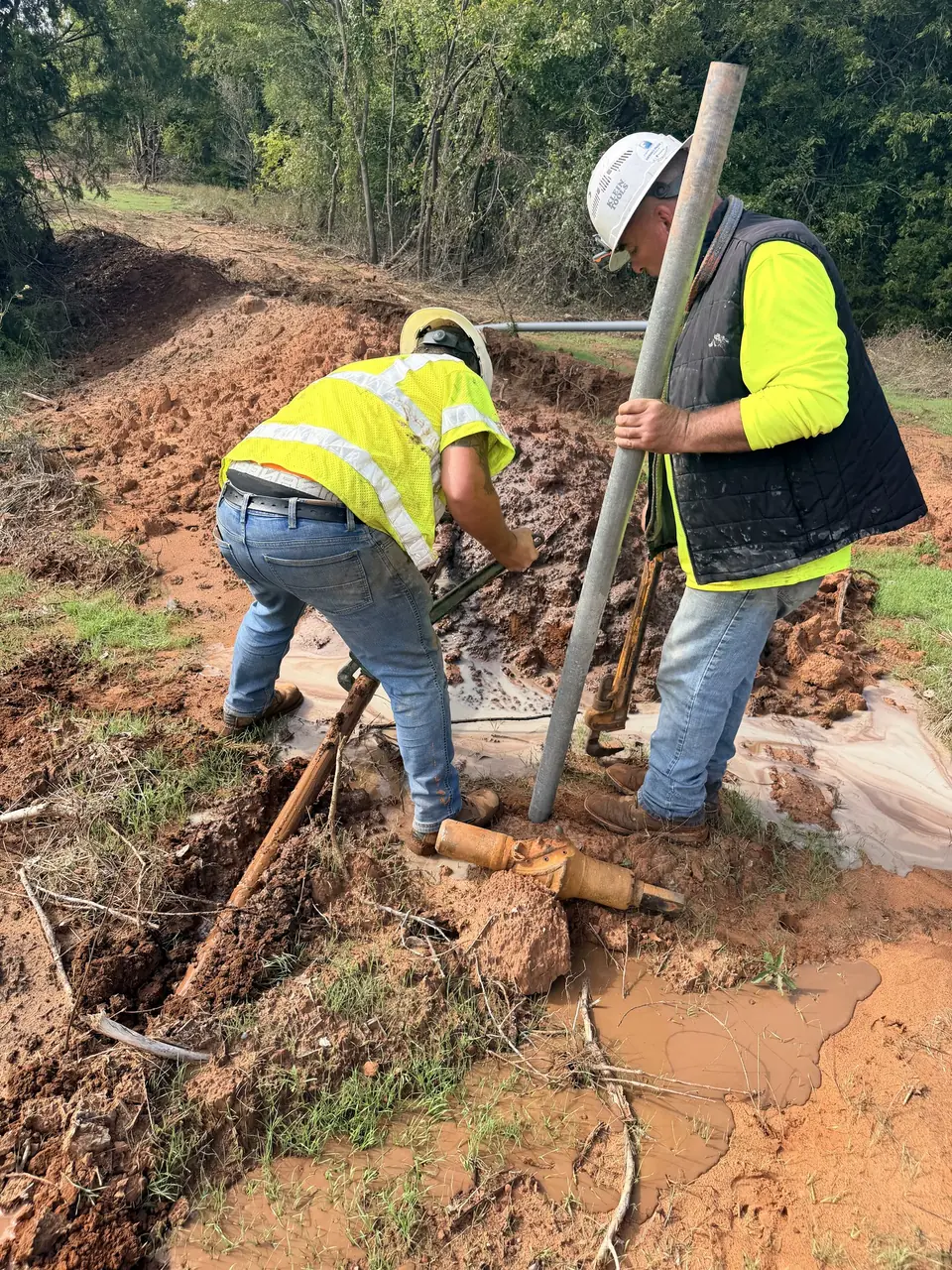
Guthrie Sandstone Rock Bore Field Photos
More Boring and Utility Resources
- Directional Boring Explained by Our Crew
- Directional Boring in Guthrie
- Directional Boring in Logan County
- Directional Boring in Crescent
- Directional Boring in Rocky and Hard Soil
- Directional Boring Soil Suitability
- Road, Highway, Railroad, Creek and River Crossings
- Highway and River Crossing Boring
- Electrical Conduit Installation
- Pipe and Conduit Installation
- Directional Boring Equipment
- Environmental Benefits of Trenchless Drilling
- Boring vs Trenching
- Project Gallery
- Directional Boring FAQ
Talk to the crew that does the work
Fastest way to a number is a phone call. Tell us where the crossing is and what is going in the ground, and you will get a straight answer on the same call. Bores from 10 feet to 5,000 feet, 3/4 inch service line through 48 inch casing, anywhere in Oklahoma and Texas. We run 24/7 for main breaks and emergency repairs.
Answered by a person, not a call center.
Would rather not call? Send the details and we will come back with a written quote.
Latest from the crew
More field reports and guides from Trinity Boring Solutions.
- Case Study: Emergency Gas Line Bore at the TA Truck Stop on Council Road and I 40 in Oklahoma City
- Storm Drain Replacement in Moore: What the $18 Million Bond Vote Means for Utility Lines
- Data Center Site Utilities in Oklahoma: What Goes Underground Before the Servers Arrive
- Trenchless Culvert Installation After Oklahoma’s October 2026 Road Washouts
- Directional Boring Explained by the Oklahoma Crew That Has Done It Since 1965
- Case Study: 6 Inch PVC Sleeve Bored Under NE 24th Street and a Water Main in Oklahoma City