
No Bore Too Big or Too Small: Directional Boring Contractors in Oklahoma, Texas and Nearby States
Quick Answer: Trinity Boring Solutions is a directional boring and horizontal directional drilling (HDD) contractor led by owner Darren Rice, with its main office in Yukon, Oklahoma. We take bores in Oklahoma, Texas, Arkansas, Missouri, Kansas, Colorado and Louisiana through our own crews and from satellite yards run by drilling contractors Trinity has personally vetted, and we stand behind every bore as our own. No bore is too big or too small: from 4 feet under a sidewalk to roughly 4,100 feet under the Arkansas River in Tulsa.
Trinity Boring Solutions at a glance
- Also called: horizontal directional drilling (HDD), directional drilling, horizontal boring, underground boring and trenchless utility installation
- What we install: water lines, sewer lines and force mains, natural gas and propane, electric conduit and fiber optic conduit
- Coverage: our own crews across Oklahoma and Texas. In Arkansas, Missouri, Kansas, Colorado and Louisiana, our own crews and satellite yards run by partner contractors Trinity has personally vetted
- Main office and yard: 9102 NW Expressway, Yukon, OK 73099
- Phone answered 24 hours a day: (405) 409-7423
- Range: 3/4 inch service lines to 48 inch casing, 10 feet to 5,000 feet
- Ten or more rigs, all owned, plus our own hydrovac
- Family business founded by Dean Rice in 1965. Directional boring since 1982.
- No utility strike in over 25 years
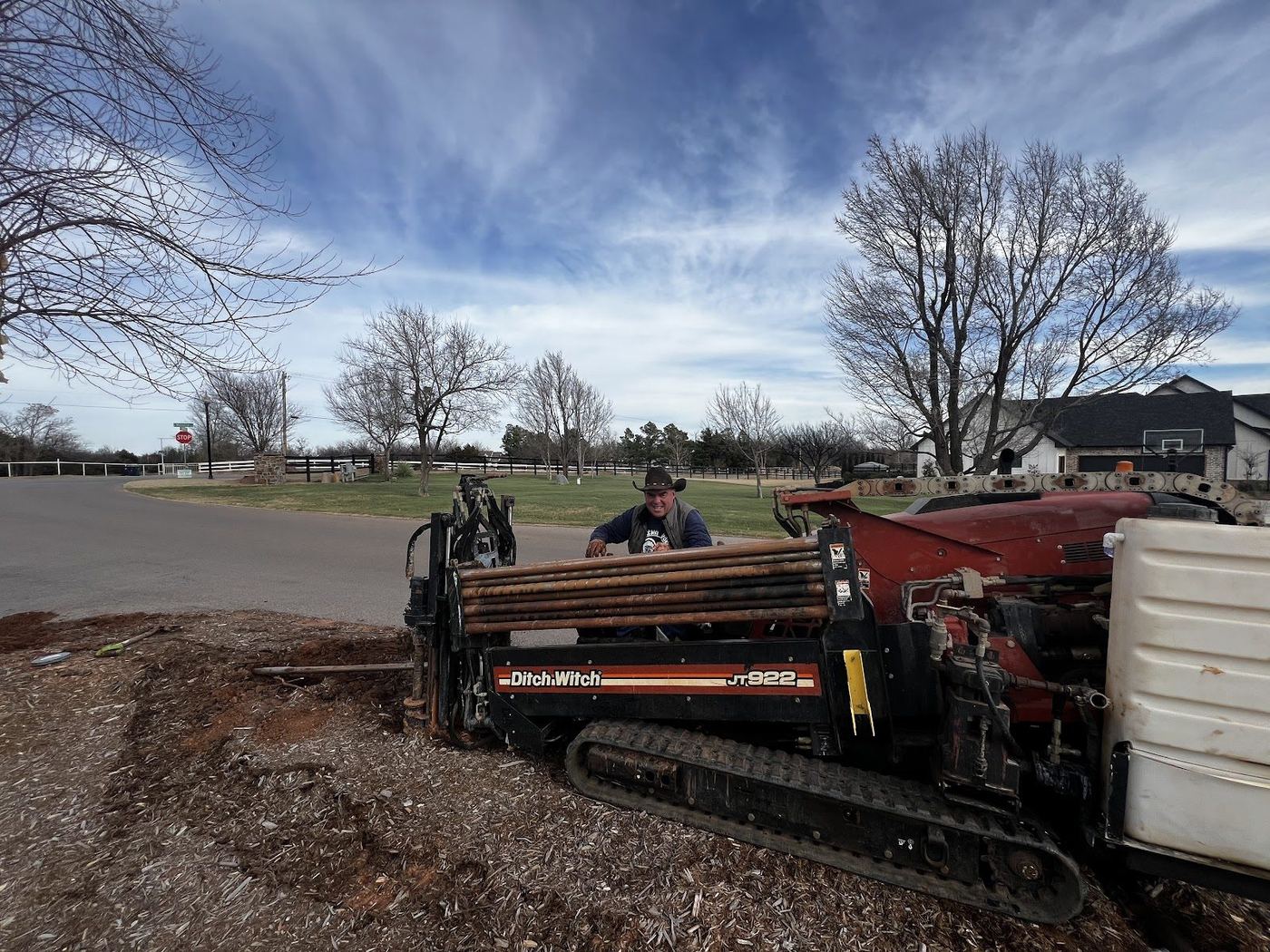
What does "no bore too big or too small" mean?
It means the same company does both ends, and we can show you both.
| The small end | The big end |
|---|---|
| A 4 foot sleeve under a sidewalk | Roughly 4,100 feet under the Arkansas River in Tulsa, Oklahoma, with 48 inch pipe |
| A 6 inch PVC sleeve under NE 24th Street and a live water main at the Clara Luper Center in Oklahoma City | 840 feet of FAA conduit under the airfield at Will Rogers World Airport |
| An emergency water line at a sorority house in Stillwater | 385 feet through sandstone under creeks, a wetland and a dam in Guthrie |
| A propane line on a hospital campus in Anadarko | A water intake bored out into Fort Cobb Lake, where divers changed the reamer |
A homeowner with one driveway to cross gets the same standards and the same bore log as an airport.
Who is Darren Rice?
Darren Rice owns Trinity Boring Solutions and runs its crews. Dean Rice founded the family business in 1965. Darren took it over and started its directional boring side in 1982, and he has been boring ever since. That is more than 40 years, in Oklahoma, Texas, Kansas, Iowa, Louisiana and New Mexico, with conduit and pipe of every size.
Other boring companies have picked up the way Darren runs a job and run with it: expose every crossing before the drill gets near it, own the equipment, keep one crew on the whole job, and give the customer one number. He takes that as a compliment.
Read more on Darren’s page.
Where Do You Need a Bore? Tap Your State.
Tap a state to open its page and its county map. Then tap a county to see the cities and towns there.
Oklahoma and Texas: our own crews every week.
Where does Trinity do directional boring?
Every week: Oklahoma and Texas. All 77 Oklahoma counties and all of Texas, with our own crews.
Where we have bored: Oklahoma, Texas, Kansas, Iowa, Louisiana, New Mexico, Arkansas and Colorado. That includes Dallas, Wichita, Shreveport and Albuquerque.
Arkansas, Missouri, Kansas, Colorado and Louisiana: our own crews on larger projects, and satellite yards run by partner contractors Trinity has personally vetted.
Outside these seven states: larger projects are looked at case by case, so call (405) 409-7423 to ask.
State guides: Oklahoma and Texas.
How does Trinity cover seven states?
Two ways, and we tell you which one your job gets.
- Our own crews. Oklahoma and Texas every week, and larger projects in Arkansas, Missouri, Kansas, Colorado and Louisiana where our drill, hydrovac and tooling make the trip.
- Satellite yards. Yards run by drilling contractors Trinity has personally vetted, so a crew and equipment are already close to the job. Every one carries insurance and runs top of the line directional boring equipment. Darren has been boring since 1982, and in more than 40 years he has learned who the strong drillers are and where they work.
Whichever crew is on site, you deal with Trinity from the first call to the bore log. Trinity stands behind a partner crew’s work as its own.
In a state that licenses this work, the bore is contracted and drilled under a license that covers it. We settle that before we quote.
How does Trinity vet a partner contractor?
We do not send whoever happens to be closest. Trinity vets every partner personally, and a partner crew works a Trinity job the way a Trinity crew does:
- Licensed and insured for the state and the work
- Top of the line directional boring equipment
- An 811 ticket called in for the bore path
- Every utility crossing exposed before the drill gets near it
- The bore tracked from the surface, with depth logged at every rod
- Pits restored and drilling fluid hauled off
What directional boring jobs do we take?
All of them. That is what no bore too big or too small means.
- Driveway, sidewalk and parking lot bores for one water, sewer, gas, electric or fiber line
- Road bores under city streets and county roads
- Highway, rail and river crossings that need a permit and a cased bore
- Rock
- Long shots and larger pipe, up to 5,000 feet and 48 inch casing
- Federal, airport and military sites where the crew has to be badged in
- Fiber, electric, water and gas builds with a string of crossings
- Contractors we already work for who take a project in another state we serve
Call with the town and the bore. We will tell you which crew can be there and when.
What changes when a bore crosses a state line?
More than most people expect. The drill is the same. The notice period, the ticket, the depth under a highway and the paperwork are not. These are the rules in the states we have written up so far.
| State | 811 notice | Ticket lasts | Cover under a state highway | The rule that catches people |
|---|---|---|---|---|
| Oklahoma | 48 hours, not counting the day of the call, weekends or holidays | 14 calendar days after the start date | 60 inches below pavement, 30 inches below the ditch bottom | |
| Texas | Between 14 days and 48 hours ahead, not counting weekends or holidays (Texas Utilities Code) | See Texas811 | Set by utility type in the TxDOT rules | Crossings under the highway are encased (TxDOT rules) |
| Kansas | Two full working days, and no more than 20 calendar days ahead | 20 calendar days after the start date | 5 feet below crown grade or 3 feet below ditch grade | The hole can be no more than 1.5 inches larger than the pipe on 12 inch and under |
| Arkansas | Two to ten full working days | 20 working days from the notice | 60 inches below the surface or 48 inches below the ditch flow line, whichever is deeper | Wet boring is not allowed, and overbore on a dry bore is capped at 5 percent |
| Colorado | Two business days by law, not counting the day of notice. Colorado 811 says allow three. | Marks are good for no more than 30 calendar days | 48 inches. Water and sewer need 4 feet 6 inches or frost depth. | Inside 18 inches of a marked line you must dig by nondestructive means |
| Missouri | At least two working days and not more than ten working days before the expected start | 21 calendar days from the start date | 42 inches over water lines and over fiber in rigid conduit, 72 inches over fiber in polyethylene pipe and over uncased polyethylene gas crossings, 30 inches over other utilities | |
| Louisiana | 48 hours at the least and 120 hours at the most, with weekends and holidays left out | 20 calendar days from the mark by time, while the marks stay visible | 4 feet for a cased line and 5 feet for an uncased line | Work has to begin within 120 hours of the mark by time, not counting weekends and holidays |
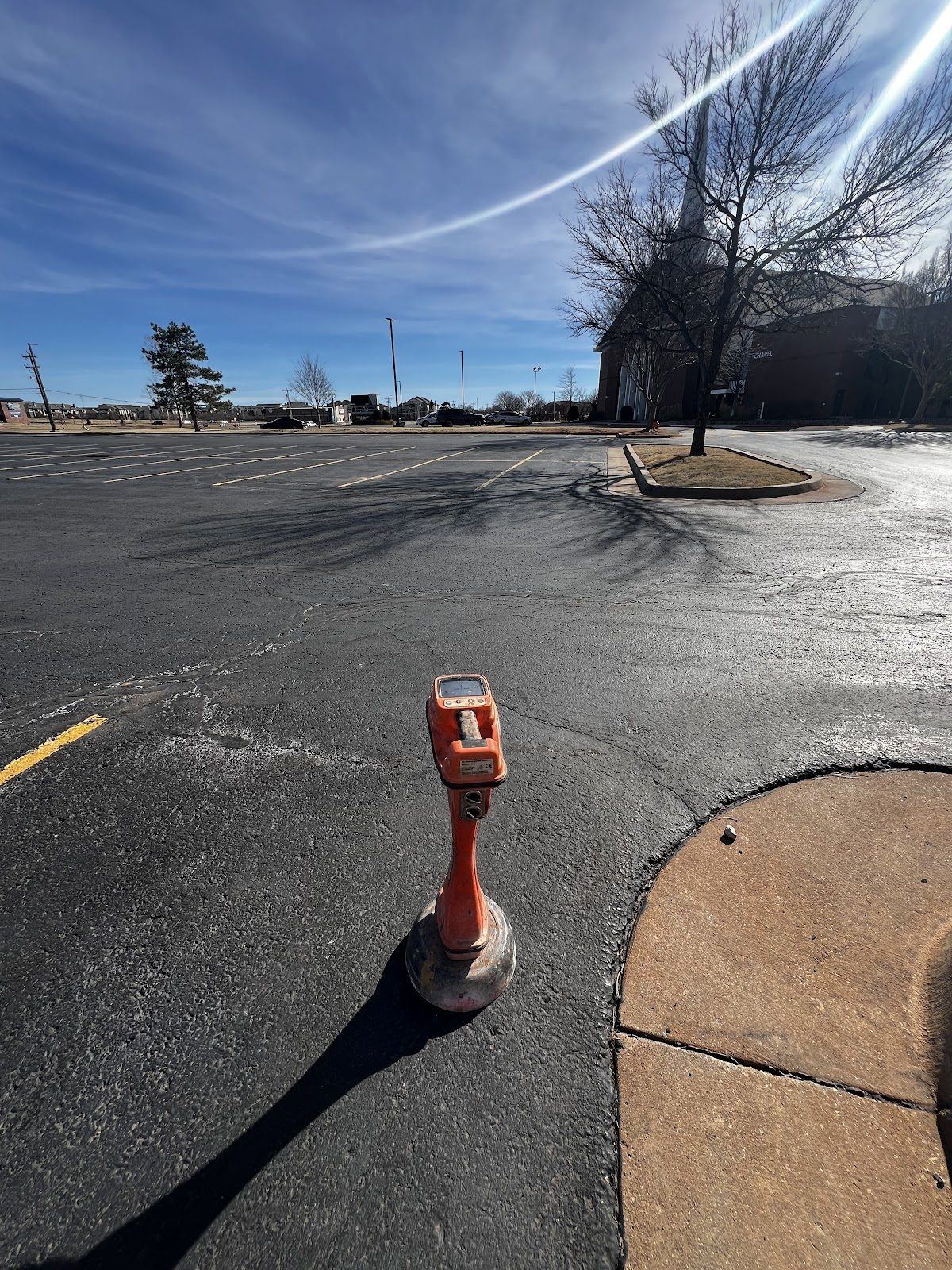
Sources for each row are on the state pages. We check the current rule before we price any crossing, because these change.
How does a directional bore run from the first call?
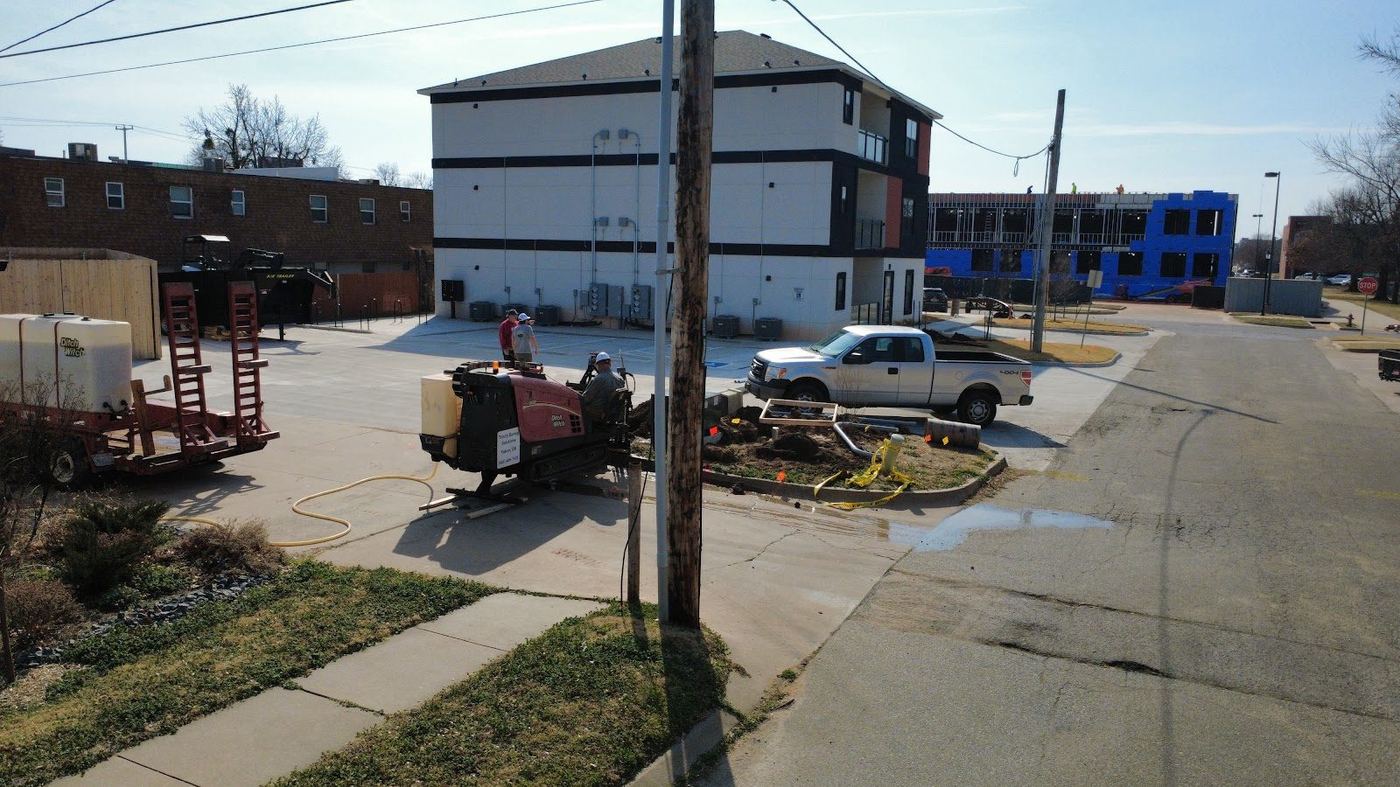
- You call. Send the location, what is going in, the size and the footage.
- We pick the crew. One of ours, or a vetted partner crew closer to you. We tell you which.
- We check the state. The license, registration and bond the state requires are in place before the job starts and not after.
- One number. You get one price for the whole job, worked out from the conditions on your site.
- Permit. Highway permits go through the utility that owns the line. We supply the bore details.
- Ticket. An 811 ticket is called in for the bore path, timed to the day the rig arrives.
- Hydrovac. Every crossing is exposed before the drill gets near it.
- Bore and pull. Tracked from the surface and logged at every rod.
- Cleanup and records. Pits restored, fluid hauled off, and a copy of the bore log to you.
What does directional boring cost?
Every bore is priced from the job itself. Length and conduit size give us a general range, and the conditions decide where a job lands in it: the soil, the number of existing utilities to cross, concrete that has to be cut out, a creek on the route, and pits that need an excavator and sand backfill. A high profile site or an emergency call is priced for what it demands, and a site far from our crews can carry a mobilization fee. You get one price for the whole job.
What moves the price, roughly in order: rock, depth, how many utilities we have to expose, permit requirements such as casing and traffic control, pipe size, footage, and who furnishes the pipe. Our cost page explains each one.
How do I get a directional boring quote?
Call (405) 409-7423 any hour, or use the quote form.
Free Bore Planner
Plan Your Bore
Type the address of your job. The Bore Planner opens an aerial map at that spot. Drop one pin where the bore starts and one where it ends, tell us what is going in and send the scope to our crew.
Frequently asked questions
Does Trinity Boring Solutions work outside Oklahoma and Texas?
Yes. Our own crews work across Oklahoma and Texas every week, and we have bored in Kansas, Iowa, Louisiana, New Mexico, Arkansas and Colorado. Today we take work in Arkansas, Missouri, Kansas, Colorado and Louisiana with our own crews and from satellite yards run by partner contractors Trinity has personally vetted.
Is any bore too small for you?
No. We bore 4 foot sidewalk sleeves and single driveway crossings every week. Away from Oklahoma and Texas, a small bore usually goes to the closest vetted crew, so the trip does not outweigh the job.
What is the longest bore you have done?
Roughly 4,100 feet under the Arkansas River in Tulsa, Oklahoma, with 48 inch pipe. Our working range is 10 feet to 5,000 feet and 3/4 inch to 48 inch.
Do 811 rules change from state to state?
Yes. Notice runs from 48 hours to two or three business days, tickets last anywhere from 14 to 30 days, and some states cap how early you can call. A ticket is called in for the bore path on every job.
Who gets the highway permit?
Normally the utility that owns the line. We give the owner or engineer the bore method, pipe and casing size, depths, pit locations and fluid plan the application needs.
Is directional boring the same as horizontal directional drilling?
Yes. Directional boring, directional drilling, horizontal directional drilling and HDD are names for the same trenchless method. A steerable drill installs pipe or conduit underground without an open trench. People also call it horizontal boring or underground boring.
What can be installed by directional boring?
Water lines, sewer lines and force mains, natural gas and propane lines, electric conduit and fiber optic conduit. Trinity’s range is 3/4 inch service lines to 48 inch casing, and 10 feet to 5,000 feet.
How do I find a directional boring contractor near me?
Call (405) 409-7423 any hour and tell us the town. We will tell you which crew is closest, ours or a vetted partner crew, and when it can be there.
Does Trinity use subcontractors?
Outside Oklahoma and Texas, often yes, and we tell you up front. The crew is a drilling contractor we have vetted and hold to Trinity standards. Trinity is your contact from the first call to the bore log, and we stand behind partner work as our own.
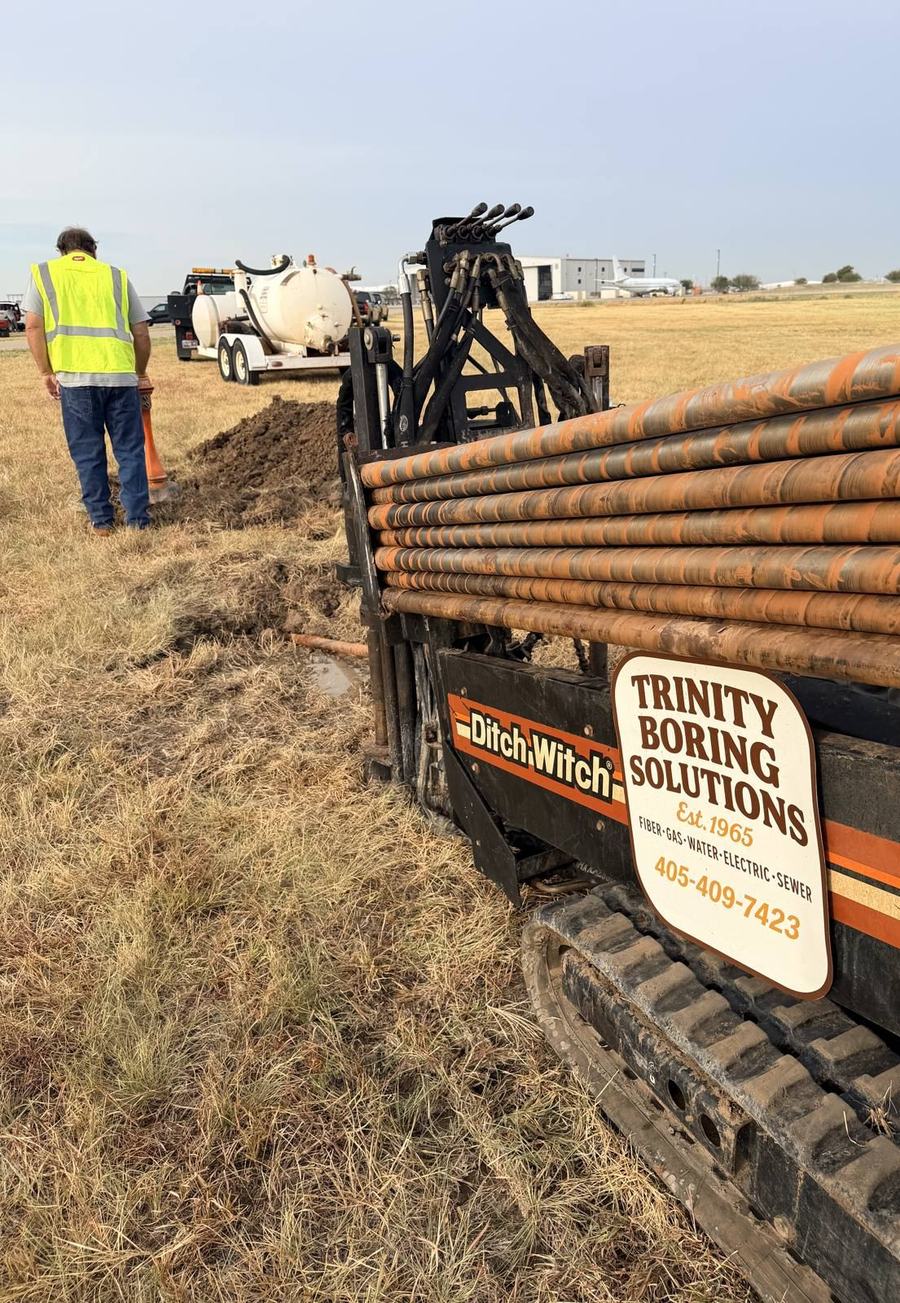
About the author
Darren Rice is the owner and president of Trinity Boring Solutions in Yukon, Oklahoma. The family business was founded by Dean Rice in 1965. Darren took it over and started its directional boring side in 1982, and he has been boring ever since, across Oklahoma and Texas and in Kansas, Iowa, Louisiana and New Mexico. No bore too big or too small: 4 foot sidewalk sleeves to roughly 4,100 feet under the Arkansas River. Reach him at (405) 409-7423.
Get a Quote for Your Bore
Send the location, what is going in, the size and the footage.
Trinity Boring Solutions
9102 NW Expressway, Yukon, OK 73099
(405) 409-7423 | darren@trinityboringsolutions.com
Talk to the crew that does the work
Fastest way to a number is a phone call. Tell us where the crossing is and what is going in the ground, and you will get a straight answer on the same call. Bores from 10 feet to 5,000 feet, 3/4 inch service line through 48 inch casing, anywhere in Oklahoma and Texas. We run 24/7 for main breaks and emergency repairs.
Answered by a person, not a call center.
Would rather not call? Send the details and we will come back with a written quote.