
Field Notes · Emergency Gas Line Boring · West Oklahoma City
Case Study: Emergency Gas Line Bore at the TA Truck Stop on Council Road and I 40 in Oklahoma City
By Trinity Boring Solutions · Yukon, Oklahoma · Licensed, Insured and Bondable
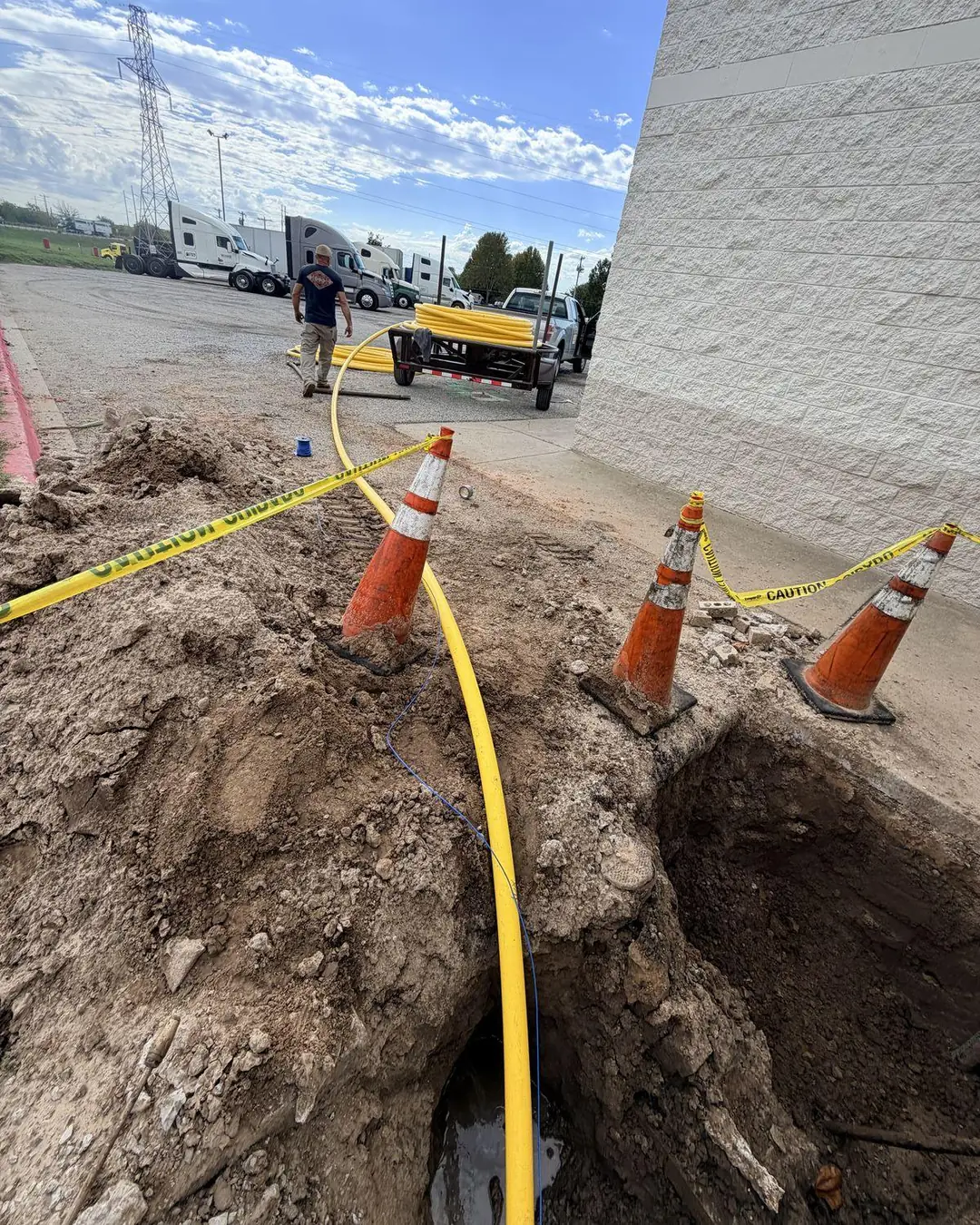
Directional boring contractor in Oklahoma City: Trinity Boring Solutions took the emergency call for a gas line leak at the TA truck stop at 801 South Council Road and I 40 in west Oklahoma City, 73128, and bored two new 2 inch SDR 11 yellow poly gas lines, about 280 feet and 275 feet. TA called an emergency directional boring company in Oklahoma once the gas line leaked at this high profile, high traffic truck stop, and we were on site immediately. We ran tracer wire with the new lines and supplied and connected four 2 inch risers. Before the drill got close, our hydrovac potholed the meter and the fiber and gas lines under the roads. The ground was sandy, so we mixed our mud very well and pulled back with a reamer. The IHOP had gas again and the showers were hot again.
The job: an emergency gas line bore at the TA truck stop at Council Road and I 40, Exit 142, in west OKC. Two bores, about 280 feet and 275 feet, about 555 feet in all, of 2 inch SDR 11 yellow poly gas pipe with tracer wire and four 2 inch risers. Concrete cut out and removed, hydrovac potholing at the meter and on the fiber and gas lines under the roads, mud mixed very well for the sandy ground, a reamer on the pullback and a Ditch Witch JT on the bore.
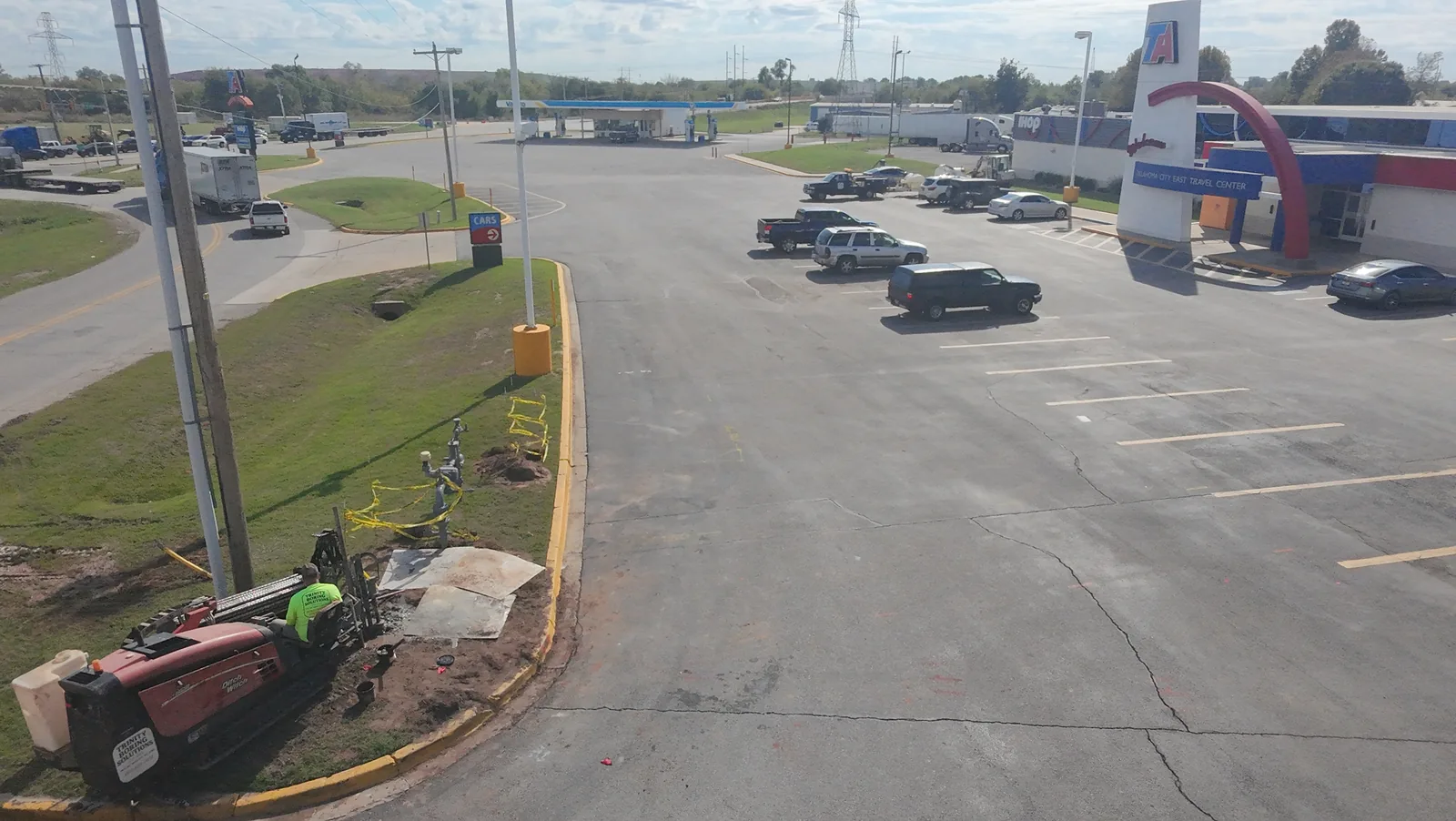
The Challenge: A Gas Line Leak at a Busy Truck Stop on I 40
The TA truck stop at Council Road and I 40 is a high profile, high traffic stop on the west side of Oklahoma City, with an IHOP and showers on site. TA lists it as TA Oklahoma City East, at 801 South Council Road, I 40 Exit 142. When the gas line leaked, the IHOP lost its gas and the showers lost their hot water. TA called an emergency directional boring company in Oklahoma, and that was Trinity Boring Solutions.
Three things made this more than a routine gas line bore. The first was the site itself: a busy truck stop with concrete over the work. The second was what was already in the ground at the meter and under the roads, including fiber and gas lines. The third was the ground. It was sandy, and sand does not hold an open hole on its own.
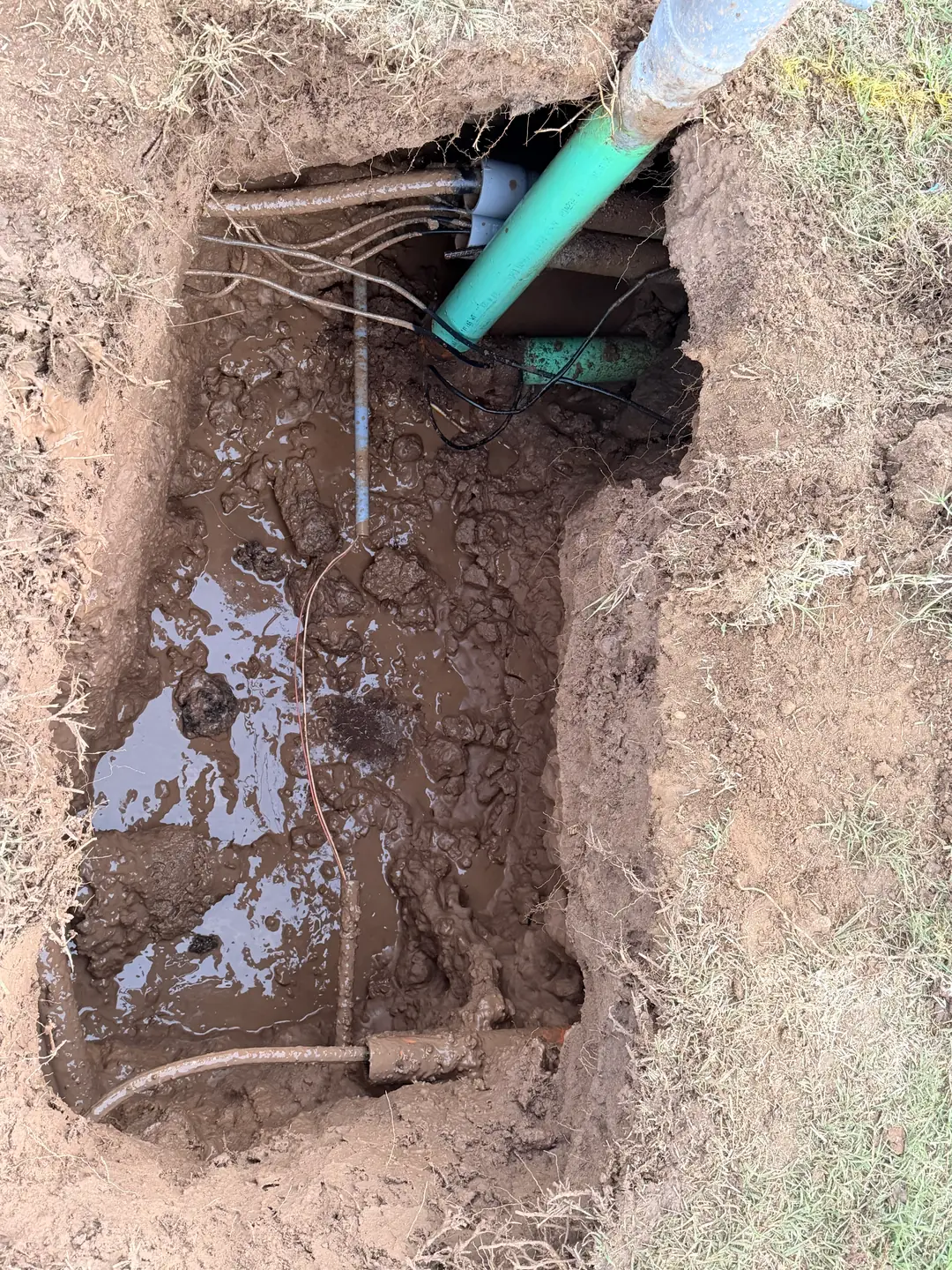
The Approach: Pothole Every Line, Hit the Pits, Mix the Mud for Sand
We were on site immediately. We cut out and removed concrete, and before the drill got close, our hydrovac potholed the meter and the fiber and gas lines under the roads. OKIE811 explains that locate marks show only the approximate horizontal location of a line, a strip of land 2 feet on either side of it. Potholing exposes the line itself, so the bore passes it, not into it. Our hydrovac daylighting page and our guide to locating utilities before you bore cover why this step comes first.
Our Ditch Witch JT bored two new 2 inch gas lines, about 280 feet and about 275 feet, roughly 555 feet in all, and we hit our pits precisely. Landing each shot right in its bore pit keeps the dig small on a busy site.
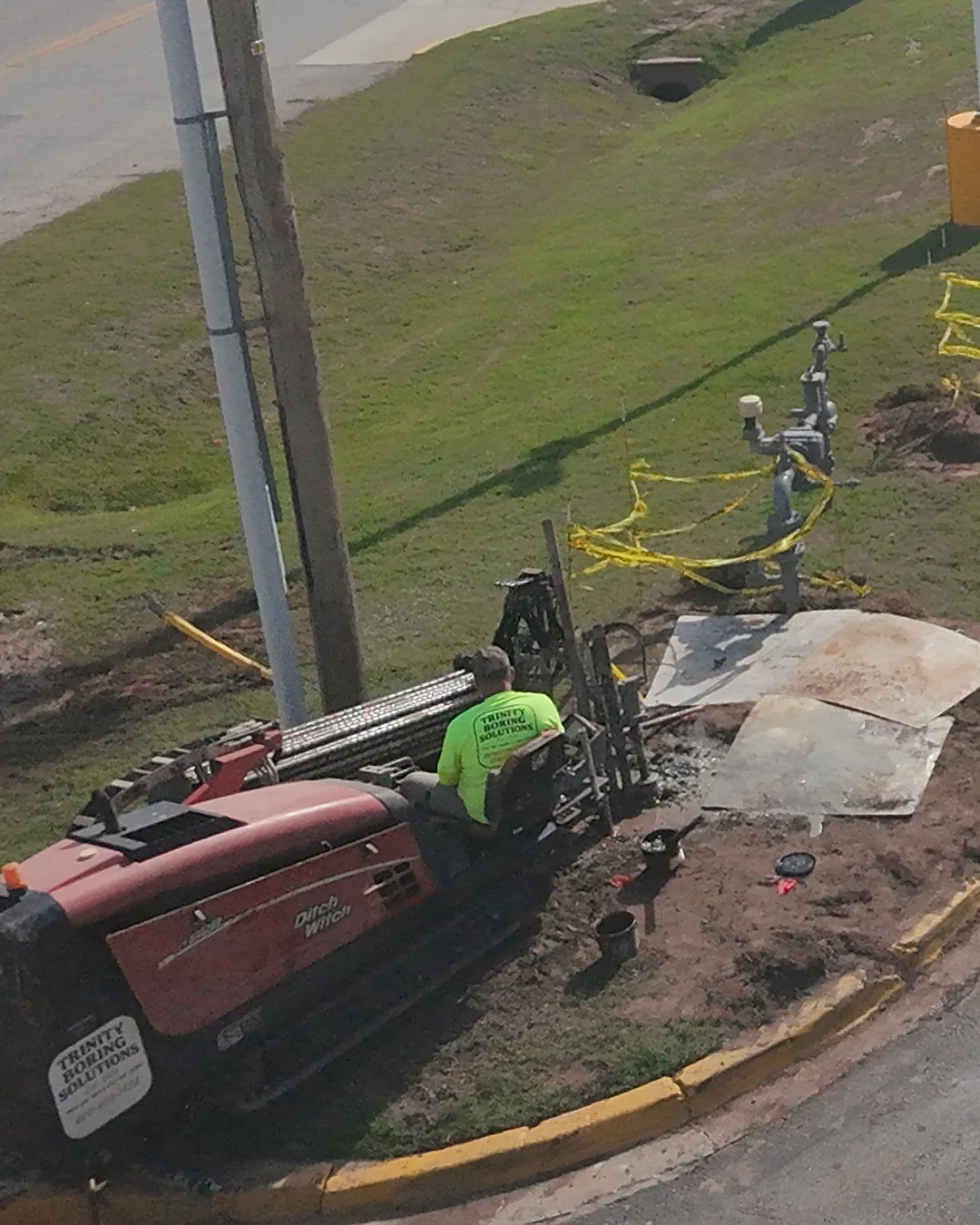
The ground was sandy. Sand has no clay to hold it together, so a bore hole in sand wants to collapse on the pipe during pullback. We mixed all of our drilling mud very well to hold the hole open, and we pulled back with a reamer so the 2 inch pipe pulled in clean. As The Driller puts it, "The most important thing when you are drilling in sand is mixing your mud." Our soil suitability guide covers sand and the other ground we bore in Oklahoma.
The new lines are 2 inch SDR 11 yellow poly gas pipe. SDR stands for standard dimension ratio, the ratio of the outside diameter to the minimum wall thickness, so a lower SDR means a thicker wall. The federal design rules for plastic gas pipe list a 0.216 inch minimum wall for 2 inch pipe at SDR 11. Yellow is the color code for gas: the APWA uniform color code on OKIE811 lists yellow for gas, oil and steam.
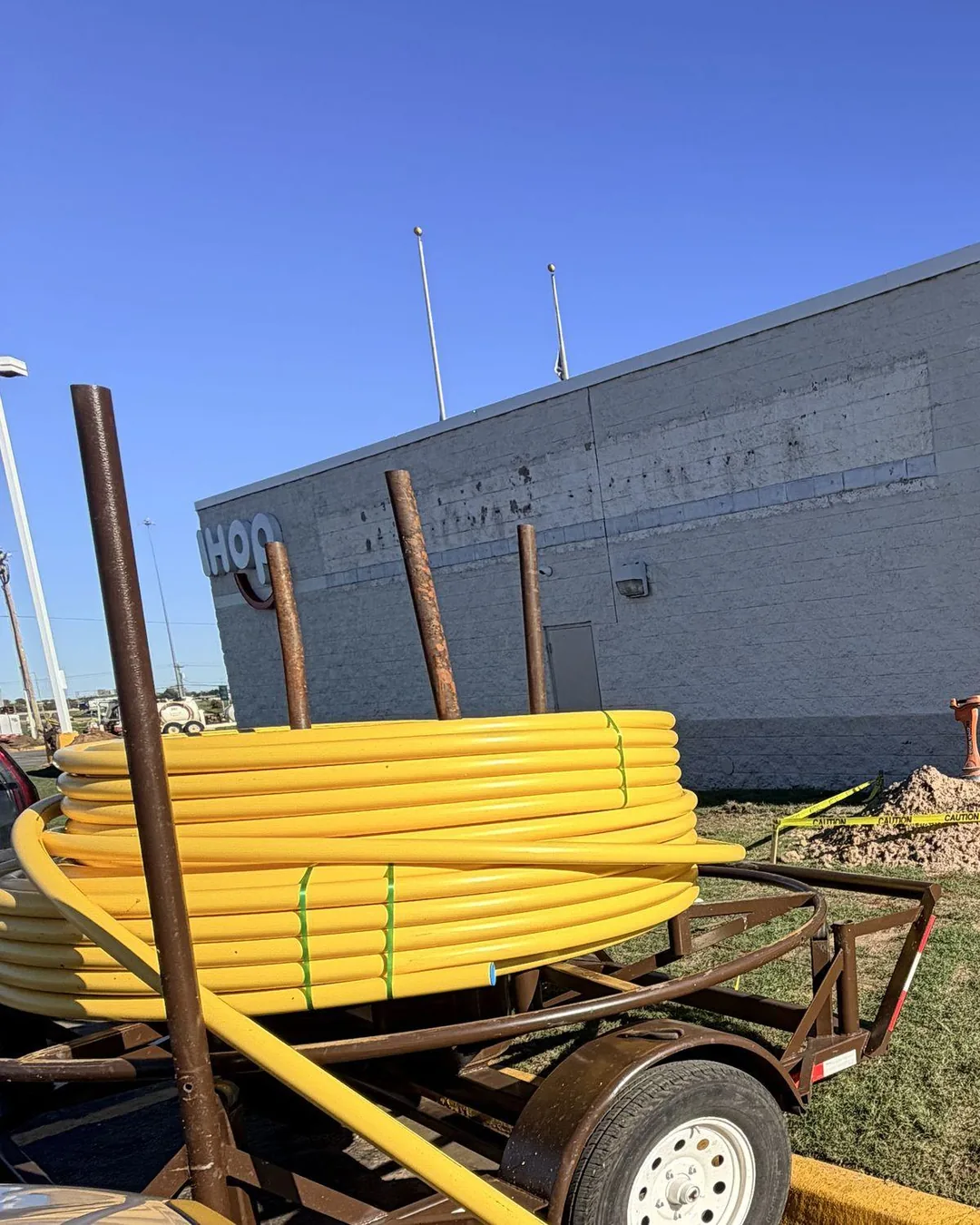
We ran tracer wire with the new lines, because plastic pipe gives a locator nothing to find on its own. The International Code Council says a tracer wire or other approved conductor goes next to underground nonmetallic gas piping, so the line can be found before anyone digs near it. Then we supplied four 2 inch risers and connected them up. A riser is the part of the gas line that comes up out of the ground, and PHMSA describes a service riser as "the section of a service line which extends out of the ground and is often near the wall of a building."
Step by step:
- Took the emergency call from TA and got on site immediately.
- Cut out and removed concrete.
- Hydrovac potholed the meter and the fiber and gas lines under the roads before the drill got close.
- Bored two shots with our Ditch Witch JT, about 280 feet and about 275 feet, and hit our pits precisely.
- Mixed all of our mud very well for the sandy ground.
- Pulled back the 2 inch SDR 11 yellow poly gas pipe with a reamer.
- Ran tracer wire with the new lines, then supplied four 2 inch risers and connected them up.
- Got TA back on track, with gas to the IHOP and hot showers again.
The Result: Gas to the IHOP and Hot Showers Again
TA was back on track. The IHOP had gas again and the showers were hot again. Two new 2 inch SDR 11 yellow poly gas lines, about 555 feet in all, with tracer wire and four 2 inch risers, are in the ground at 801 South Council Road. This is why Trinity Boring Solutions is the emergency directional boring leader in Oklahoma: on call, on site immediately and utilities in the ground. See our gas line services, underground gas line installation and emergency gas line repair support pages.
What an Emergency Gas Line Bore at a Busy Commercial Site Actually Requires
- A crew that gets there fast. When a truck stop loses gas, the kitchen and the hot water go with it. We were on site immediately.
- Potholing before the drill gets close. Hydrovac the meter and every fiber and gas line in the path, so the bore passes them, not into them.
- Only the concrete the job needs. Cut out and remove what the bore needs, not a trench across the lot.
- Pits hit precisely. Landing each shot in its pit keeps the dig small on a busy site.
- Mud mixed for the ground. In sand, the mud has to be mixed very well to hold the hole open.
- A reamer on the pullback. It opens the hole so the 2 inch pipe pulls in clean.
- Gas pipe you can find later. 2 inch SDR 11 yellow poly gas pipe with tracer wire run along with it.
- Risers connected. Four 2 inch risers, supplied and connected up, to bring the gas back above ground.
Trinity Boring Solutions answers emergency utility calls 24/7 and bores gas lines for commercial sites across Oklahoma City and the west metro, including Yukon, Bethany, Warr Acres, El Reno, Canadian County and all of Oklahoma County, plus Edmond, Moore and Norman. See more work like the propane line bore at a hospital in Anadarko, the emergency water line bore in Stillwater and the FAA conduit bore at Will Rogers World Airport, or read directional boring explained by an Oklahoma expert.
Frequently Asked Questions
What people ask about a gas line leak, an emergency bore and the pipe that goes back in.
Who do you call for a gas line leak at a business?
Get everyone clear and call 911 and the gas company first. Oklahoma Natural Gas says to leave the area immediately and call 911, then its emergency line at 800 458 4251. Once the site is safe and a new line has to go in, call an emergency directional boring contractor. At the TA truck stop on Council Road, that was Trinity Boring Solutions.
What is emergency directional boring?
Emergency directional boring is boring in a new utility line on short notice when an existing line fails, without trenching across a busy site. At the TA truck stop on Council Road and I 40, Trinity Boring Solutions was on site immediately and bored two new 2 inch gas lines.
Can you directional bore a gas line?
Yes. A directional bore can put a new gas line under concrete, drives and roads without an open trench. Here we bored two 2 inch SDR 11 yellow poly gas lines, about 280 feet and 275 feet, at a busy truck stop in west Oklahoma City.
What does SDR 11 mean on gas pipe?
SDR stands for standard dimension ratio, the ratio of the pipe outside diameter to its minimum wall thickness. SDR 11 means the outside diameter is 11 times the wall, and a lower SDR means a thicker wall. The federal design table for plastic gas pipe lists a 0.216 inch minimum wall for 2 inch pipe at SDR 11.
Why are gas lines yellow?
Yellow is the color code for gas. In the APWA uniform color code that OKIE811 publishes, yellow marks gas, oil and steam, so yellow pipe in the ground says gas. This job used 2 inch SDR 11 yellow poly gas pipe.
What is tracer wire for on a gas line?
Plastic pipe gives a locator nothing to find on its own, so a tracer wire runs with it. A locator puts a signal on the wire to find the line later. The International Code Council says a tracer wire or other approved conductor goes next to underground nonmetallic gas piping. We ran tracer wire with both new 2 inch gas lines.
What is a gas riser?
A gas riser is the part of a gas line that comes up out of the ground, often at the meter or a building wall. PHMSA describes a service riser as the section of a service line that extends out of the ground. On this job we supplied four 2 inch risers and connected them up.
Can you directional bore in sand?
Yes. Sand has no clay to hold it together, so a bore hole in sand wants to cave in. The answer is drilling mud mixed very well to hold the hole open and a reamer on the pullback. That is how we bored two 2 inch gas lines through sandy ground at the TA truck stop.
Why hydrovac before boring near gas lines?
Locate marks show only the approximate location of a line, a strip 2 feet on either side of it, and not its depth. Hydrovac potholing uses water and vacuum to expose the line so the crew sees exactly where it is before the drill gets close. Here we potholed the meter and the fiber and gas lines under the roads.
Can you bore a gas line under concrete?
Yes. The bore runs under the concrete, so you cut out only what the job needs instead of trenching across the lot. At the TA truck stop we cut out and removed concrete and hit our pits precisely.
How fast can an emergency directional boring crew get there?
It depends on the crew and the call. On this gas line leak, Trinity Boring Solutions was on site immediately. We are based at 9102 NW Expressway in Yukon and answer emergency calls 24/7.
Who is an emergency directional boring contractor in Oklahoma City?
Trinity Boring Solutions is a directional boring contractor based at 9102 NW Expressway in Yukon, established in 1965, serving Oklahoma City, west OKC, Edmond, Moore, Norman, Yukon, Mustang, Bethany, Warr Acres, El Reno, Oklahoma County, Canadian County and all of Oklahoma. We bore gas, water, sewer, electric and fiber lines. Call (405) 409-7423.
Need an emergency gas line bore in Oklahoma City?
New gas lines, risers, hydrovac potholing and bores under concrete and roads. Trinity Boring Solutions answers emergency calls across Oklahoma City, Oklahoma County and all of Oklahoma. 9102 NW Expressway, Yukon, OK 73099.
More Boring and Utility Resources
- Directional Boring in Oklahoma City
- Directional Boring in Oklahoma County
- Directional Boring in Yukon
- Directional Boring in Bethany
- Directional Boring in Warr Acres
- Directional Boring in El Reno
- Emergency Directional Boring in Oklahoma
- Emergency Gas Line Repair Support
- 24/7 Emergency Utility Services
- Gas Line Services
- Underground Gas Line Installation
- Commercial Directional Boring
- Hydrovac Daylighting
- Locating Utilities Before You Bore
- Directional Boring Soil Suitability
- Drilling Fluid in Directional Boring
- Bore Pits, Casing and Boring Mechanics
- Directional Boring Equipment
- Propane Line Bore at a Hospital in Anadarko
- Emergency Water Line Bore in Stillwater
- FAA Conduit Bore at Will Rogers World Airport
- Directional Boring FAQ
Talk to the crew that does the work
Fastest way to a number is a phone call. Tell us where the crossing is and what is going in the ground, and you will get a straight answer on the same call. Bores from 10 feet to 5,000 feet, 3/4 inch service line through 48 inch casing, anywhere in Oklahoma and Texas. We run 24/7 for main breaks and emergency repairs.
Answered by a person, not a call center.
Would rather not call? Send the details and we will come back with a written quote.
Latest from the crew
More field reports and guides from Trinity Boring Solutions.
- Storm Drain Replacement in Moore: What the $18 Million Bond Vote Means for Utility Lines
- Data Center Site Utilities in Oklahoma: What Goes Underground Before the Servers Arrive
- Trenchless Culvert Installation After Oklahoma’s October 2026 Road Washouts
- Directional Boring Explained by the Oklahoma Crew That Has Done It Since 1965
- Case Study: 6 Inch PVC Sleeve Bored Under NE 24th Street and a Water Main in Oklahoma City
- Case Study: 385 Foot Sandstone Rock Bore Under Creeks, Wetland and a Dam in Guthrie, OK