
Home / Services / EPA environmental remediation boring in Oklahoma and Texas
Government and agency work
EPA environmental remediation boring in Oklahoma and Texas
We can quote the drilling portion of EPA environmental remediation boring in Oklahoma and Texas. What we want to see first is where the approved bore passes relative to the contamination, the wetland and existing utilities. Send the profile and tell us who controls the work limits. A line on a map is enough to start a conversation, but not enough to price contaminated returns or plan a drill setup beside a creek.
At a glance
- Work: Directional boring for utility lines and sleeves on cleanup sites and for stream and wetland crossings with environmental conditions.
- Where: Oklahoma and Texas. Our shop is at 9102 Northwest Expy, Yukon, OK 73099.
- Size and reach: We bored a 4,100 foot single shot under the Arkansas River. Longer runs are bored in sections. Our largest pipe installation was a 48 inch HDPE water intake at Fort Cobb Lake. Neither job sets the size or reach we would quote for your site.
- Permits: The customer or general contractor pulls permits and arranges traffic control. We supply the bore plan and profile, equipment and method description, and as built records.
- Quote: Send your crossing plan or call (405) 409-7423 with the site location, pipe or sleeve size and approval conditions.
EPA environmental remediation boring and state environmental agency crossings
Start with the site plan and mark the drilling footprint, not just the crossing. Include both pits, access from the public road, the rig and pipe staging areas, and the place set aside for fluid and cuttings. We want to know which of those areas the cleanup team has cleared for use. Then we can discuss what we can drill without changing the limits in the work plan.
Agency review and quote requirements
Use this table to route questions before sending the work out for a quote. More than one row can apply: a crossing under a creek can have different conditions from the pad beside it, and neither tells you where the site team will accept the drilling returns.
| Job condition | Authority or rule | What to hand us before we price the bore |
|---|---|---|
| Part of an authorized Superfund response conducted entirely on site | For a response selected and carried out under CERCLA Section 121, no permit is required for the portion conducted entirely on site, but applicable substantive requirements still apply unless waived (EPA policy on permits). | A plan defining the response area, approved work limits and applicable construction conditions. Show where every pit and haul route sits. |
| Material from a covered Superfund response moves off site | The EPA Off Site Rule governs the acceptability of facilities receiving covered CERCLA waste (EPA Off Site Rule). | The site team’s material handling plan, who is assigning the waste designation, and the receiving and transport arrangements. Do not assume the drilling quote includes disposal. |
| Proposed discharge of dredged or fill material into federally regulated waters or wetlands | Clean Water Act Section 404 generally requires a permit for discharging dredged or fill material into federally regulated waters unless an exemption applies (EPA Section 404 permit program). | A plan showing any proposed fill or excavation, including pads and temporary access. Attach the Corps determination or applicable approval and conditions if available. |
| Proposed work under a navigable water of the United States | Section 10 of the Rivers and Harbors Act can apply to work under navigable waters, including cable and pipeline crossings (Army Corps Galveston District permit FAQ). | Stationing, bore profile and agency review status. Show the channel and the work area on each bank. |
| Oklahoma water quality review for a federal discharge permit | Oklahoma DEQ handles Section 401 certification and directs a project proponent seeking an individual certification to submit a meeting request at least 30 days before the certification request (Oklahoma DEQ Water Quality Certification). | The certification or the status of the request, plus any conditions that affect pit locations, access or when we can work. |
| Texas water quality review for a Corps Section 404 permit | TCEQ handles Section 401 review for covered discharges; it identifies the Railroad Commission as responsible for oil and gas exploration (TCEQ 401 Certification Reviews). | The applicable certification conditions or confirmation from the applicant of which agency is reviewing the discharge. |
| Oklahoma voluntary cleanup site | The Oklahoma DEQ Voluntary Cleanup Program guide lists site characterization, a decision document and a remedial action plan as separate stages (Oklahoma DEQ cleanup guide). | The current drawing and plan revision. Tell us if the bore is for investigation or construction under an approved remedy. |
| Texas voluntary cleanup site | TCEQ asks for prior site reports with a Voluntary Cleanup Program application and an agreement that sets the cleanup submittal schedule (TCEQ Voluntary Cleanup Program). | Relevant site reports, the approved drilling limits and the expected date of any design release. |
| Oklahoma Class V injection associated with remediation | Oklahoma DEQ regulates most Class V wells; the Oklahoma Corporation Commission regulates those used to remediate groundwater associated with storage tanks under Commission jurisdiction (Oklahoma DEQ Underground Injection Control). | The well purpose, who holds the approval, the approved plan and a clear split between the civil bore and any regulated well construction. |
| Texas Class V aquifer remediation injection | TCEQ lists aquifer remediation injection wells for nonhazardous fluids among the types it regulates and says most Class V wells require authorization before construction (TCEQ Class V Injection Wells). | The applicable authorization, completion drawing and responsibility for installation, testing and operation. |
Facts checked November 2026. Tell us if something has changed.
Oklahoma and Texas cleanup sites are not interchangeable
EPA identifies Tar Creek in Ottawa County, Oklahoma, as a mining waste cleanup involving the Quapaw Nation and Oklahoma DEQ (EPA Tar Creek Strategic Plan). At the San Jacinto River Waste Pits in Channelview, Texas, EPA documented a different cleanup involving TCEQ and Harris County (EPA account of the Channelview site). Neither is a Trinity job. These examples are why we ask for the decision and drawings for your specific site, not just the name of the agency.
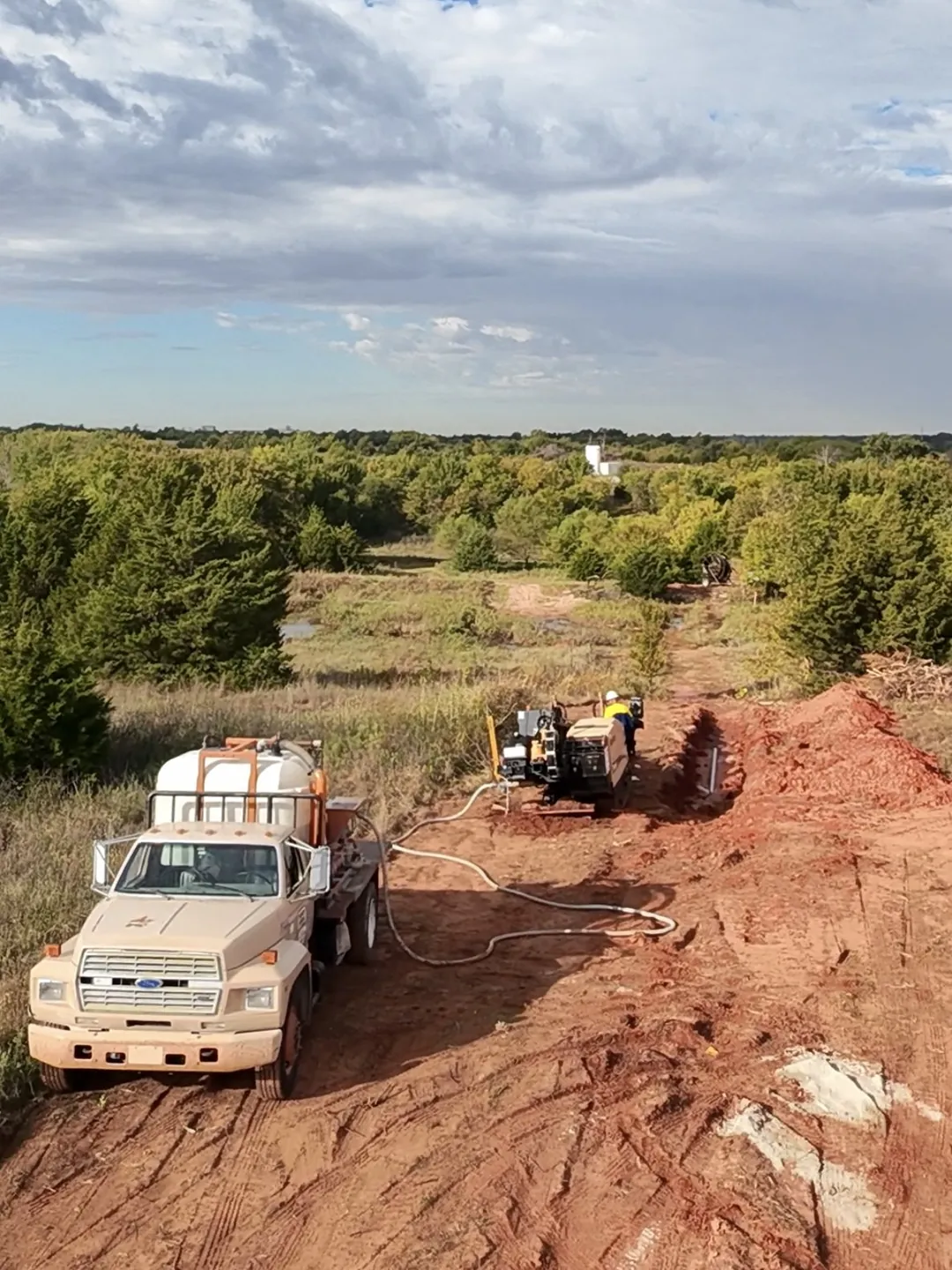
Work we have done that is like this
These are the same kind of crossing near water and wetlands. We do not list any of them as an EPA or cleanup job.
- Rock under creeks, a wetland and a dam. Our Guthrie sandstone bore ran 385 feet through hard sandstone beneath two small creeks, a wetland and a dam for a 4 inch HDPE electrical conduit.
- A lake intake. We installed a 48 inch HDPE water intake line out to the middle of Fort Cobb Lake, and divers changed the reamer at the lake end. Fort Cobb Lake is a Bureau of Reclamation reservoir in Caddo County, part of the Washita Basin Project, not a Corps lake.
- A long river shot. We bored a single shot of 4,100 feet under the Arkansas River.
What we bring to this kind of job
Dean Rice started Trinity in 1965. We have done underground construction since 1982, and Darren Rice owns the company today. Our sandstone bore at Guthrie went beneath creeks, a wetland and a dam. That job is a better illustration of our crossing work than a claim that we have drilled for an environmental agency.
We also put a PVC sleeve under NE 24th Street at the Clara Luper Center in Oklahoma City. That is the kind of defined construction scope we want on a cleanup job too: show us what goes in the ground, where it starts and ends, and what the line crosses. We own auger machines and can discuss jack and bore with steel casing as an alternative if the site can accommodate the pits and the approved design allows it.
For existing utility conflicts, we can daylight the lines with hydrovac and plan utility potholing around the limits set by the cleanup team. Include any handling restrictions for material pulled into the vacuum truck. We can also quote trenchless utility installation, including water line work, as separate construction items when they are on the plan.
Horizontal remediation wells are not utility sleeves
EPA’s CLU IN overview describes horizontal remediation wells laid out along or across a plume, with screened intervals that put the well in contact with the target formation (EPA CLU IN overview). A sleeve under a road does not serve that function. If your plan calls for a well, send the completion drawing, the target interval and the name of the specialist responsible for the well. We can review a defined civil drilling scope. Do not assume our quote includes well construction, testing, or operation.
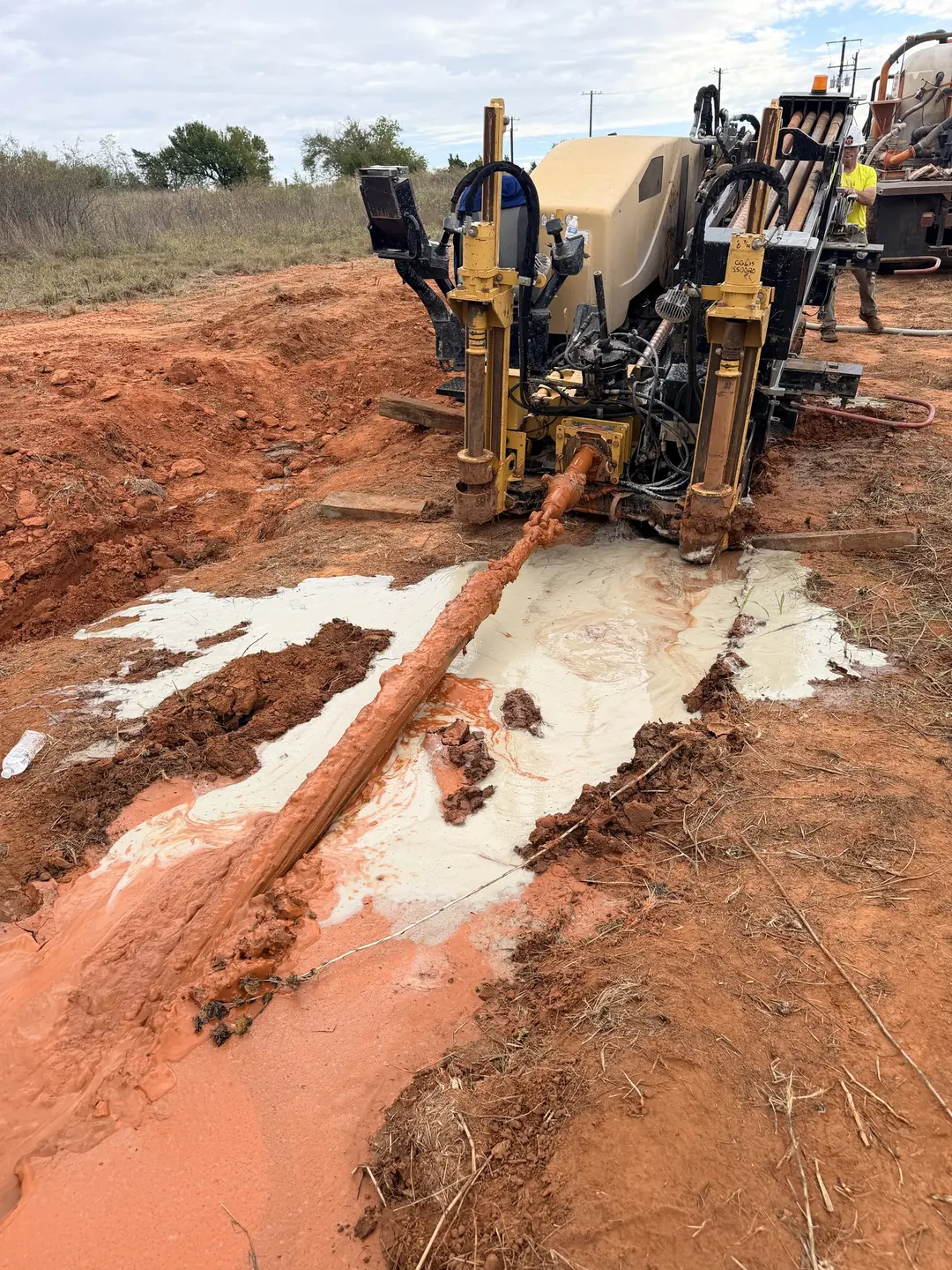
Plan for an inadvertent return before drilling
An inadvertent return is drilling fluid surfacing away from the intended returns (FERC HDD guidance, abbreviations). FERC staff guidance for natural gas projects separates routine drilling, loss of circulation and a confirmed return, and calls for monitoring and response provisions for each condition (FERC HDD guidance, Sections 3.5 to 3.7). We use those questions to discuss a crossing with the site team, not as a substitute for your approval conditions.
Walk the alignment on the drawing with us. If one bank cannot be reached from the approved access, identify who monitors it and from where. Write down who can stop the bore, who contacts the agency, who handles recovery, and who can authorize resuming work. Reserve a place for recovered material before deciding how to reach a wet area. A recovery route that crosses a marked wetland or a contaminated zone is not a route we want to discover after a release. Our Guthrie rock bore passed beneath two small creeks, a wetland and a dam, which is the kind of path where that plan gets settled before drilling.
What we need from you to quote it
- Drawings: Send the plan and profile with stationing or coordinates, pipe or casing size, connection elevations, bore limits and utility crossings. Identify which plan revision we should price.
- Approvals: Provide the permit, certification or remedial work plan conditions that affect the bore. Tell us what is still pending and who is arranging traffic control.
- Ground information: Send the geotechnical logs and groundwater observations for the alignment and both pits. Mark known contamination boundaries separately from property lines.
- Utilities: Provide available utility records, including private lines and abandoned lines shown on site drawings. Say which crossings have been exposed and which still need potholing.
- Site access: Show where we can stage pipe and equipment, how we reach the far end, and where the site team allows decontamination and material storage.
- Returns and cuttings: Identify who supplies containment, who characterizes material, and who authorizes transport and disposal. Include any sampling hold points and the required records.
- Schedule and closeout: Tell us the drilling window, when monitoring staff are available and who must accept the profile and records. If you need alternates, show the alignments you want priced separately.
Questions about remediation boring and water crossings
Do I need a permit to bore under a creek in Oklahoma or Texas?
A creek bore is not automatically exempt from review. Section 404 generally regulates discharge of dredged or fill material into federally regulated waters (EPA Section 404 permit program). Section 10 can apply to work under a navigable water (Army Corps Galveston District permit FAQ). Show the reviewer the pits, temporary access and work pads as well as the alignment.
What is the difference between Section 401 and Section 404?
Section 404 addresses discharges of dredged or fill material into federally regulated waters, while Section 401 certification is a water quality review tied to certain federal permits, including applicable Section 404 permits (Oklahoma DEQ Water Quality Certification). Put both on the drawing list for the quote if they apply. We need the conditions that affect the actual crossing, not only a permit number.
Who files Section 401 water quality certification in Oklahoma?
The project proponent requests certification from Oklahoma DEQ and submits a meeting request at least 30 days before filing the individual certification request (Oklahoma DEQ Water Quality Certification). On our jobs the customer or general contractor handles filing and traffic control. We supply the profile and method information for the drilling scope.
Does TCEQ review every Texas stream crossing?
No. TCEQ describes its Section 401 review in connection with Corps Section 404 permits and identifies an exception for oil and gas exploration under the Railroad Commission (TCEQ 401 Certification Reviews). Have the project team confirm what applies to the actual activity. We need the written conditions that affect the work area, not an assumption based on the stream’s width.
Does a Superfund cleanup need local or state permits?
Qualifying response work conducted entirely on site can be exempt from obtaining permits under CERCLA Section 121(e)(1), but applicable substantive requirements still apply unless waived (EPA policy on permits). Ask the lead agency to identify the work the exemption actually covers. Give us the approved scope before we price a pit, access route or staging area outside those limits.
What is horizontal directional drilling for groundwater remediation?
It is a way to place a horizontal well along or across a target zone so the screen contacts the part of the ground being sampled or treated (EPA CLU IN overview). A utility bore is not the same thing. Send both the well design and civil drawings if you expect us to quote the drilling portion.
Do injection wells for aquifer cleanup need separate authorization?
Injection can require its own authorization. Oklahoma DEQ identifies a jurisdiction split for certain Class V remediation wells (Oklahoma DEQ Underground Injection Control). TCEQ says most Class V wells need authorization before construction (TCEQ Class V Injection Wells). Have the project team confirm the reviewing agency and give us the approved civil scope before committing to a start date.
What is an inadvertent return or frac out in directional drilling?
An inadvertent return is drilling fluid reaching the surface outside the intended returns (FERC HDD guidance, abbreviations). FERC staff guidance for natural gas projects distinguishes a return observed at the surface from a loss of fluid circulation during drilling (FERC HDD guidance). We want the crossing plan to say how the two situations will be recognized, documented and handled.
Can a directional bore avoid bringing equipment into a wetland?
It can if the approved setup, access and exit areas are outside the wetland and the work can proceed from those positions. Do not look only at the rig footprint. Mark the pipe laydown, foot access for monitoring, and any route needed if the bore cannot be completed as planned.
Can drilling fluid and cuttings go to an ordinary disposal site?
Do not assume they can. The EPA Off Site Rule governs which facilities can accept covered CERCLA wastes (EPA Off Site Rule). For any cleanup project, tell us who will characterize the material and choose the destination. If the site calls for testing before anything leaves, tell us where and how long it can be held.
What should I send for a directional boring quote on a cleanup site?
Start with the bore profile and the environmental conditions that change the work. Include the pit locations, utility records, pipe specification, ground information, permitted access and schedule. Flag assumptions you want separated in the quote, such as material storage, monitoring and backfill, so everyone can tell what the drilling scope includes.
Get a quote for the crossing
Send the profile and site conditions or call (405) 409-7423. We can tell you which details are missing before we put a number on the bore. For other project types, see our utility crossing services.
Talk to the crew that does the work
Fastest way to a number is a phone call. Tell us where the crossing is and what is going in the ground, and you will get a straight answer on the same call. Bores from 10 feet to 4,100 feet in a single shot, with longer runs bored in sections, 3/4 inch service line through 48 inch pipe, anywhere in Oklahoma and Texas. We run 24/7 for main breaks and emergency repairs.
Answered by a person, not a call center.
Would rather not call? Send the details and we will come back with a written quote.