
Home / Services / FEMA Disaster Recovery Utility Boring in Oklahoma and Texas
Government and agency work
FEMA Disaster Recovery Utility Boring in Oklahoma and Texas
FEMA disaster recovery utility boring means putting a damaged water, sewer, gas, power or fiber line back in the ground after a declared flood, tornado, ice storm or wildfire, under the cost and paperwork rules of FEMA Public Assistance. We are Trinity Boring Solutions in Yukon, Oklahoma. Dean Rice started the company in 1965. We have done underground construction since 1982, and Darren Rice runs it now.
Quick summary
- What it is: directional drilling, auger boring and hydrovac work to replace water, sewer, gas, power and fiber lines after a declared disaster, under FEMA Public Assistance rules.
- Where: Oklahoma and Texas only, from our shop in Yukon. Same day crews within about four hours of Yukon.
- Sizes and lengths: up to a 48 inch HDPE pipe and a 4,100 foot single shot on our record. Longer runs are bored in sections.
- Who files: the city, district or nonprofit applies to FEMA. The owner or general contractor pulls permits and arranges traffic control. We supply the bore plan and profile, method description and as built records.
- How to get a number: send the checklist below or call (405) 409-7423.
We have not been handed a FEMA contract, and we will not pretend otherwise. We can bore the line, keep the records a reviewer asks for, and quote the work so your grant staff can file it.
How FEMA disaster recovery utility boring fits into Public Assistance
FEMA does not pay the driller. The Public Assistance Program and Policy Guide says for profit companies are not eligible applicants. FEMA reimburses the applicant, and the applicant pays the contractor. In our two states that applicant is usually a city, a county, a rural water district, a utility authority or a nonprofit utility.
The money comes through the state. The Oklahoma Department of Emergency Management guides applicants from damage assessment to closeout and lists utilities and water authorities as eligible special districts. In Texas, local officials start with their TDEM District Chief. Both states sit in FEMA Region 6, based in Denton, Texas.
Every project faces three tests in the policy guide. The damage came from the declared incident. It sits inside the declared area. The line is the applicant’s legal responsibility. So we ask who owns the pipe before we price it. The applicant has 30 days after designation to file a Request for Public Assistance. Our municipal utility page covers how we work with city crews.
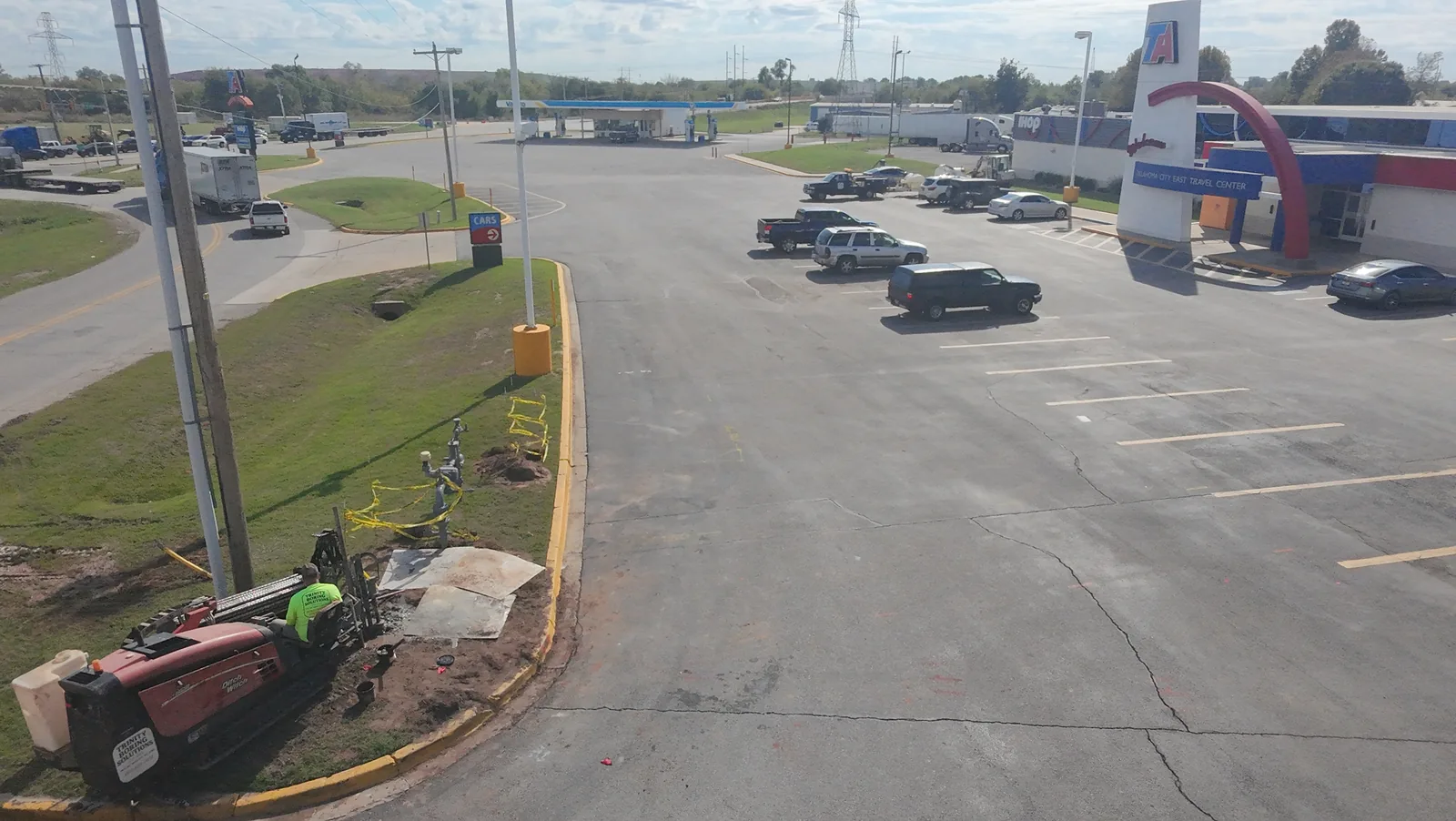
Work we have done that is like this
These are the same kind of fast repair bore that disaster work calls for. We do not list either of them as a FEMA job.
- An emergency water line. We bored an emergency water line for a sorority house in Stillwater, a 3 inch water service brought into the basement, working for the plumbing contractor.
- An emergency gas replacement. At the TA truck stop at Council Road and Interstate 40 in Oklahoma City, we made two bores of about 280 and 275 feet under roads for a 2 inch emergency gas replacement.
Emergency work versus permanent work on a utility line
FEMA splits the work in two. Emergency work is Category A for debris and Category B for emergency protective measures. Permanent work is Categories C through G, and utilities are Category F. Under 44 CFR 206.201, permanent work restores a facility to its predisaster design and current standards.
Here is the line that catches people. An emergency repair that restores the predisaster design and function of a facility is permanent work, not emergency work. Power restoration is the one exception (PAPPG page 161). If a washed out creek takes a water main and we bore the new crossing that stays in service, expect it to be filed as Category F, even though everyone treated it as an emergency. A temporary bypass line or pump setup is the kind of thing that stays in Category B.
The category sets the deadline and decides whether mitigation money is possible. We have bored an emergency water line for a sorority house in Stillwater, so we know the pace when the water is out. See our emergency utility contractor page. On disaster work we note the date, station and reason for every change. Our emergency gas replacement at the TA truck stop at Council Road and Interstate 40 in Oklahoma City is the same kind of fast repair bore, and we do not list it as FEMA work.
FEMA Public Assistance rules for utility boring: reference table
Each row links to the rule we read.
| Rule | What it says | What it means on a bore | Source |
|---|---|---|---|
| Categories of work | Emergency work is Category A debris and Category B protective measures. Permanent work is Categories C to G. Category F is public utilities. | A replacement crossing is usually F. A temporary bypass is usually B. | FEMA PA process page |
| What Category F covers | Water delivery, power lines, natural gas distribution, sewage collection and communication systems. | Water, sewer, gas, electric and fiber bores all fit when the owner is eligible. | PAPPG v5.0, page 201 |
| Rushed repair that is permanent | Exigent repair that restores predisaster design and function is permanent work, except power restoration. | A final water or sewer bore done the night of the storm is still permanent work. | PAPPG v5.0, page 161 |
| Power restoration | May be claimed as Category B or F. Mitigation funding only comes with F. | Pick the category for electric conduit bores before the claim is written. | PAPPG v5.0, page 202 |
| Completion deadlines | From the declaration date: 6 months for emergency work, 18 months for permanent work. The state may add 6 and 30 months, project by project. | Schedule the permanent bore inside the window or request an extension early. | 44 CFR 206.204(c) |
| Improved projects | Permanent work restores predisaster design. Improvements need the recipient’s approval, and federal money is capped at the estimate for the original repair. | Upsizing is possible, but the owner pays the difference. | 44 CFR 206.201 and 206.203(d)(1) |
| Inspecting buried lines | Eligible only with evidence of damage, such as sunken ground over a water pipeline. General video inspection of sewer lines is not. | Photograph sinkholes and breaks before cleanup. Then potholing has a reason on paper. | PAPPG v5.0, Appendix I, pages 308 to 309 |
| Section 406 mitigation | Permanent work only. Cost effective at up to 15 percent of repair cost, up to 100 percent for Appendix J measures, or with a benefit cost analysis. | A deeper bore under a creek that scoured the line can be proposed. FEMA decides. | PAPPG v5.0, pages 178 to 180 |
| Who gets paid | For profit firms are not applicants. FEMA reimburses the applicant, which pays the contractor. | Our invoice goes to you, not to FEMA. | PAPPG v5.0, page 48 |
| Emergency procurement | Noncompetitive award allowed when the exigency or emergency will not permit the delay of public notice. | Write down why and for how long. Compete the rest. | 2 CFR 200.320(c)(3) |
| Contract type | Time and materials only with a ceiling price and close oversight. Cost plus a percentage of cost is prohibited. | We carry a ceiling and move to a fixed price once the alignment is set. | 2 CFR 200.318(j); 2 CFR 200.324 |
| Clauses and records | Contracts carry the applicable Appendix II provisions, including the SAM exclusions bar. Keep records three years from the final financial report. | Send your federal addendum with the bid. Keep our logs in the grant file. | 2 CFR 200 Appendix II; 2 CFR 200.334 |
| Contract cost records | Contractor name, dates worked, invoice number, amount and description of work, plus daily or weekly logs for time and materials. | Our daily log and invoice are built around these fields. | PAPPG v5.0, page 100 |
| Oklahoma emergency locates | Okie811 takes emergency requests around the clock to dig before 48 hours when life, health or property is in danger. | We call in the right ticket and log the number. | Okie811 Membership Guide |
| Texas emergency locates | An emergency needs a danger to life, health or property and work the same day. Normal notice is two working days. | A next morning start is not an emergency ticket. | Texas811 FAQ |
Facts checked November 2026. Tell us if something has changed.
Records we keep on a FEMA funded utility bore
FEMA says costs must be adequately documented, authorized, necessary and reasonable, and TDEM asks for force account labor and equipment, materials and contracts to certify a claim. Here is what we hand the owner.
- Bore plan and profile, dated, with the depth under each creek, road or other utility.
- A daily log: crew, equipment hours, footage bored, pipe installed and locate ticket number.
- Dated photos of the damage before we touch it and of every pothole on existing lines.
- Change notes that say what changed and why, so a reviewer can tell repair from improvement.
- As built records and invoices with dates worked, invoice number, amount and a plain description of the work.
We expose existing lines with hydrovac daylighting and utility potholing, and those photos go in the same file.
Contract terms for FEMA reimbursable utility repair
Emergency awards. 2 CFR 200.320 allows a noncompetitive award when the emergency will not permit the delay of a public notice. Once water is flowing again, the permanent bore can usually be competed.
Contract type. A time and materials contract needs a ceiling price. Cost plus a percentage of cost is not allowed, and the FEMA contracting checklist calls it out by name. Footage and pipe size on a bore are usually known within a day or two, so we move to a fixed price per crossing once the alignment is set.
Federal clauses. Under 2 CFR 200.327 your contract carries the applicable Appendix II provisions. FEMA procurement guidance tells owners to check contractor responsibility starting at SAM.gov. If a general contractor holds the prime, we work under them; see boring for general contractors.
Rebuilding a damaged crossing deeper or safer
Floods break lines at creek crossings when the bank scours out. A bore can put the new line under the scour.
FEMA has two doors for that. An improved project needs approval, and the owner pays above the original repair estimate. Section 406 hazard mitigation applies only to permanent work and must pass the cost tests in the table. We give your engineer the bore plan, profile and method description for either request. FEMA makes the call. See utility crossings, jack and bore with steel casing and water line services.
What we bring to this kind of job
- Since 1965, when Dean Rice founded the company. Underground construction since 1982. Darren Rice owns and runs it from 9102 Northwest Expy, Yukon, OK 73099.
- An emergency water line bore in Stillwater.
- Water crossings: a 4,100 foot single shot under the Arkansas River, and the 48 inch HDPE water intake at Fort Cobb Lake.
- A sandstone bore at Guthrie beneath creeks, a wetland and a dam.
- Public property with rules: 840 feet of FAA conduit under runways at Will Rogers World Airport, a bore under the John Kilpatrick Turnpike, and a PVC sleeve under NE 24th Street at the Clara Luper Center in Oklahoma City.
- A propane line at Anadarko.
- Directional drilling, auger boring and jack and bore with steel casing on our own auger machines, plus hydrovac for potholing and daylighting.
No FEMA contract is on that list, so we do not claim one. For other federal money, see federal government directional boring.
What we need from you to quote it
- Plans. Record drawings of the damaged line and any repair design. No design yet? A marked map of where it ran and failed.
- Disaster details. Declaration number, county, and whether grant staff call it emergency or permanent work.
- Permit conditions. Road, railroad, creek or wetland conditions on the crossing. You or your general contractor file; we supply the driller’s part.
- Soil or geotech. Boring logs near the crossing, and where the bank scoured and how deep.
- Utility records. Maps of other lines in the corridor and any open locate ticket.
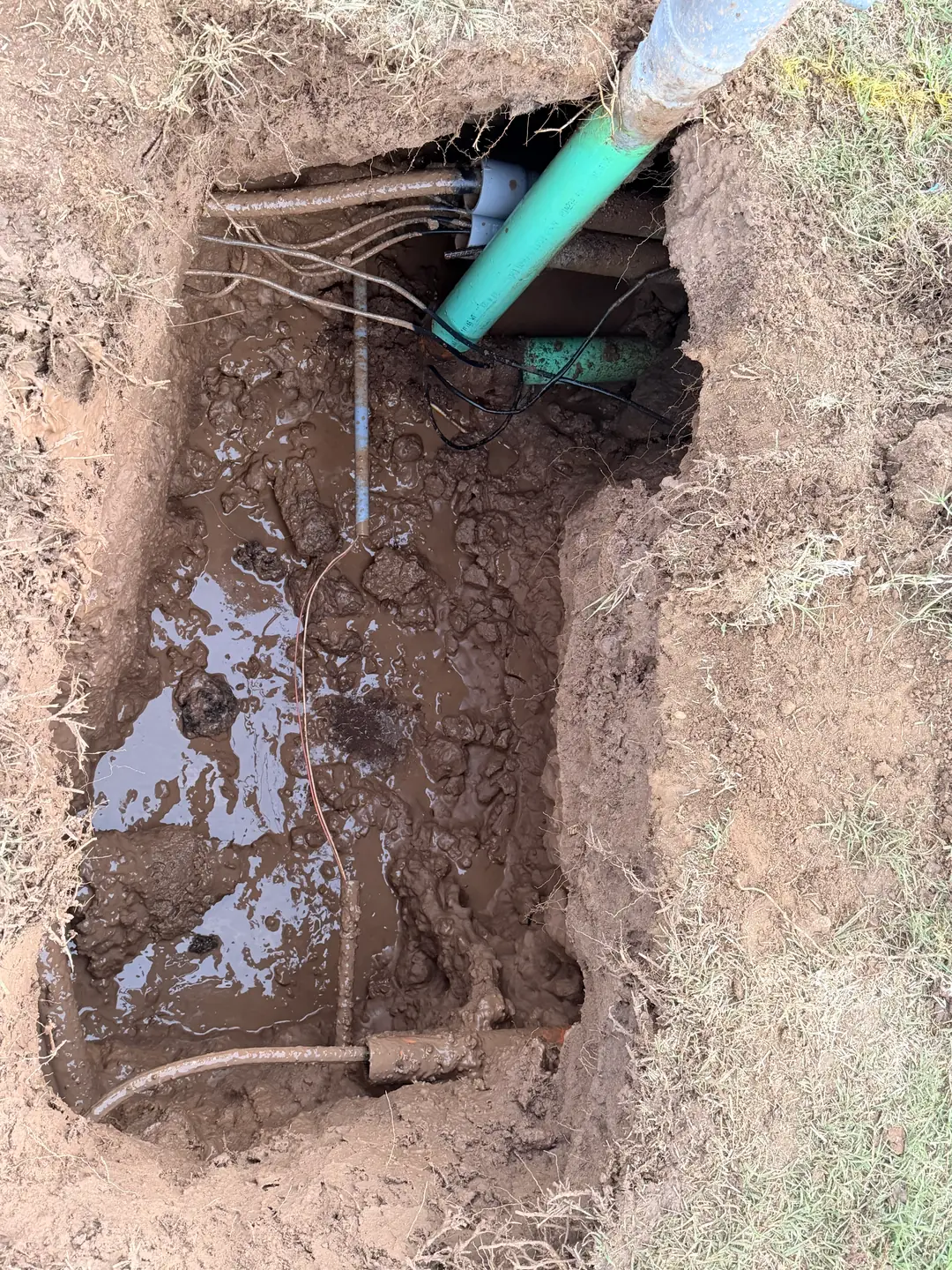
- Damage evidence. Dated photos of sunken ground, breaks and washouts, before cleanup if possible.
- Access. Room for a rig and a pipe string on each side, and whether the ground will carry equipment yet.
- Schedule and contract. Your completion deadline, your federal clause addendum, and whether you want a fixed price or a ceiling.
Where FEMA disaster recovery work happens in Oklahoma and Texas
Disaster work in our two states runs through FEMA Region 6 in Denton, Texas, then through the Oklahoma Department of Emergency Management or the Texas Division of Emergency Management.
Oklahoma declaration 4862 came on March 18, 2025, for storms, tornadoes and flooding in November 2024, with both emergency and permanent work funding. Declaration 4866 followed on May 21, 2025, for wildfires and straight line winds. In Texas, declaration 4935 was approved on September 1, 2026, for storms and flooding from July 12 to August 4, 2026. See our Oklahoma locations and the Texas underground utility depth chart.
FEMA utility repair and disaster recovery boring FAQs for Oklahoma and Texas
Does FEMA pay for water line repair after a disaster?
Yes, when the line belongs to an eligible applicant and the declared disaster caused the damage. Water delivery systems fall under Category F utilities. The line must be inside the declared area and be the legal responsibility of the city, district or nonprofit. Lines on private property are usually not covered. FEMA pays the applicant, and the applicant pays the contractor.
What is FEMA Category F?
Category F is the Public Assistance category for public utilities. It covers water treatment and delivery, sewage collection and treatment, natural gas distribution, power lines and communication systems. It is permanent work, with a standard deadline of 18 months from the declaration date. A bore that replaces a damaged main or conduit for an eligible owner normally falls here.
Can a contractor bill FEMA directly?
No. For profit companies are not eligible Public Assistance applicants. The city, county, district or nonprofit applies, FEMA reimburses that applicant through the state, and the applicant pays the contractor. In Oklahoma the money moves through the Oklahoma Department of Emergency Management, and in Texas through TDEM. Our invoice goes to the owner who hired us.
What is the difference between emergency work and permanent work in FEMA Public Assistance?
Emergency work protects lives, property and public health right now. Permanent work restores a facility to its predisaster design and current standards. An emergency repair that permanently restores the line counts as permanent work, except power restoration. So a final water line bore done the night of the storm is usually Category F, not Category B.
How long do you have to finish FEMA emergency and permanent work?
Emergency work has 6 months and permanent work has 18 months from the declaration date under 44 CFR 206.204. The state can add 6 months for emergency work and 30 months for permanent work, project by project. Longer requests go to the FEMA Regional Administrator. Ask in writing before the deadline passes.
Does FEMA reimburse time and materials contracts?
Yes, in a narrow way. A time and materials contract is allowed only when no other type is suitable, with a ceiling price the contractor exceeds at its own risk and close oversight by the owner. FEMA limits it to the period before a clear scope exists. Cost plus a percentage of cost contracts are not allowed at all.
Can a city hire a contractor without bidding after a disaster?
Yes, for a limited time. Under 2 CFR 200.320, a city may use noncompetitive procurement when the emergency will not allow the delay of a public notice. Write down why, how long the exception lasts, and how the price was judged fair. Work that can wait for a competitive process should be competed.
What documentation does FEMA require for contractor costs?
On large projects FEMA asks for each contractor’s name, dates worked, invoice number, amount and a description of the work. It also wants the procurement file, contracts, change orders and invoices. Time and materials work needs daily or weekly logs or records of performance meetings. We build our daily logs and invoices around those fields.
Are rural water districts and electric cooperatives eligible for FEMA Public Assistance?
Often, yes. The Oklahoma Department of Emergency Management lists special districts such as utilities and water authorities as eligible applicants. FEMA also treats a private nonprofit facility that provides a utility service as a critical service. Eligibility still depends on the declaration and who is legally responsible, so confirm with your state emergency management office.
Do I need to call 811 for emergency utility repairs after a storm in Oklahoma or Texas?
Yes. Okie811 accepts emergency locate requests 24 hours a day when an emergency endangers life, health or property. Texas811 processes an emergency notice only for a danger to life, health or property with work happening the same day. Otherwise Texas requires two working days of notice. Keep the ticket number in your daily records.
Get a number on a disaster utility bore
Send the checklist items to us through our contact page or call (405) 409-7423. Tell us the declaration, the line and the deadline, and we will tell you what we can bore and how we would document it.
Trinity Boring Solutions, 9102 Northwest Expy, Yukon, OK 73099. Oklahoma and Texas only.
Talk to the crew that does the work
Fastest way to a number is a phone call. Tell us where the crossing is and what is going in the ground, and you will get a straight answer on the same call. Bores from 10 feet to 4,100 feet in a single shot, with longer runs bored in sections, 3/4 inch service line through 48 inch pipe, anywhere in Oklahoma and Texas. We run 24/7 for main breaks and emergency repairs.
Answered by a person, not a call center.
Would rather not call? Send the details and we will come back with a written quote.