
Home / Services / State DOT Highway Bore Permitting and County Road Bore Permitting in Oklahoma and Texas
Government and agency work
State DOT Highway Bore Permitting and County Road Bore Permitting in Oklahoma and Texas
State DOT highway bore permitting is mostly paperwork that has to match the ground. Every road we bore under in Oklahoma and Texas belongs to someone: the Oklahoma Department of Transportation, the Texas Department of Transportation, a board of county commissioners or a commissioners court. Each one sets its own depth, casing and notice rules, and the permit only holds up if the bore matches the drawings.
Quick summary
- State DOT highway bore permitting and county road bore permitting for crossings under ODOT, TxDOT and county roads in Oklahoma and Texas.
- We bore 3/4 inch service lines up to 48 inch pipe, from 10 foot road crossings to 4,100 feet in a single shot under the Arkansas River.
- The customer or general contractor pulls the permit and sets up traffic control. On a TxDOT road the permit is in the utility owner’s name.
- We hand over what the permit asks of the driller: bore plan and profile, equipment and method description, and as built records.
- For a number, send the plans and the road owner’s permit conditions, or call (405) 409-7423.
We are Trinity Boring Solutions, a family company out of Yukon, Oklahoma, founded by Dean Rice in 1965 and doing underground construction since 1982. We do not file the permit; the customer or general contractor does, and on a Texas state highway it is issued to the utility owner. We build the crossing the permit describes and give the permit holder the driller’s part of the package.
Who approves a bore under which road
This table puts the permit rules for the roads we cross most in one place, with the agency document behind every row. County rows are examples, not the rule for every county.
| Road | Who approves, and under what | Who files | Cover and method for a crossing | Notice and timing |
|---|---|---|---|---|
| Oklahoma state and US highways | ODOT field district engineer, under 69 O.S. § 1401 and ODOT Form M4, requested through the ODOT online utility permit portal | Utility owner or applicant | Top of conduit 60 inches below pavement and 30 inches below the ditch bottom. Dry boring, punching or an approved method; pilot hole first; 10 PSI grout when fluid is used. Casing runs right of way line to right of way line. | District Engineer approves first and is told when work starts and ends. No weekend, holiday or night work unless approved. |
| Oklahoma interstates (controlled access) | ODOT, interstate version of the utility permit | Utility owner or applicant | Same 60 inch and 30 inch cover. Crews and equipment may not use through lanes or ramps to reach the work. | OKIE811 and the County Clerk notified 3 working days before any work. |
| Oklahoma steel pipelines without casing | ODOT special provisions, R/W Form 311, attached to the utility permit | Pipeline owner | Pipe at least 48 inches below the flowline of ditches, with corrosion protection kept up. | Follows the permit it is attached to. |
| Oklahoma county roads | Board of county commissioners, under 69 O.S. § 1401. Example: Oklahoma County Engineer utility permit | Utility, company or citizen the board consents to | Oklahoma County: 48 inches below subgrade, 30 inches below ditches, bored or punched, as builts with elevations every 100 feet. | County Engineer told when work starts and ends. |
| Oklahoma county roads, rural boards | Examples: Pontotoc County crossing application and Woodward County crossing application | Applicant or contractor named on the application | Pontotoc: bored, 10 feet from the road edge, 3 feet below centerline or 2 feet below ditch. Woodward: bored, 4 feet below centerline or ditch. | Pontotoc: five days notice of intent. Woodward: application to the County Clerk 5 days before a commissioners meeting. |
| Texas state highways | TxDOT district, under 43 TAC § 21.40, filed in RULIS or UIR | Utility owner only. Consultants cannot submit, and the permit is issued to the owner, not the contractor | Water, electric and communication crossings 60 inches below the lowest point of grade, plus 12 inches within 50 feet of a creek or culvert. Boring or tunneling; jacking only with written district approval. Water lines under pavement cased. | 2 business days before construction, then an as built certification. TxDOT says allow at least 90 days for the permit. |
| Texas county roads | Commissioners court, under Transportation Code §§ 251.003 and 251.016; gas and electric utilities give notice under Utilities Code §§ 181.024 and 181.044 | Utility or permittee, per county order | Grayson County: 6 feet below the crown or 3 feet below the ditch. Wise County: bored or jacked, no open cuts, 48 inches below pavement. McLennan County: 24 inches below ditch, road or ground, whichever is lower. | Grayson: 48 hours written notice. McLennan: 7 days. Wise: permittee keeps a traffic control plan on site. |
| Locates in both states | OKIE811 in Oklahoma; Utilities Code § 251.151 in Texas | The excavator | Separate from the road permit. | Oklahoma: 3 business days ahead, valid 14 calendar days. Texas: no later than 48 hours and no earlier than 14 days ahead, not counting weekends and legal holidays. |
Facts checked November 2026. Tell us if something has changed.
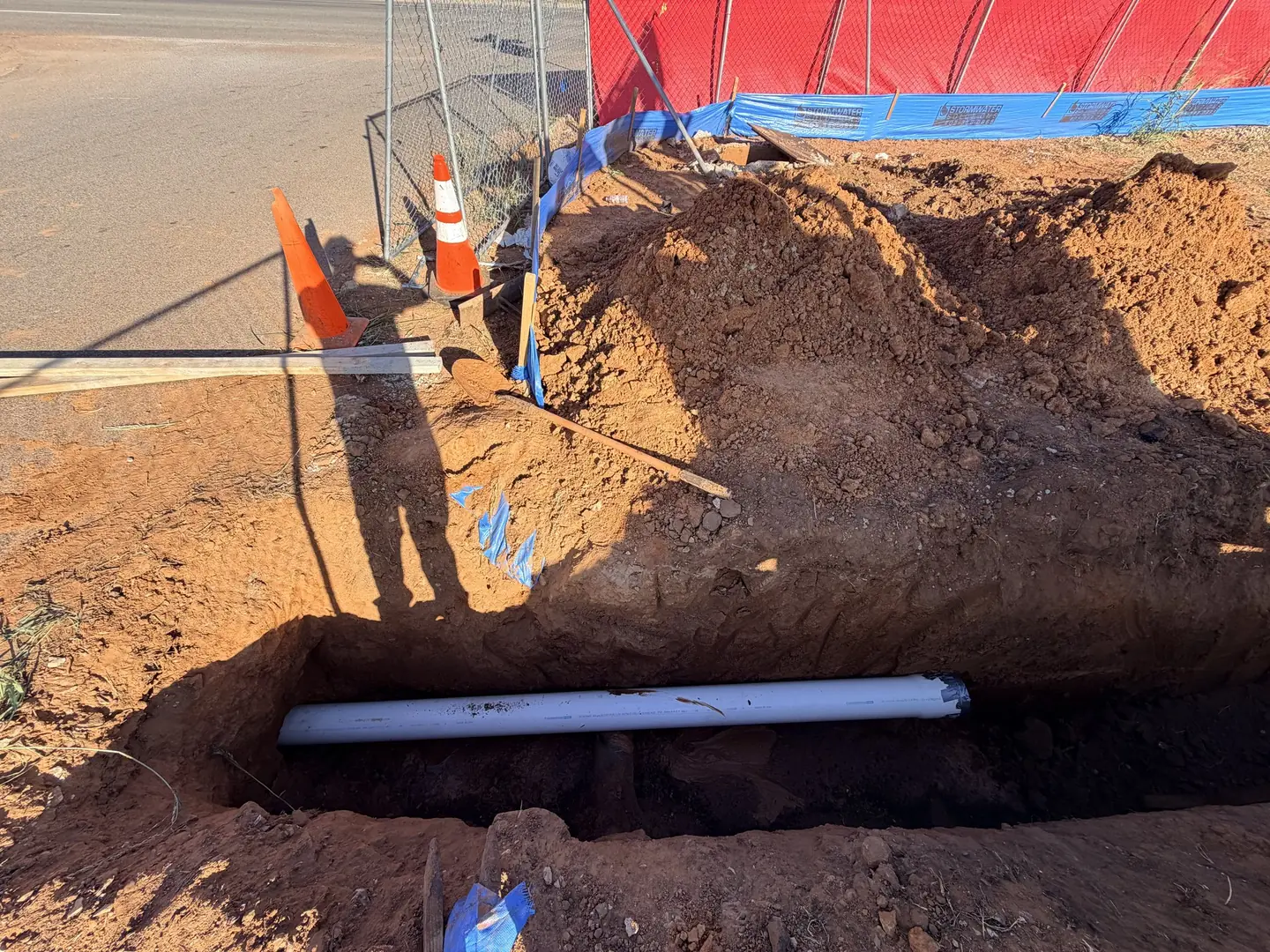
Work we have done that is like this
These are the same kind of road and right of way crossing. This list does not say which permits each job used.
- A turnpike crossing. We bored beneath the John Kilpatrick Turnpike in Oklahoma City.
- A sleeve under a street and a water main. At the Clara Luper Center in Oklahoma City, we bored a 6 inch PVC sleeve under NE 24th Street and a live water main for a general contractor.
- Rock under creeks, a wetland and a dam. Our Guthrie sandstone bore ran 385 feet through hard sandstone beneath two small creeks, a wetland and a dam for a 4 inch HDPE electrical conduit.
- An emergency gas replacement. At the TA truck stop at Council Road and Interstate 40 in Oklahoma City, we made two bores of about 280 and 275 feet under roads for a 2 inch emergency gas replacement.
How state DOT highway bore permitting works in Oklahoma
In Oklahoma the right to put a pipe or conduit under a public road comes from 69 O.S. § 1401. It requires consent from ODOT for the state highway system and from the board of county commissioners for county roads. For a state highway, that consent is the Utility Permit for Federal or State Highways, Form M4. ODOT now generates it through its online utility permitting portal.
The permit is granted to the utility owner or applicant, and it goes to the field district engineer who covers the county. Our shop is in Canadian County, which sits in ODOT Division 4, headquartered in Perry, along with Oklahoma, Logan and Payne counties. That covers Yukon, Oklahoma City, Guthrie and Stillwater. Anadarko, in Caddo County, falls under Division 7 in Duncan.
Form M4 is specific about the bore itself. These lines shape every state highway crossing we drill:
- Every highway crossing needs an actual profile and cross section view on the drawings, not just a plan view.
- Drilling fluid is allowed under the roadway only when the bore is at least 6 feet below the top of pavement. Jetting is not allowed.
- A pilot hole sets the alignment before the full size bore. When fluid is used, the annular space gets grout at no less than 10 PSI.
- A bore has to be reamed and cleaned out within one working day, and no muck or fluid can sit in the hole overnight.
Interstates use a controlled access version that keeps crews off through lanes and ramps, and steel pipelines can skip casing only under R/W Form 311.
How TxDOT utility permits work in Texas
In Texas, 43 TAC § 21.40 says a department permit is required for every utility installation in TxDOT right of way. The permit is filed online in RULIS, and TxDOT is firm about who files it. Consultants cannot submit, and a utility representative signs off on the application and the final as builts. The Austin District guideline puts it plainly: the permit is issued to the utility owner, not the contractor.
The Utility Installation Request asks for GPS location, total length, crossing or parallel, city limits, paving, and the pipe and casing. Construction notice goes in at least 2 business days before work starts, and an as built certification closes it out. TxDOT tells applicants to allow at least 90 days to get the permit.
Two rules in 43 TAC 21.40 shape our setup more than the depth figures in the table. On rural high speed highways the bore has to reach 30 feet past the main lanes, or 10 feet on low speed roads. A bore pit or drill closer than 30 feet to the pavement needs approved protective devices, and the district approves the shoring. Annular voids over one inch get slurry grout or flowable fill. TxDOT runs 25 districts. Wichita Falls, Paris, Childress and Amarillo border Oklahoma.
County road bore permitting in Oklahoma and Texas
County rules change from one courthouse to the next. In the table, Pontotoc and Woodward counties disagree on crossing depth by a foot.
In Oklahoma, the same statute that covers ODOT lets each board of county commissioners consent to lines under its roads and set its own conditions. It also lets the board grant that right to any citizen, not only a utility. Oklahoma County runs it through the County Engineer; Pontotoc and Woodward counties take the application to the board itself.
In Texas, Transportation Code Chapter 251 gives the commissioners court rule making power and general control over county roads. Gas and electric utilities outside city limits give the court notice under Utilities Code Chapter 181, and the court may designate where in the right of way the line goes. Wise County adds that pits stay open no longer than 2 days.
That is bore permitting and right of way coordination in practice: the permit holder leads it, and we build to it. Statewide depth figures for Texas are also on our Texas underground utility depth chart, and Oklahoma county rules are on the Oklahoma county right of way fact table.
What we bring to this kind of job
We are a driller, not a permit service. Here is what we have actually done.
- We bored under the John Kilpatrick Turnpike in Oklahoma City, where pits and access get planned before the rig shows up. More on our road and highway utility work page.
- We set a PVC sleeve under NE 24th Street at the Clara Luper Center in Oklahoma City.
- We bored 840 feet of FAA conduit under runways at Will Rogers World Airport.
- Our longest single shot is 4,100 feet under the Arkansas River, and longer runs are bored in sections. Our largest pipe is a 48 inch HDPE water intake at Fort Cobb Lake.
- At Guthrie we bored through sandstone beneath creeks, a wetland and a dam. That bore was near highways 33 and 74. In Stillwater we bored an emergency water line. Near Anadarko we bored a propane line.
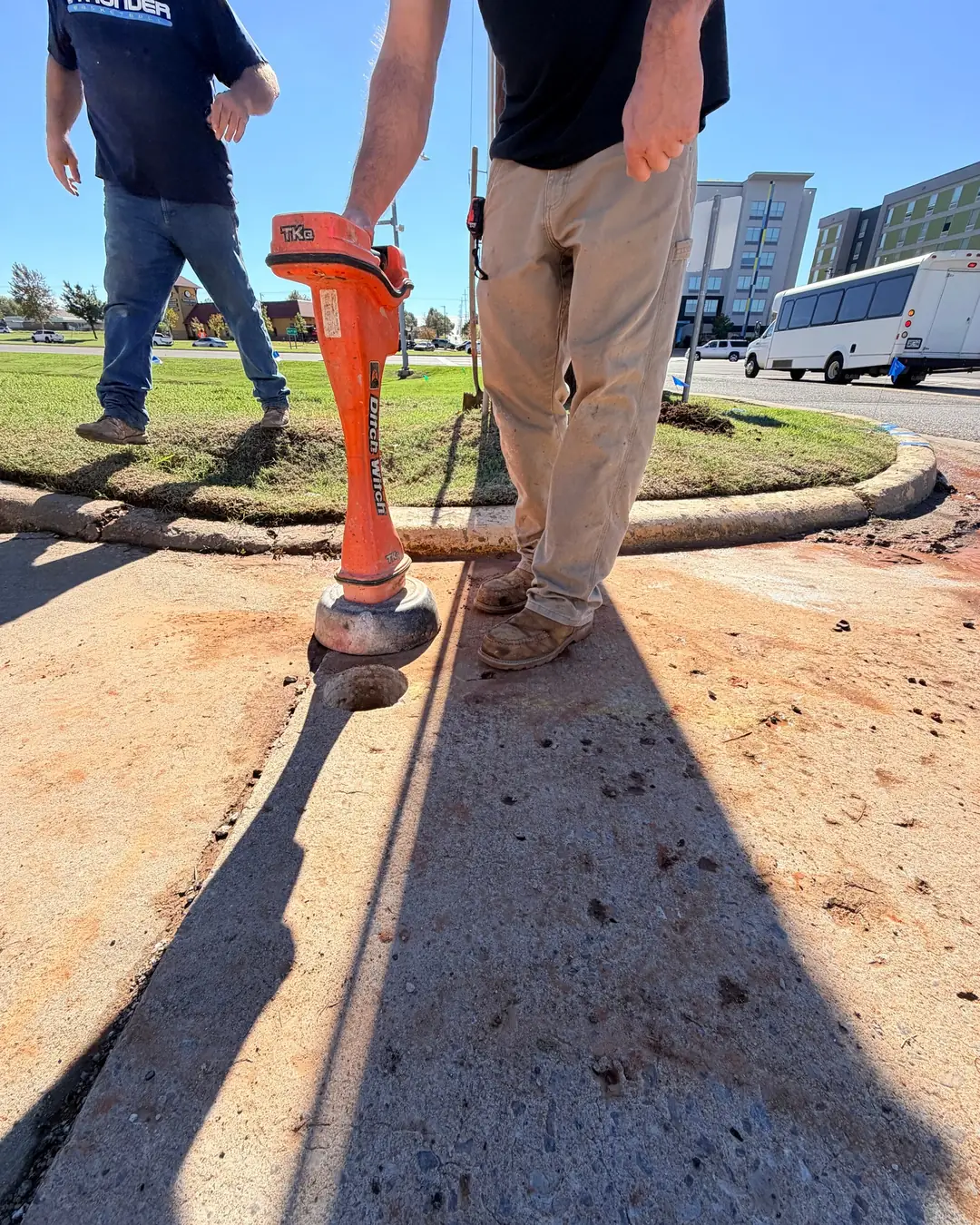
- We own auger machines for jack and bore with steel casing, the method many county rules and casing requirements point to, and we run hydrovac for potholing and daylighting existing lines before we drill.
For the permit package we supply the bore plan and profile, a description of the equipment and method, and as built records when the crossing is done. Those are the pieces ODOT, TxDOT and most counties ask the driller for. Same day crews are available within about four hours of Yukon.
What we need from you to quote it
- Plans showing the road, right of way lines, pit locations, and line size and material. Add a profile if you have one.
- The road owner (ODOT, TxDOT, which county, or a city) and any issued permit conditions or special provisions.
- Who holds the permit and who is setting up traffic control.
- Required depth and casing, if the owner or engineer already set them.
- Soil or geotechnical reports or nearby boring logs. Rock changes the method.
- Utility records, locate tickets and any potholing already done.
- Access: where the rig, pipe string and trucks can sit, and how far that is from the pavement.
- Schedule windows, including any weekend, holiday or night limits in the permit.
Highway and county road bore permit questions
Do I need a permit to bore under a state highway in Oklahoma?
Yes. Oklahoma law requires ODOT consent before a pipe or conduit goes under a state highway, and that consent is the Utility Permit for Federal or State Highways, Form M4. It is requested through the ODOT online utility permit portal and approved by the field district engineer. No work starts in the right of way until the approval is in hand.
Do I need a permit to bore under a TxDOT highway?
Yes. 43 TAC 21.40 requires a TxDOT permit for every utility installation in department right of way. The utility owner files it online in RULIS, and the permit is issued to the owner, not to the contractor. TxDOT tells applicants to allow at least 90 days, so we suggest getting it started before the bore is scheduled.
Who pulls the permit, the utility, the contractor or the driller?
The customer or general contractor pulls the permit and arranges traffic control, and on a Texas state highway the permit is in the utility owner’s name. TxDOT does not let consultants or contractors submit it. We supply the driller’s part: the bore plan and profile, the equipment and method description, and as built records after the crossing.
How deep does a bore have to be under a highway in Oklahoma?
Under ODOT Form M4, the top of the conduit should be at least 60 inches below the top of pavement and at least 30 inches below the bottom of the ditches. Electric crossings go in conduit at least 48 inches below the ditch flow lines. The district engineer can require more, so the approved permit always controls.
How deep does a bore have to be under a TxDOT road?
For crossings, TxDOT rules put water, electric and communication lines 60 inches below the lowest point of the crossed grade. Within 50 feet of a creek, ditch, channel or culvert, the rules add 12 more inches. Gas and pressurized sewer lines have their own figures in 43 TAC 21.40, and the district can require more.
Do I need a casing to bore under a highway?
Often, yes. TxDOT requires casing for water lines under paved highways and most other crossings. ODOT wants HDPE and PVC lines inside a steel or equivalent conduit, cased from right of way line to right of way line. Steel pipelines can skip casing in Oklahoma only under the R/W Form 311 special provisions.
How long does a TxDOT utility permit take?
TxDOT tells applicants to allow at least 90 days to receive a utility permit. After approval, the utility owner still has to notify TxDOT at least 2 business days before construction and submit an as built certification when the work is done. Build that time into the schedule before you lock in a bore date.
Who approves a bore under a county road in Oklahoma?
The board of county commissioners. Under 69 O.S. 1401, a line goes under a county road only with the board’s consent, and the board can grant that right to any citizen as well as a utility. Some counties route it through a County Engineer, as Oklahoma County does, and others through the County Clerk before a board meeting.
Who approves a bore under a county road in Texas?
The commissioners court. Transportation Code Chapter 251 gives it rule making power and general control over county roads, and gas and electric utilities outside city limits give it notice under Utilities Code Chapter 181. Many counties issue the permit through a County Engineer, such as Grayson and Wise counties.
Can you open cut a county road instead of boring it?
Usually not. Wise County allows only bored or jacked crossings, with no open cuts. Pontotoc and Woodward counties in Oklahoma require crossings to be bored unless the board agrees otherwise in writing. Grayson County allows an open cut only with special permission from the County Engineer when rock or terrain makes boring impractical.
Does TxDOT allow jack and bore under a highway?
Only with written approval from the district. 43 TAC 21.40 says lines under existing highways go in by boring or tunneling and that jacking may not be used unless the district approves it in writing. We own auger machines for jack and bore with steel casing, so we can price both methods when the permit allows it.
Do I still call 811 if I have a road permit?
Yes. The road permit and the locate request are separate. In Oklahoma, OKIE811 asks for the request at least 3 business days ahead, and it is valid for 14 calendar days. In Texas, the law sets notice no later than 48 hours and no earlier than 14 days before digging, not counting weekends and legal holidays.
Get a number on your crossing
Send the plans, the road owner and any permit conditions, and we will come back with a lump sum that lists what is included. Call (405) 409-7423 or use the contact page. Our other crossing pages: utility crossings, trenchless utility installation, water line services and boring for general contractors.
Talk to the crew that does the work
Fastest way to a number is a phone call. Tell us where the crossing is and what is going in the ground, and you will get a straight answer on the same call. Bores from 10 feet to 4,100 feet in a single shot, with longer runs bored in sections, 3/4 inch service line through 48 inch pipe, anywhere in Oklahoma and Texas. We run 24/7 for main breaks and emergency repairs.
Answered by a person, not a call center.
Would rather not call? Send the details and we will come back with a written quote.