
Directional Boring Contractors in Hood County, TX
Trinity Boring Solutions is a directional boring contractor serving Hood County, Texas, installing water, sewer, gas, electric and fiber lines without an open trench in Granbury, DeCordova, Tolar, Cresson, Lipan and Stockton Bend. From the Trinity main office in Yukon, Oklahoma it is about 257 road miles south to Granbury, the county seat. Most Hood County bores go under US 377 and State Highway 144 and the Brazos River. Call (405) 409-7423 any time.
Free Bore Planner
Plan Your Bore in Hood County, Texas
Type the address of your job in Hood County. The Bore Planner opens an aerial map at that spot. Drop one pin where the bore starts and one where it ends, tell us what is going in and send the scope to our crew.
What Should You Know Before Boring in Hood County?
Hood County covers 421 square miles, has about 69,126 residents and sits in the TxDOT Fort Worth District.
| County seat | Granbury |
|---|---|
| Population | 69,126 (2024 Census estimate), up 12.2% since 2020 |
| Land area | 421 square miles |
| Largest cities and towns | Granbury (12,934), DeCordova (3,252), Tolar (1,339), Cresson (1,070) and Lipan (546) |
| TxDOT district | TxDOT Fort Worth District |
| 811 center | Texas811 (call 811), two working days of notice |
| Electric utilities | Oncor Electric Delivery Company, Texas-New Mexico Power, Tri-County Electric Cooperative and United Electric Cooperative Service |
| Interstate and US highways | US 377 |
| State Highways | 144 |
| State loops and spurs | Loop 426 |
| Rivers | Brazos River, Paluxy River and Starve Out Branch Paluxy River |
| Creeks and other streams | Robinson Creek, Fall Creek, Comanche Creek, Kickapoo Creek, Strouds Creek, Rucker Creek, Walnut Creek and Long Creek |
| Lakes | Lake Granbury |
| Railroads | short line railroads, about 32 main line miles |
| Average precipitation | 35.1 inches a year (1991 to 2020) |
| New housing units permitted | 258 in 2025 |
| Road distance from Trinity main office | About 257 miles from Yukon, Oklahoma to Granbury |
| Trinity insurance | General liability of $1,000,000 per occurrence and $4,000,000 aggregate, plus $5,000,000 excess liability |
Sources: Census Bureau (2024 population, 2025 building permits, TIGER/Line roads and water), EIA Form 861 (2025), NOAA 1991 to 2020 precipitation, federal rail network map, TxDOT districts, OpenStreetMap routing. Checked November 2026.
What Does a Bore Have to Cross in Hood County?
A bore in Hood County most often has to cross a highway such as US 377 or State Highway 144, a stream such as the Brazos River, the Paluxy River or Robinson Creek and short line track. State Highways 144 also run through the county, along with Loop 426. The Census map names 26 larger streams in Hood County, led by the Brazos River, Robinson Creek, Fall Creek, Comanche Creek, the Paluxy River and Kickapoo Creek. The rest are Strouds Creek, Rucker Creek, Walnut Creek, Long Creek, Nolan Branch, Dry Branch, Rocky Branch, Panter Branch, Crockery Creek, Wolf Creek, Contrary Creek, Starve Out Branch Paluxy River, Lambert Branch, Lollar Branch, Weaver Branch, Blue Branch, Star Creek, Star Hollow Creek, S Fork Strouds Creek and Bee Creek. Lake Granbury is the main mapped lake. The federal rail map shows about 32 miles of main line track in Hood County, owned by short line operators.
What Is the Ground Like for Directional Boring in Hood County?
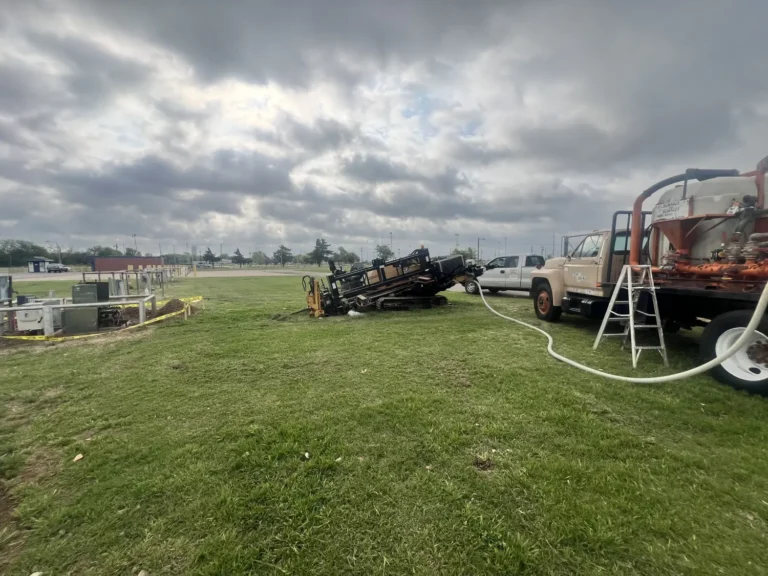
Rock is the main thing to plan for in Hood County: the federal soil survey records bedrock within five feet of the surface on about 51 percent of the county, most of it hard rock. In Hood County the bore path is set around rock where that is possible, and rock tooling goes on the truck where it is not. May is the wettest month in Hood County at 4.4 inches on average and January the driest at 2.0. Hood County averages 35.1 inches of precipitation a year, so rain delays are occasional.
- Most common soils: Aledo (10%), Bolar (9%) and Windthorst (9%).
- Surface texture: most often clay loam (16%) or fine sandy loam (12%).
- Bedrock within 5 feet: about 51% of the county. Most of it is hard rock.
- Clay rich layer (35% clay or more) in the top 5 feet: about 34% of the county.
- Sandy layer (70% sand or more) in the top 5 feet: about 20% of the county.
- Seasonal water table within 5 feet: about 9% of the county.
- Gravelly, cobbly or stony surface soil: about 18% of the county.
Source: USDA Natural Resources Conservation Service, Soil Survey Geographic Database, Hood and Somervell Counties, Texas (survey area TX609, version 23, September 8, 2026), through Web Soil Survey. Percentages are shares of mapped county area.
Who Permits a Bore in Hood County?
The TxDOT Fort Worth District permits bores under state highways in Hood County, the Hood County Commissioners Court handles county roads, and Granbury, DeCordova and Tolar each handle their own streets.
- State highways. US 377, the other numbered state routes and the farm to market roads in Hood County are on the state system. The utility owner files a TxDOT utility permit in RULIS.
- Texas811 locates. Texas811 needs at least two working days of notice before digging (Texas811 FAQ; Texas Utilities Code, Section 251.151).
- Railroads. A bore under short line track in Hood County needs a crossing agreement from the railroad that owns it, which sets the casing, depth and flagging.
- Water crossings. A bore under the Brazos River, the Paluxy River, Robinson Creek or Lake Granbury is checked for U.S. Army Corps of Engineers jurisdiction while the path is planned.
Statewide rules are on the Directional Boring Texas page, and Trinity supplies the bore plan and profile for the permit package.
Which Electric Utilities Serve Hood County?
Oncor Electric Delivery Company, Texas-New Mexico Power, Tri-County Electric Cooperative and United Electric Cooperative Service serve Hood County, according to 2025 filings with the U.S. Energy Information Administration. Oncor Electric Delivery Company and Texas-New Mexico Power are investor owned utilities; Tri-County Electric Cooperative and United Electric Cooperative Service are member owned cooperatives. The owner of the line sets the conduit size, depth and inspection steps, so it is confirmed before a conduit bore in Hood County is planned. More on electric line boring for electric cooperatives.
How Much New Construction Is There in Hood County?
Hood County permitted 258 new housing units in 2025, all single family homes, according to the Census Bureau Building Permits Survey. The population of Hood County went from 61,594 in 2020 to 69,126 in 2024, a gain of 12.2 percent. That pace of building in Hood County puts new water, gas, electric and fiber services under finished pavement.
Which Cities and Towns in Hood County Does Trinity Serve?
Trinity takes directional boring work in all 6 incorporated places in Hood County and at sites outside city limits, and Granbury is the largest with about 12,934 residents.
| City or town | 2024 population |
|---|---|
| Granbury | 12,934 |
| DeCordova | 3,252 |
| Tolar | 1,339 |
| Cresson | 1,070 |
| Lipan | 546 |
| Stockton Bend | 413 |
Source: U.S. Census Bureau 2024 estimates, counting only the part of each city inside Hood County.
Hood County borders Erath County, Johnson County, Palo Pinto County, Parker County and Somervell County; every county is on the Directional Boring in All 254 Texas Counties page. The neighboring county seats are Stephenville (Erath), Cleburne (Johnson), Palo Pinto (Palo Pinto), Weatherford (Parker) and Glen Rose (Somervell).
Which Directional Boring Services Are Available in Hood County?
Every Trinity service is available in Hood County: horizontal directional drilling from 3/4 inch service lines to 48 inch casing, auger boring, hydrovac potholing, trenching and 24 hour emergency response, all listed under Underground Utility and Boring Services.
- Road, highway, railroad, creek and river bore crossings, including US 377, State Highway 144 and the Brazos River
- Bores under short line track, built to the railroad boring requirements of the owner
- Drinkable water line boring and sewer force mains in Granbury or DeCordova and on rural water systems
- Underground conduit in Oncor Electric Delivery Company and Texas-New Mexico Power territory, see electric line boring
- Fiber optic boring for ISPs and broadband builders along US 377
- Municipal boring services for cities such as Granbury, DeCordova and Tolar
The free Bore Planner sizes a Hood County job before you call.
Hood County Directional Boring FAQs: What Do Customers Ask?
Does Trinity Boring Solutions work in Granbury, Texas?
Yes. Trinity Boring Solutions takes work in Granbury, DeCordova, Tolar, Cresson, Lipan and Stockton Bend and the rural parts of Hood County. Trinity works in Texas with its own crews and from satellite yards run by partner drilling contractors Trinity has personally vetted.
Who approves a bore under US 377 in Hood County?
The TxDOT Fort Worth District. The utility owner files the permit in the TxDOT RULIS system. County roads go through the Hood County Commissioners Court and city streets through the city.
Is there rock in Hood County?
Yes, in places. The federal soil survey records bedrock within five feet of the surface on about 51 percent of Hood County, most of it hard rock. Potholing confirms it on the actual bore path.
Can a line be bored under the Brazos River in Hood County?
Yes. A drill is steered below the bed of the Brazos River from a pit on each bank and the pipe is pulled back through, so the channel is not opened. Federal jurisdiction over the crossing is checked first.
Which railroads have track in Hood County?
Short line operators, with about 32 miles of main line track on the federal rail map. Each requires its own crossing agreement before a bore goes under the rails.
Is Trinity insured for work in Hood County?
Yes. Trinity Boring Solutions carries general liability of $1,000,000 per occurrence and $4,000,000 aggregate, plus $5,000,000 excess liability. Ask for a certificate with the quote.
How much does directional boring cost in Hood County?
We start from a general range based on length and pipe size. Depth, the crossings and the ground set the number, and rock is a factor on many Hood County jobs.
How Do You Get a Bore Quote in Hood County?
Call (405) 409-7423 any time or send the address in Hood County, the utility, the length and what it crosses. Trinity has bored since 1965 and is family owned.