
Field Notes · Sleeve Boring · Northeast Oklahoma City
Case Study: 6 Inch PVC Sleeve Bored Under NE 24th Street and a Water Main in Oklahoma City
By Darren Rice, Owner of Trinity Boring Solutions · Yukon, Oklahoma · Licensed, Insured and Bondable
Directional boring contractor in Oklahoma City: Trinity Boring Solutions bored a 6 inch PVC sleeve under NE 24th Street and a water main near N Martin Luther King Avenue in northeast Oklahoma City, at the future Clara Luper Civil Rights Center. The sleeve is 6 inch Schedule 40 PVC, and it went in from two bore pits with a Ditch Witch JT922. Our crew spotted the water main first, then bored under the street and the main, pre reamed the hole with a 9 inch reamer and ran bentonite drilling fluid to hold the sandy soil open before the sleeve was pulled back for the general contractor.
The job: a 6 inch Schedule 40 PVC sleeve bored under NE 24th Street and a water main in northeast OKC, from two bore pits, with a Ditch Witch JT922. The water main was spotted first, the hole was pre reamed to 9 inches, bentonite drilling fluid held the sandy soil open, and the 6 inch sleeve was pulled back successfully for the general contractor.
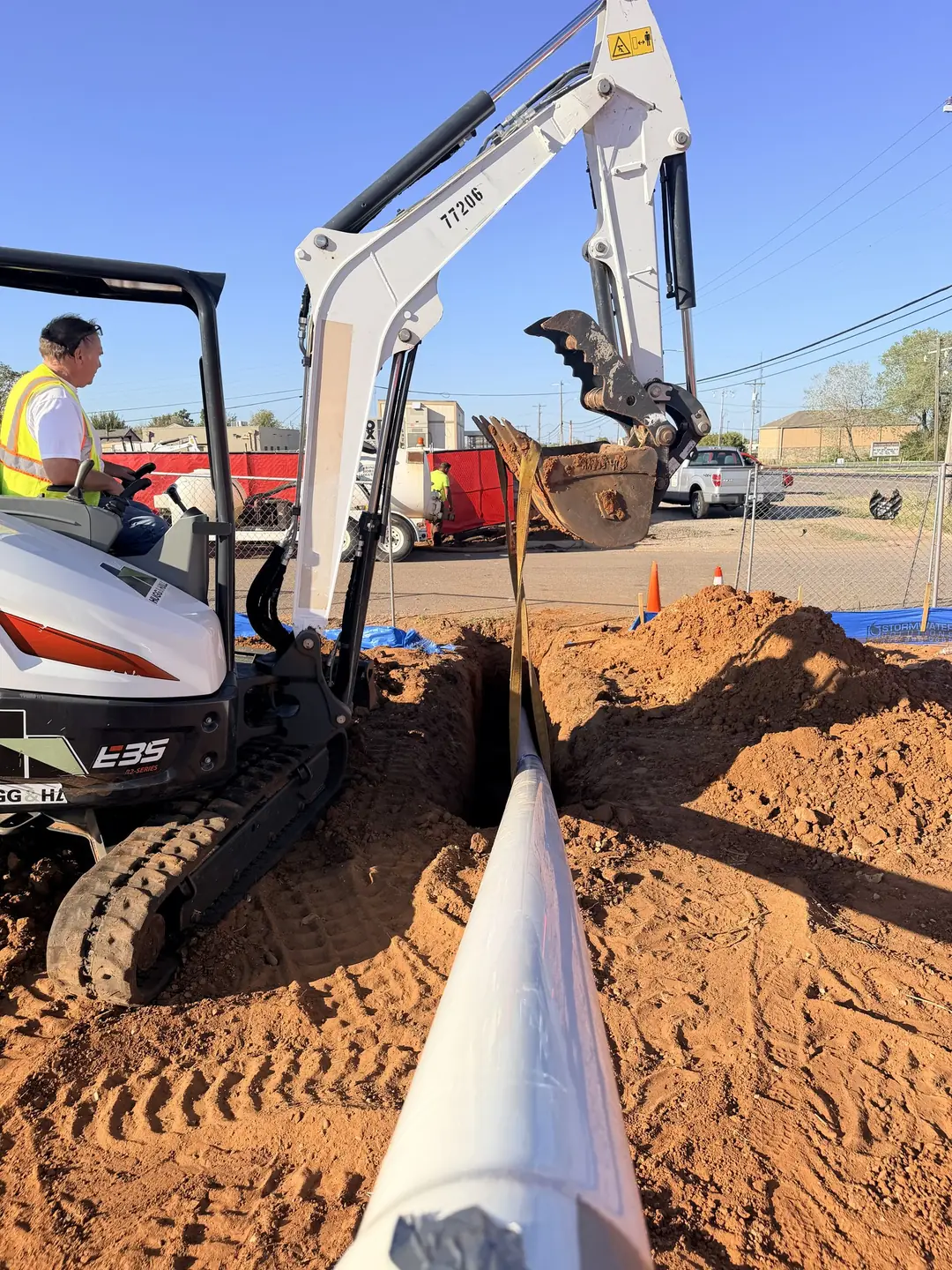
The Challenge: A Water Main in the Path and Sandy Soil
The Clara Luper Civil Rights Center is a $17 million MAPS 4 project going up at N Martin Luther King Avenue and NE 24th Street, just south of the historic Freedom Center. The City of Oklahoma City says it is scheduled to open in 2028. The general contractor needed a 6 inch PVC sleeve bored under NE 24th Street, and a water main sat in the path.
Two things made this more than a routine street crossing. The first was the water main. Boring blind near a water main risks hitting it, so the main had to be spotted before the drill went in, and the bore had to pass under it. The second was the ground. The soil here is red and sandy, and sand does not hold an open hole on its own. Without the right drilling fluid, a hole in sand can cave in before the pipe is pulled through.
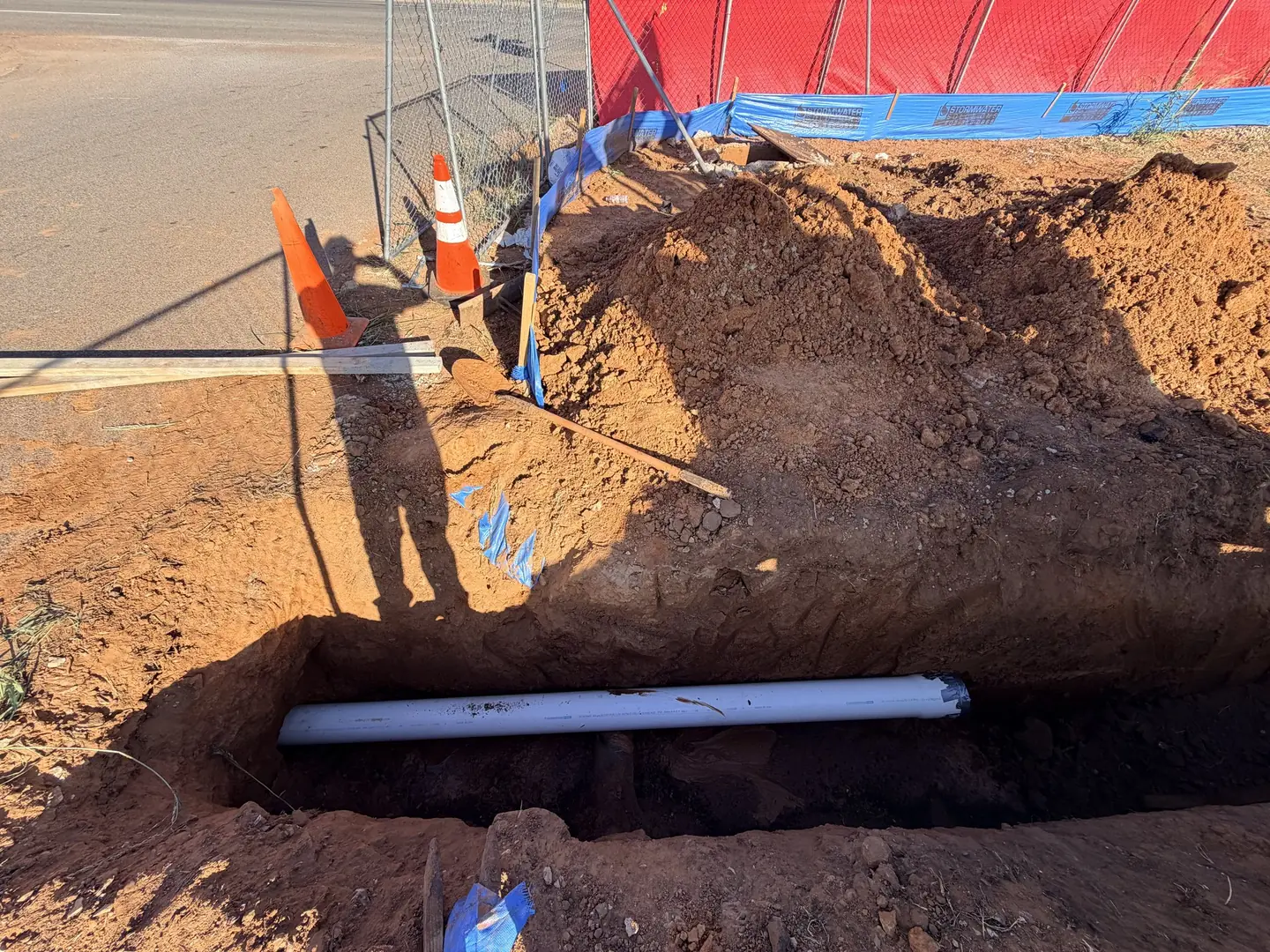
The Approach: Spot the Main, Two Bore Pits, Bentonite and a 9 Inch Pre Ream
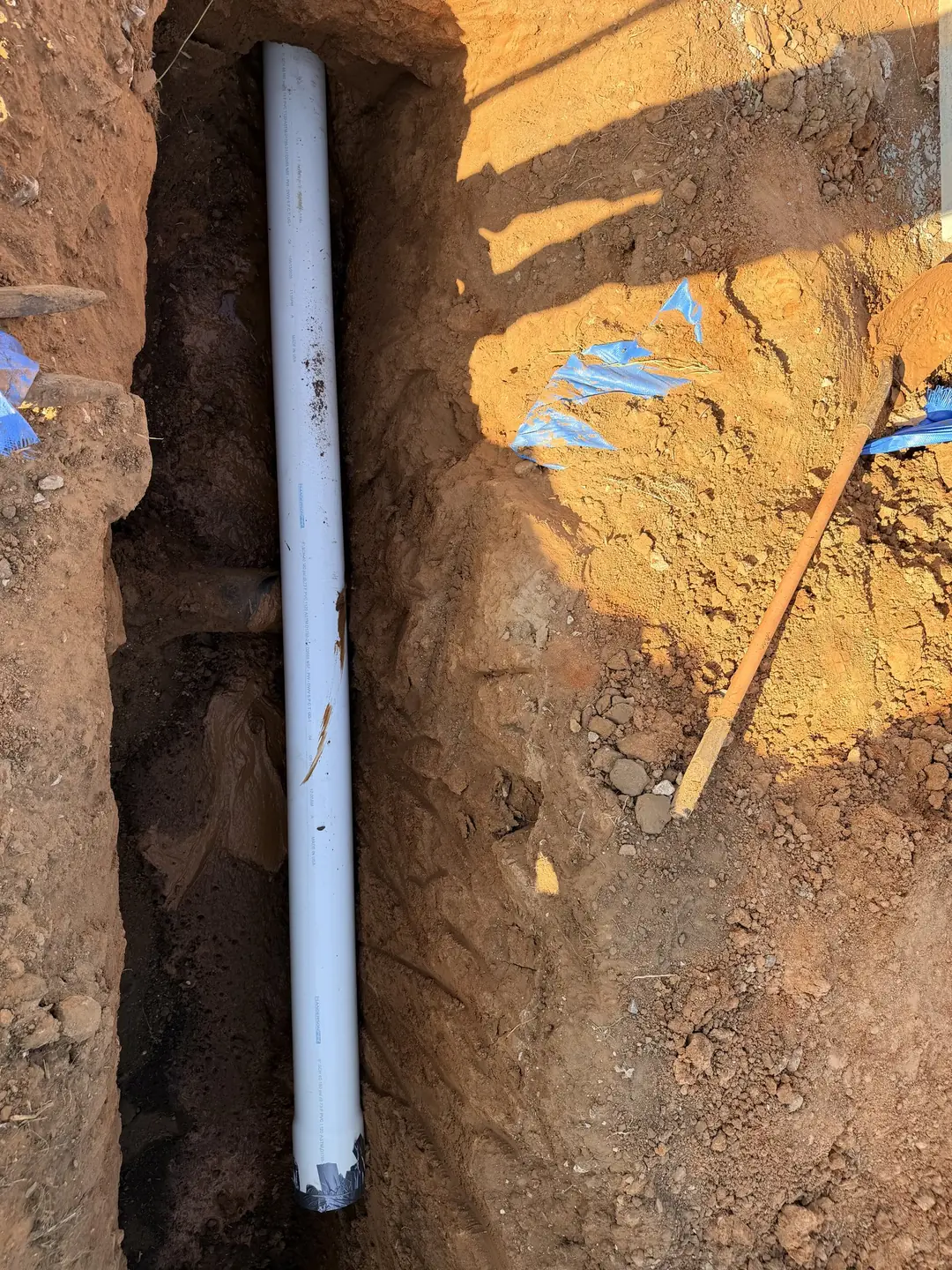
Our crew spotted the water main first, so we knew exactly where it was before the drill went in. Blue flags marked the water line on the surface. Our guide to locating utilities before you bore covers why this step always comes first.
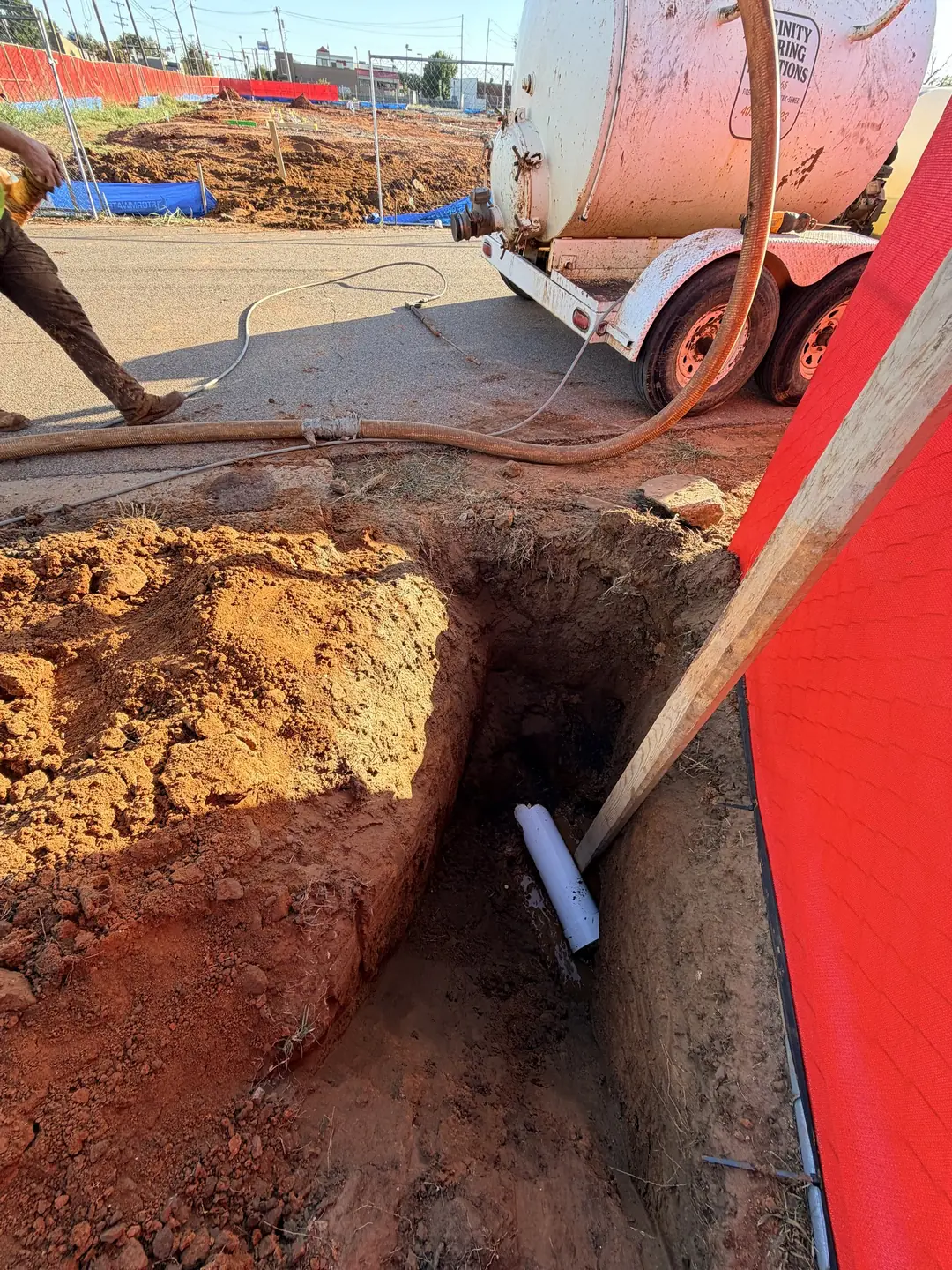
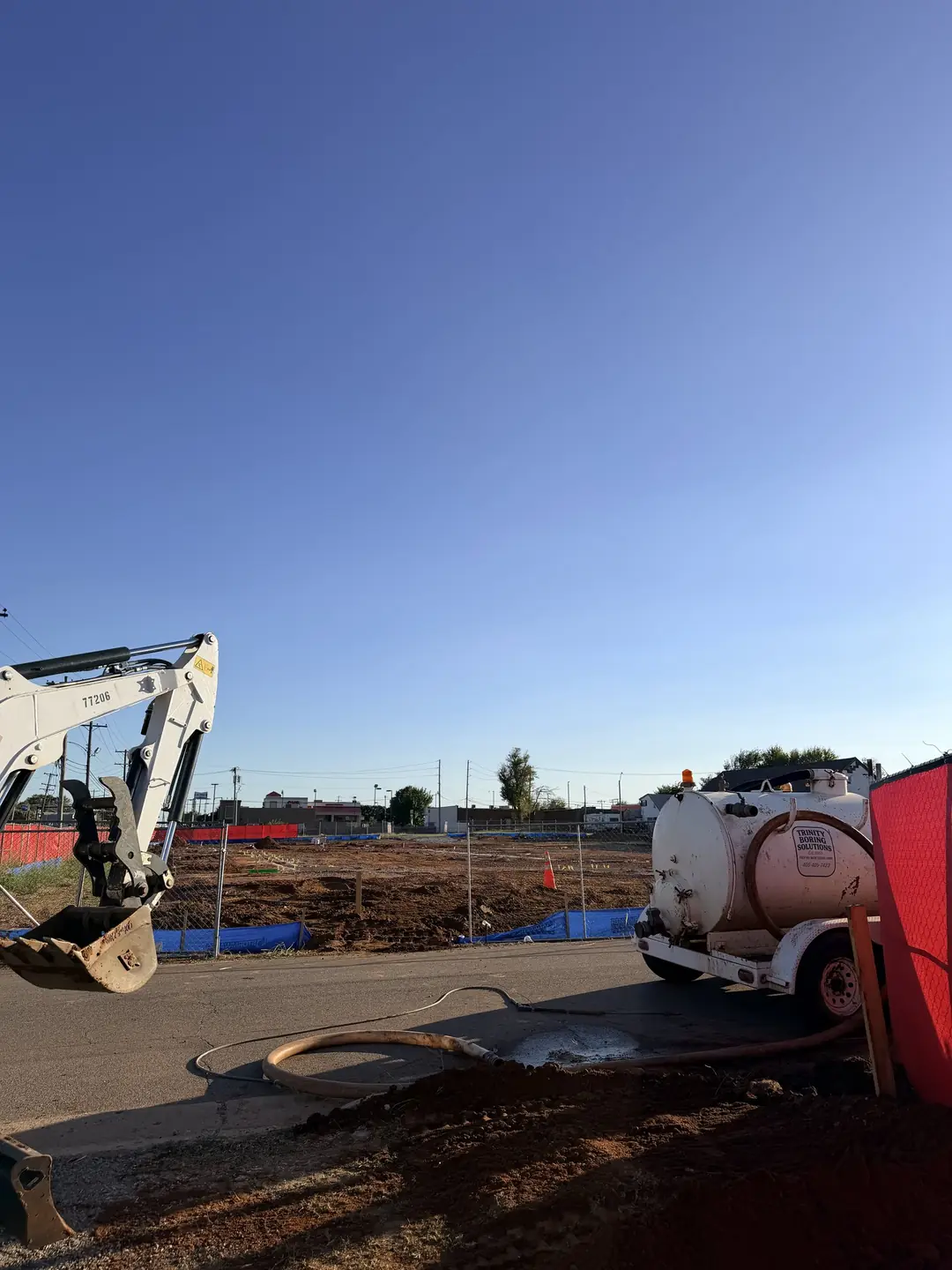
We dug two bore pits, one at each end of the bore, and set up our Ditch Witch JT922 for the shot. Ditch Witch rates the JT922 for 9,000 lb of thrust and pullback and 1,100 ft lb of spindle torque, and its compact size suits commercial sites, street crossings and sleeve bores like this one. The bore passed under NE 24th Street and the water main as planned.
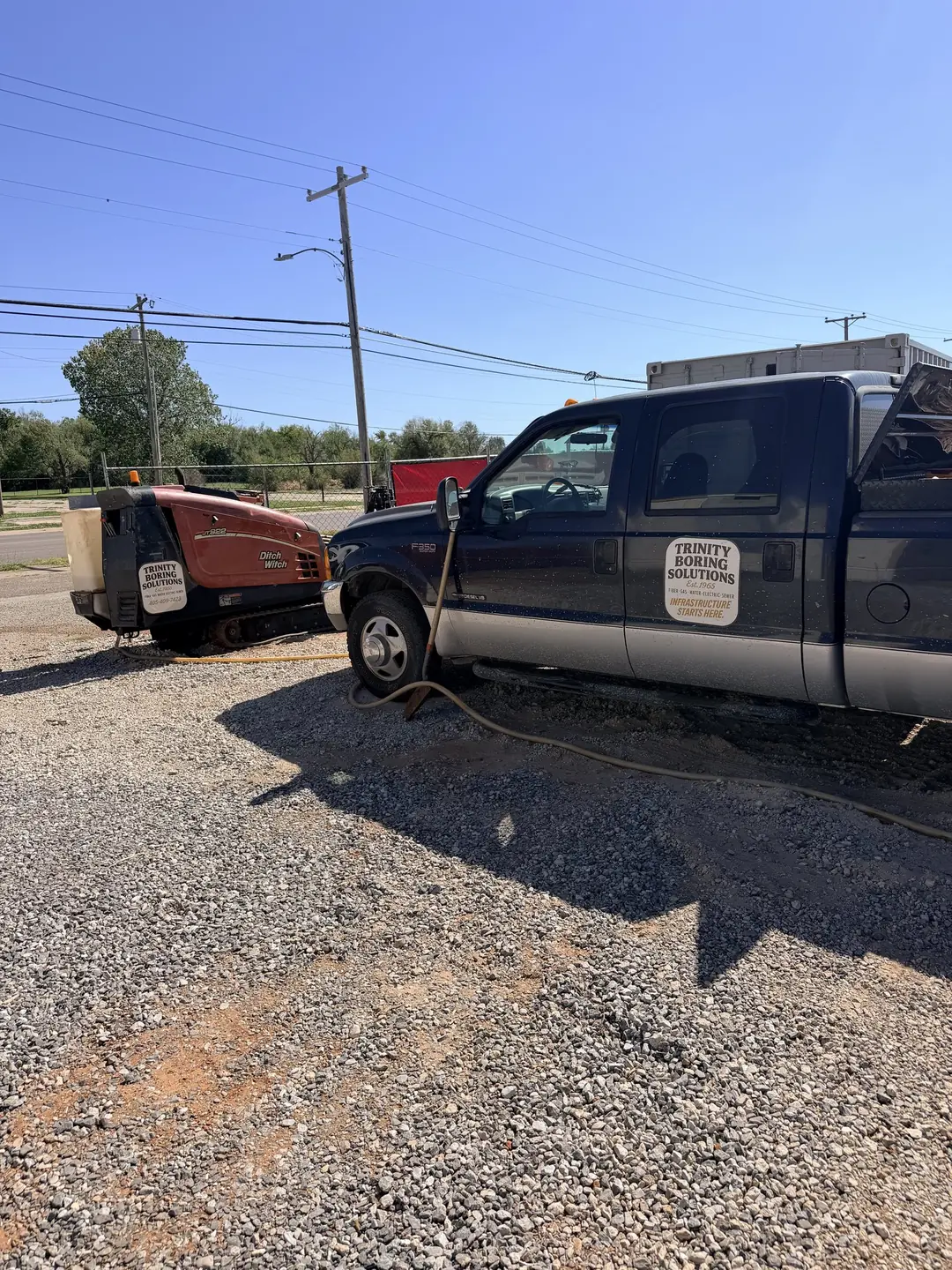
Sand needs drilling fluid that holds the hole open, so we ran bentonite. Bentonite coats the wall of the hole with a thin filter cake that holds the sand back, and the fluid carries the cuttings out to the pits. As The Driller puts it, “Bentonite is best used in sandy or rocky conditions.” Our Trinity water trailer supplied the water for the mix.
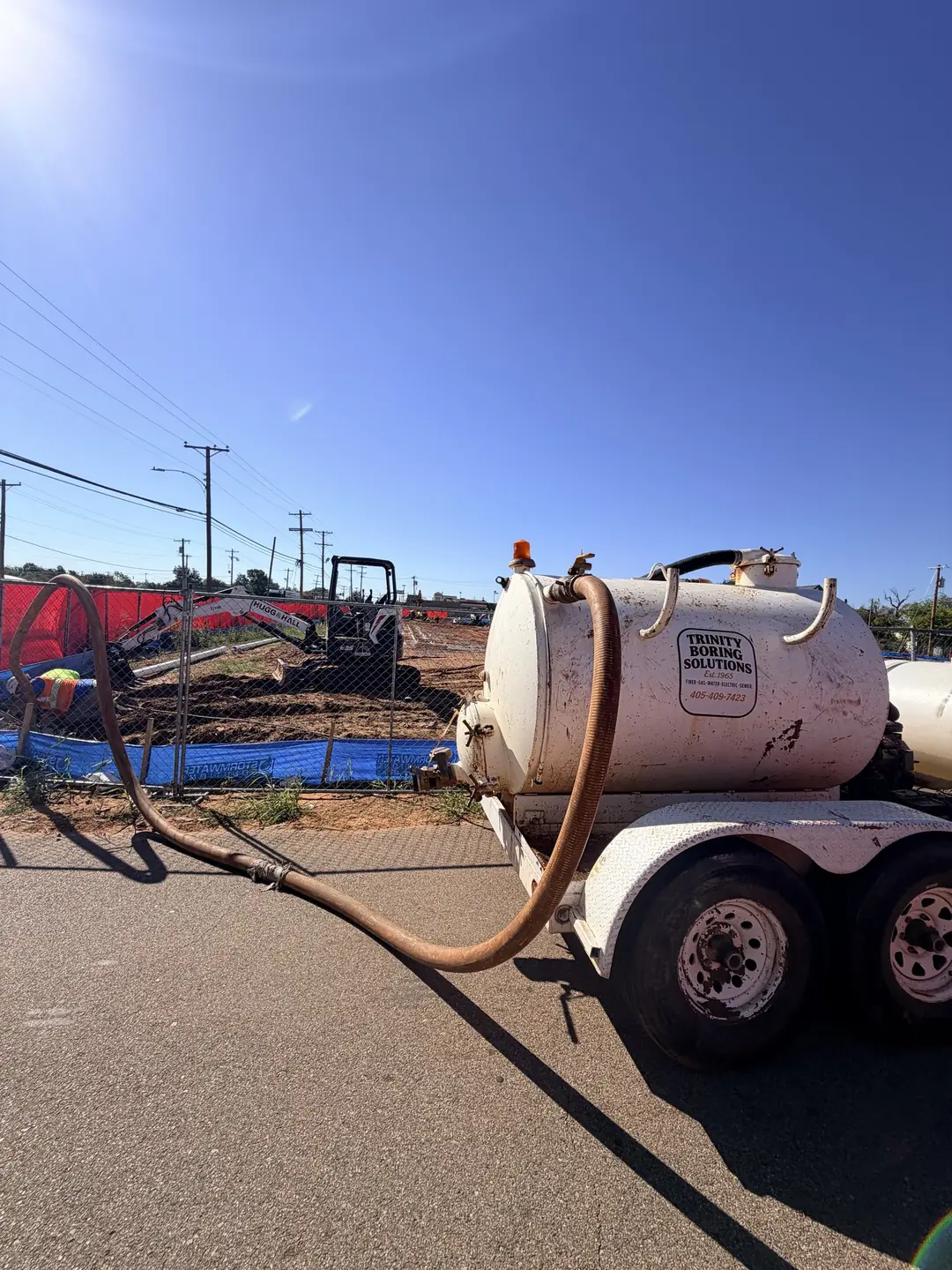
Before pullback, we pre reamed the hole with a 9 inch reamer. The Plastics Pipe Institute handbook puts the usual reamed hole at about 1.2 to 1.5 times the outside diameter of the pipe. A 6 inch Schedule 40 PVC sleeve is 6.625 inches outside, so a 9 inch hole is about 1.36 times, right in that range. That gives the sleeve room to pull through the sand without binding.
Step by step:
- Spotted the water main, so we knew exactly where it was before the drill went in.
- Dug two bore pits, one at each end of the bore.
- Drilled the pilot bore under NE 24th Street and the water main with the Ditch Witch JT922.
- Ran bentonite drilling fluid to hold the sandy soil open and carry the cuttings out.
- Pre reamed the hole to 9 inches.
- Pulled the 6 inch Schedule 40 PVC sleeve back through the bore.
The Result: 6 Inch Schedule 40 PVC Sleeve Pulled Back for the General Contractor
With the hole open and the bentonite holding the sand, we pulled the 6 inch Schedule 40 PVC sleeve back through the bore, under the street and the water main. The sleeve is in the ground and ready for the general contractor. The print on the pipe reads Sanderson Pipe, SCH 40, PVC 1120, ASTM D1785 and 180 psi at 73 F. See how we handle underground conduit installation and pipe and conduit across Oklahoma.
What a Sleeve Bore Under a Street and a Water Main Actually Requires
- Spot the water main first. Knowing exactly where the main is lets the bore pass under it, not into it.
- Bore pits at both ends. Two pits give the drill head a place to go in and come up, and the pipe a place to be hooked on for pullback.
- Drilling fluid matched to the ground. In sandy soil, bentonite builds a filter cake that holds the hole open.
- A pre ream sized to the pipe. About 1.2 to 1.5 times the outside diameter of the pipe. For 6 inch Schedule 40 PVC, we used 9 inches.
- A rig that fits the site. The compact Ditch Witch JT922 is rated for 9,000 lb of thrust and pullback.
- Water on site. A water trailer keeps the drilling fluid mixed and moving.
- Pipe made for the ground. Schedule 40 PVC is a common choice for buried sleeves.
Trinity Boring Solutions bores sleeves, conduit and utility crossings for general contractors across Oklahoma City and the northeast metro, including Spencer, Midwest City, Del City, Choctaw, Harrah, Arcadia and Luther, and all of Oklahoma County. See more Oklahoma City work, like the FAA conduit bore at Will Rogers World Airport and the Hobby Lobby headquarters conduit bore, or browse the project photo gallery.
Frequently Asked Questions
What people ask before a sleeve bore under a street or a water main.
Can you directional bore under a water main?
Yes. The water main is spotted first so the crew knows exactly where it is, then the bore is steered under it, not into it. That is how Trinity Boring Solutions put a 6 inch PVC sleeve under NE 24th Street and a water main in northeast Oklahoma City.
What is a PVC sleeve, and how is it different from conduit?
A PVC sleeve is a larger pipe set under a street, drive, slab or another utility so cables or smaller pipes can be pulled through it later without digging again. Conduit is the pipe that carries and protects the wire itself. A sleeve is the protected path that conduit or pipe passes through. This job used a 6 inch Schedule 40 PVC sleeve.
What size reamer do I need for a 6 inch pipe?
A common rule is a reamed hole about 1.2 to 1.5 times the outside diameter of the pipe. 6 inch Schedule 40 PVC is 6.625 inches outside, so that works out to about 8 to 10 inches. On this sleeve bore we pre reamed with a 9 inch reamer, about 1.36 times the outside diameter.
What is pre reaming in directional drilling?
Pre reaming opens the pilot hole to a larger size before the pipe is pulled back, so the pullback runs through a clean, open hole. On this job the hole was pre reamed to 9 inches before the 6 inch PVC sleeve went in.
How do you directional bore in sandy soil?
Sand does not hold an open hole on its own, so the drilling fluid has to. Run bentonite drilling fluid to build a filter cake on the wall of the hole, keep the fluid moving to carry the cuttings out, and pre ream the hole large enough for the pipe. That is how we bored this 6 inch sleeve under NE 24th Street in sandy soil.
Why is bentonite used in drilling?
Bentonite is a clay that swells in water to make drilling fluid, often called drilling mud. It coats the wall of the hole with a thin filter cake that holds sand back, carries the cuttings out of the hole, and cools and lubricates the tooling. It works best in sandy or rocky ground, like the sandy soil on this job.
What is a bore pit?
A bore pit is a pit dug at the start or end of a bore, where the drill head goes in or comes up and the pipe is hooked on for pullback. Drilling fluid and cuttings collect in the pits too. This 6 inch sleeve bore used two bore pits.
Can Schedule 40 PVC be buried?
Yes. Schedule 40 PVC is commonly buried for water, drain, sleeve and conduit work. The 6 inch Schedule 40 PVC sleeve on this job, printed ASTM D1785, PVC 1120 and 180 psi at 73 F, is now in the ground under NE 24th Street in Oklahoma City.
What are the Ditch Witch JT922 specs?
Ditch Witch rates the JT922 for 9,000 lb of thrust and pullback and 1,100 ft lb of spindle torque. It is a compact directional drill that fits tight sites. Trinity Boring Solutions ran this 6 inch PVC sleeve bore under NE 24th Street with it.
Who is a directional boring contractor in Oklahoma City?
Trinity Boring Solutions is a directional boring contractor based at 9102 NW Expressway in Yukon, established in 1965, serving Oklahoma City, northeast OKC, Spencer, Midwest City, Del City, Choctaw, Harrah, Jones, Arcadia, Luther and all of Oklahoma County. We bore sleeves, conduit, water, gas, sewer and fiber lines. Call (405) 409-7423.
Need a sleeve or a utility crossing bored in Oklahoma City?
Sleeves, conduit, water mains, streets and drives. Trinity Boring Solutions bores across Oklahoma City, Oklahoma County and all of Oklahoma. 9102 NW Expressway, Yukon, OK 73099.
NE 24th Street PVC Sleeve Bore Field Photos
More Boring and Utility Resources
- Directional Boring in Oklahoma City
- Directional Boring in Oklahoma County
- Directional Boring in Spencer
- Directional Boring in Midwest City
- Directional Boring in Del City
- Boring for General Contractors
- Bore Pits, Casing and Boring Mechanics
- Locating Utilities Before You Bore
- Drilling Fluid in Directional Boring
- Directional Boring Soil Suitability
- Water Main Boring
- Road, Railroad and Creek Utility Crossings
- Underground Conduit Installation
- Directional Boring Equipment
- FAA Conduit Bore at Will Rogers World Airport
- Hobby Lobby Headquarters Conduit Bore
- Directional Boring FAQ
- Project Photo Gallery
Talk to the crew that does the work
Fastest way to a number is a phone call. Tell us where the crossing is and what is going in the ground, and you will get a straight answer on the same call. Bores from 10 feet to 5,000 feet, 3/4 inch service line through 48 inch casing, anywhere in Oklahoma and Texas. We run 24/7 for main breaks and emergency repairs.
Answered by a person, not a call center.
Would rather not call? Send the details and we will come back with a written quote.
Latest from the crew
More field reports and guides from Trinity Boring Solutions.
- Case Study: Emergency Gas Line Bore at the TA Truck Stop on Council Road and I 40 in Oklahoma City
- Storm Drain Replacement in Moore: What the $18 Million Bond Vote Means for Utility Lines
- Data Center Site Utilities in Oklahoma: What Goes Underground Before the Servers Arrive
- Trenchless Culvert Installation After Oklahoma’s October 2026 Road Washouts
- Directional Boring Explained by the Oklahoma Crew That Has Done It Since 1965
- Case Study: 385 Foot Sandstone Rock Bore Under Creeks, Wetland and a Dam in Guthrie, OK